
Archives: Articles

IssueM Articles

What Kind of Society? A Better Vision Needed

The people have spoken in the General Election. They have voted in overwhelming numbers for change. They have done so because the philosophy and policies of the past have patently failed and they want no more of them. The new Government will go down the same tired routes at its peril.


The Way Forward for Ireland: A Values Added Tax Policy?

Eugene Quinn, April, 2011 Introduction The maintenance of a low tax regime was a key tenet of national policy during the years of Ireland’s economic boom. However, there were also demands from many quarters for improved public services and for greater protection for the most vulnerable. For a time, Ireland appeared to achieve the impossible… Read more »


anglo

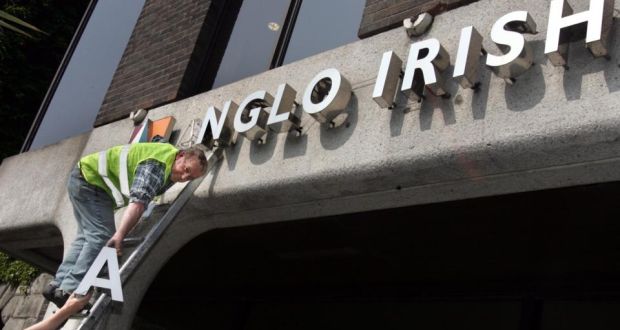
Irish Banking: Rediscovering Values for Rebuilding and Renewal

This article explores the deconstruction of the Irish banking system. It discusses the ‘pressure points’ which are reshaping this system, and how these are likely to impact on the wider banking and financial community. This is an important issue in its own right because the constitutive purpose of banking is to support the wider economy, and especially job creation. But it is particularly timely to critique recent events and policies which in combination have served to subvert the development of modern Ireland.


Unemployment: The Need for a Comprehensive Response

There is no doubting that nearly everyone who stood as a candidate in the February 2011 General Election saw employment – its maintenance and creation – as a critical issue to be addressed by the in-coming Dáil. Now that a new Dáil has been elected and a new Government appointed, what should be the focus in tackling unemployment? What is needed to give unemployed people hope for the future as well as proper income and social supports to meet their needs?


working-notes-issue-66

Working Notes – Issue 66 Editorial

In a Statement issued prior to the General Election in February of this year, the Jesuit Centre for Faith and Justice noted that in public discussions in Ireland on how to address the economic crisis reference was frequently made, by politicians and commentators, to ‘the common good’, ‘solidarity’ and ‘sustainability’. The Statement said that while… Read more »


A New Economic Paradigm? In the Concrete

Towards a New Model A map of the world that does not include Utopia is not even worth glancing at … (Oscar Wilde) It is good to remember that utopia is nothing but the reality of tomorrow and that today’s reality is yesterday’s utopia. (Le Corbusier) Politics left to managers and economics left to brokers… Read more »


working-notes-issue-64

Working Notes – Issue 64 Editorial

Even as the global economy shows signs of recovery from the financial and economic shocks of the past two years, worrying questions remain. Just how robust is the recovery: is it possible we may yet face a ‘double dip’ recession? How long until economic growth translates into a fall in unemployment? How severe will be… Read more »


Social Enterprise – An Untapped Resource

Across Europe, social enterprises are making a significant impact on communities, particularly those blighted by high levels of unemployment, poverty and disadvantage. According to the European Commission, there are 2 million social enterprises in the EU (representing 10 per cent of all European businesses) and they employ over 11 million people (the equivalent of 6 per cent of the working population of the EU).  In EU Member States, social enterprises are present in almost every sector of the economy, including banking, insurance, agriculture, crafts, various commercial services, and health and social services.


waste-small

Enough: Foundation for a Moral and Ecological Economics

Introduction How can we live in harmony with nature? How do we stop global warming, the associated climate change and the destruction of ecosystems? How can we eliminate poverty, provide security and create sufficiency for all the people of the earth? How do we restore an ethic of care for people and for the earth?… Read more »


tree in hand

A New Economic Paradigm?

Introduction The virus of global recession, with its virulent manifestation in Ireland, has raised the question of what antidotes are possible. What lessons can we learn from the past, in order to plot a more secure way into the future? In particular, the question arises as to whether we need to consider a new, more… Read more »


Bad Business

Crisis Much of the world is going through the biggest financial and economic crisis since the Great Depression of the 1920s and 1930s.  While the crisis is not as severe as that of the Great Depression, its effects are more widespread, owing to globalisation and the interconnectedness of national economies.  It is causing much suffering,… Read more »


Co-operatives and the Economic and Environmental Crisis

Introduction The current economic and financial crisis has had an enormous impact across the world. Here in Ireland, we have experienced the harsh consequences of a sharp reversal of economic growth. During 2009, there was estimated fall of over 7 per cent in GDP, and of more than 10 per cent in GNP. Both measures… Read more »


working-notes-issue-63

Working Notes – Issue 63 Editorial

Even as the global economy shows signs of recovery from the financial and economic shocks of the past two years, worrying questions remain. Just how robust is the recovery: is it possible we may yet face a ‘double dip’ recession? How long until economic growth translates into a fall in unemployment? How severe will be… Read more »


‘Up Stairs, Down Stairs’: Whose Interests are being Protected?

Peter McVerry SJ, November, 2009 The Parable John and Jane are tenants in the same house. John lives in a flat on the top floor. At 8 o’clock in the morning he pulls the curtains; the sun shines in. He looks out the window at the mountains in the distance rolling down to the sea.… Read more »


The Challenges Facing the Church in Ireland in the Aftermath of the Ryan Report

The mission of the Church in every age and context is to proclaim the Good News of Jesus Christ. The Church always needs to be prepared to read ‘the signs of the times’ and to enquire how it can renew itself to be faithful to that mission. The Ryan Report published in May 2009, the Ferns Report published in 2005, and undoubtedly the issues which will emerge from the report into sexual abuse in the Archdiocese of Dublin, raise very serious challenges for the whole People of God in Ireland now and in the immediate future.


Pro Bono: Still Relevant for Access to Justice

A call to justice for the poor and marginalised is to be found in the three major monotheistic faith traditions. The Hebrew tradition specifically mentions the need for justice for the poor in their lawsuits.1 In Christian scriptures, scribes or lawyers were encouraged to foster justice, especially among the poor and widows. A similar call to justice can be found in the Quran,2 alongside calls to charity.3 Each tradition is intimately linked to law, and emphasises the need for its careful application with justice and mercy.


‘Frontloading’: The Case for Legal Resources at the Early Stages of the Asylum Process

In 1992, fewer than fifty people came to Ireland seeking asylum. From 1995, however, there was a rapid increase in the numbers applying for asylum, reaching a peak of 11,634 in 2002. Following the Citizenship Referendum of 2004 and subsequent legislative changes, and consistent with underlying trends internationally, the number of asylum applications fell significantly. By 2008, applications had declined to a total of 3,866 for the year, representing a 2.9 per cent decrease on the total of 3,985 in 2007, and a 200 per cent reduction on the 2002 figure.


working-notes-issue-62

Working Notes – Issue 62 Editorial

In a recent interview, the writer Iain Banks, expressing strong criticism of senior British politicians, said that they were ‘very good at standing up to the weak and poor, and utterly pathetic at standing up against the rich and powerful; they roll over every single time’ (The Guardian, 8 September 2009). As we in Ireland… Read more »


Europe: What is Pope Benedict Thinking?

It may seem strange, as Ireland prepares for its second vote on the Lisbon Treaty on October 2, 2009, to focus on the vision of Europe of the current pope. After all, are his views not essentially religious and are Ireland’s concerns with Lisbon not, in the main, economic, social and political? At first glance,… Read more »


working-notes-issue-61

Working Notes – Issue 61 Editorial

With the Referendum on the Lisbon Treaty just weeks away the build-up has been gathering momentum. Various civil society groups including those comprising some of our best known arts and sports celebrities, farmers, lawyers, ‘women for Europe’ have publicised their support for a Yes vote. Whatever the outcome of the vote on October 2nd, it… Read more »


Towards the Lisbon Treaty Referendum: The View from Europe

The title proposed to me implies a double focus: actually, a double double focus. If the rest of this edition of Working Notes offers perspectives on Europe, my task is to discuss perspectives from Europe. Two doublets are implicit in the title: ‘The view’: but whose view? The view of the political establishment in Brussels?… Read more »


From LIBERTAS to CARITAS

Euro barometer surveys consistently show that Irish people have a positive attitude towards the European Union. Research on how people voted in the referendum on the Lisbon Treaty found that this positive attitude was the strongest single factor affecting people’s voting decisions.1 It also found that a low level of knowledge of what was in… Read more »


Taking Our Rightful Place Ireland, the Lisbon Treaty and Democracy

The Irish electorate has voted in favour of many European treaties since the original treaty of accession in 1971. Until the Nice Treaty any deal struck by Irish negotiators with their European partners included generous financial incentives. These incentives are indisputable and easily grasped. They have been our point of entry into Europe up till now and no other vision has been offered by our political leaders, who now have left it too late to redeem their failure of leadership. They have appealed too often and too eagerly to narrow self-interest and, as a result, they have lost the ability to inspire any generous sentiment.


Ireland, Europe and Catholic Social Teaching: Shared Values?

In May this year, on the last stretch of the ancient pilgrim route to Santiago de Compostela in Spain, etched on a large stone, for all to see, were the words ‘No Irish in EU’. The pilgrim route celebrates St James the Apostle and has been walked by Christians for well over a thousand years, and by Kerrymen since the 1400s!1 Given the history of Irish Christianity, and its importance in the founding of Europe from the 6th century, it shocks to realise that in 2009 there are people who do not want us in the European Union.


Alcohol: A Key Public Health Issue

The television documentary, When the Party’s Over, presented by Dr Mark Hamilton and broadcast on RTE just before Christmas 2008, provided many memorable images of Ireland’s current drinking habits and of the consequent impact on individuals and society as a whole.