
Archives: Articles

IssueM Articles

housing-is-a-human-right

A Constitutional Right to Housing – A Tale of Political Sidestepping

Jerome Connolly IntroductionThere is in the Sherlock Holmes canon a particular and often-quoted phrase which comes to mind when scrutinising the housing policies of successive Irish governments over the last two decades. The phrase refers to an incident concerning a dog guarding stables from which a racehorse had been stolen during the night. The curious… Read more »


build-social-housing-now

Homelessness and Social Housing Policy

Peter McVerry SJ, Eoin Carroll and Margaret Burns Homelessness The Continuing Rise in Homelessness The most disturbing aspect of the current housing crisis is, of course, the extent to which individuals and families are experiencing homelessness. While homelessness has been rising since at least 2013 there has been a particularly marked increase since 2015. As… Read more »


house-the-homeless

Rebuilding Ireland: A Flawed Philosophy – Analysis of the Action Plan for Housing and Homelessness

Margaret Burns, P.J. Drudy, Rory Hearne and Peter McVerry SJ Introduction Providing affordable, quality and accessible housing for our people is a priority … The actions of the New Partnership Government will work to end the housing shortage and homelessness. (Programme for Government, May 2016) Against a background of deepening public concern about the increasing… Read more »


cover-issue-80

Working Notes – Issue 80 Editorial

When Ireland became an independent State it inherited some appallingly bad housing conditions. This was most notoriously the case in the severely deprived areas of inner-city Dublin, but inadequate and overcrowded housing which lacked basic facilities was also prevalent in towns and villages and rural areas around the country. Over the following seven decades, significant… Read more »


Inequality on blackboard

Reflections from an Ignatian Educational Perspective

Introduction The Report, Justice in the Global Economy, is a call to action. Whilst it combines the clarity and scholarship of an academic paper, its underlying tone conveys urgency. The Report calls on all of us in Jesuit works to wake up to the realities that humankind is facing and asks that as individuals, organisations,… Read more »


Praying in the church (Horizontal)

Justice in the Global Economy: A Theological Reflection

Introduction Justice in the Global Economy is a concise account of the crisis which humanity is currently facing: ‘We are faced not with two separate crises, one environmental and the other social, but rather with one complex crisis which is both social and environmental’ (Laudato Si’, § 139). Of particular interest is the recommendation that… Read more »


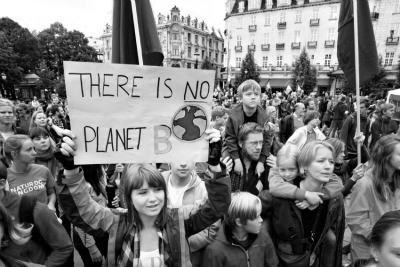
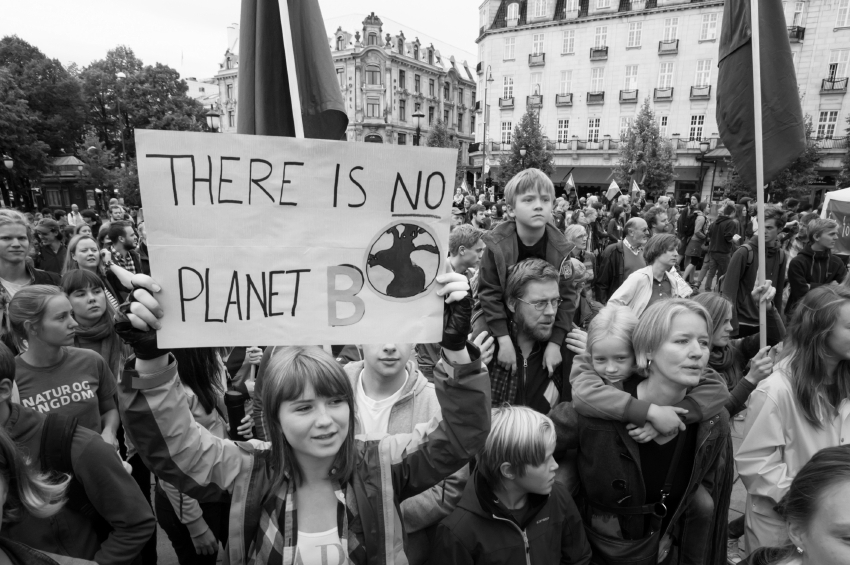
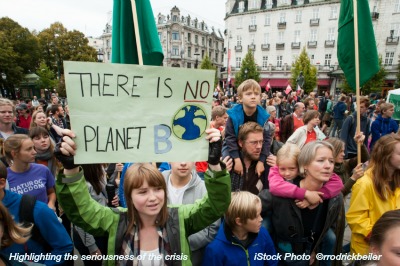
A sign reads, "There Is No Planet B", as parents carry children among thousands marching through central Oslo, Norway, to support action on global climate change, September 21, 2014. According to organizers of "The People's Climate March", the Oslo demonstration was one of 2,808 solidarity events in 166 countries, which they claim was "the largest climate march in history".

Justice in the Global Economy: What It Means for Earth-Care

Introduction The Report, Justice in the Global Economy, highlights the inter-relationship between environmental justice and economic justice. It points out that ‘the rate of extraction of natural resources cannot be sustained’ and warns that if consumption continues at the current pace ‘we face severe menaces to both ecological stability and human well-being’. It notes also… Read more »


Decent Work: Implications for Equality and Social Justice

Introduction The idea that any job is better than no job is increasingly debatable, and the assumptions that have guided employment policy for decades no longer hold. There is not much point in wanting to return to a golden past of straightforwardly good jobs, perhaps in the 1960s and 1970s, because they never existed. However,… Read more »


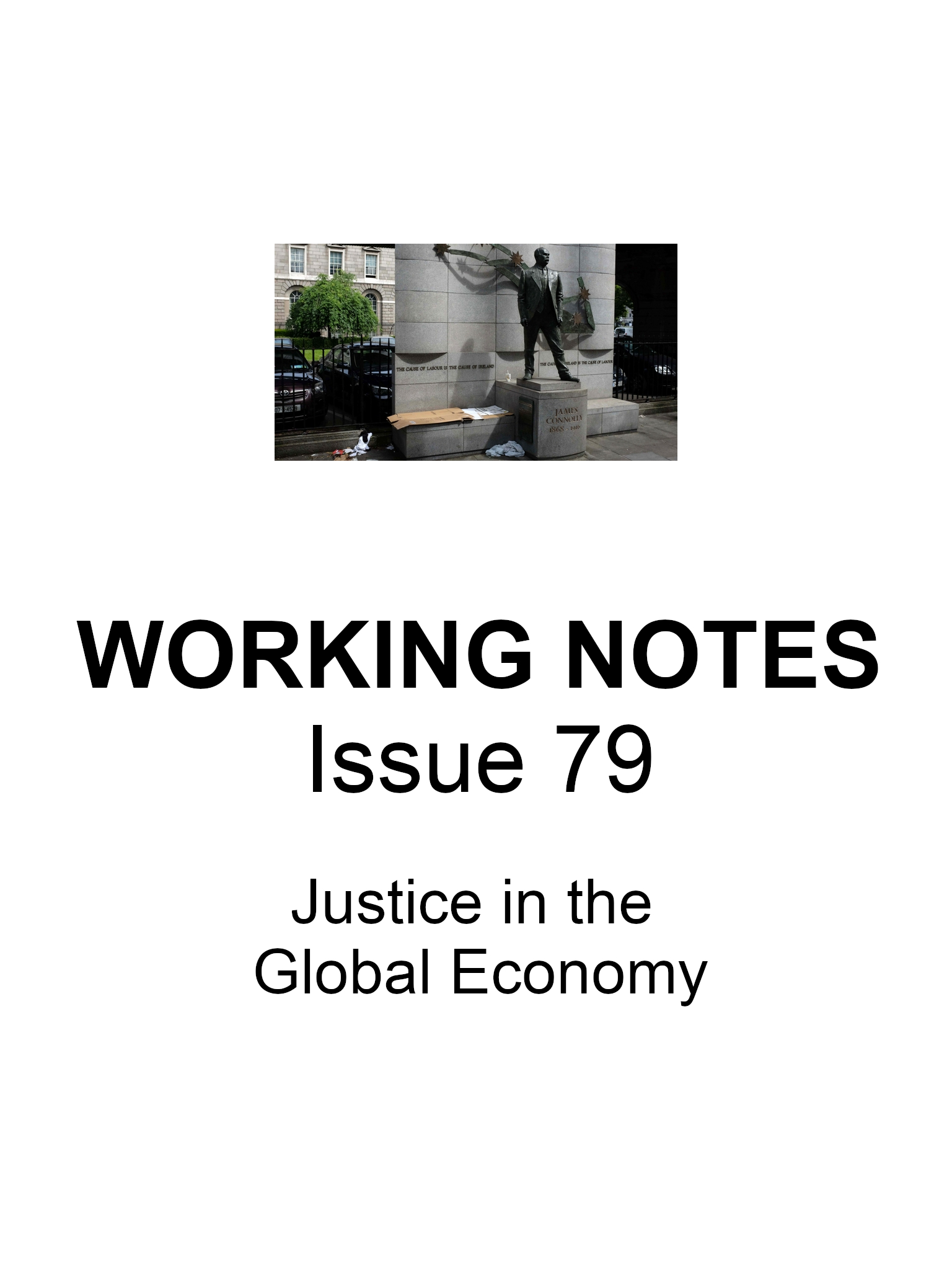
working-notes-issue-79

Working Notes – Issue 79 Editorial

In February 2016, the Jesuit Secretariat for Social Justice and Ecology and for Higher Education in Rome published a Special Report on Justice in the Global Economy. The Report was compiled by an international group of Jesuits and lay colleagues in the fields of social science and economics, philosophy and theology. It understands itself as… Read more »


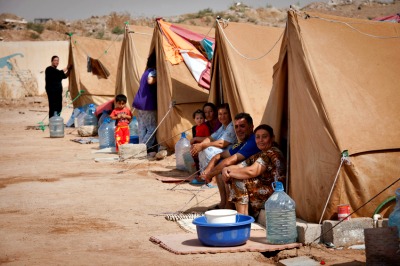
Refugee camp, Kurdistan, Iraq   iStock Photo ©claudiad

Our Common Humanity: Human Rights and Refugee Protection

Colin Harvey Contexts The global refugee crisis is raising profound questions about the status and effectiveness of protection regimes at all levels. It should also prompt reflection on the present international order and why, despite the plea of ‘never again’, we still witness human rights violations on massive scales. The world remains a structurally unequal… Read more »


The EU Refugee and Migrant Crisis: A Shared Responsibility

David Moriarty Introduction  We cannot allow the Mediterranean to become a vast cemetery! The boats landing daily on the shores of Europe are filled with men and women who need acceptance and assistance. (Pope Francis)1 During 2015, over one million migrants and asylum seekers risked crossing the Mediterranean Sea in unsafe boats in an attempt… Read more »


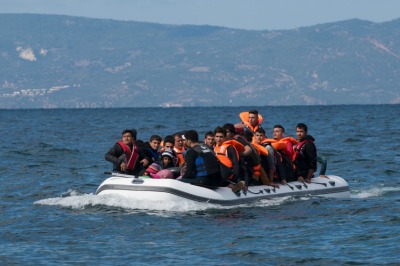
An inflatable boat filled with refugees and other migrants approaches the north coast of the Greek island of Lesbos. Turkey is visible in the background. More than 500,000 migrants have crossed by boat from Turkey to the Greek islands so far in 2015.

Time to Act: Implementation of the Report of the Working Group on the Protection Process

Eugene Quinn Introduction The Statement of Government Priorities 2014–2016, which was issued by the Fine Gael and Labour Party Coalition Government in July 2014, included a commitment to ‘treat asylum seekers with the humanity and respect that they deserve … [and] reduce the length of time the applicant spends in the system …’.1 This commitment… Read more »


working-notes-issue-78

Working Notes – Issue 78 Editorial

John Guiney SJ and Eugene Quinn During 2015, in excess of one million refugees and migrants risked their lives in crossing the Mediterranean Sea to enter the European Union. More than 3,700 people, one quarter of them children, died by drowning during the attempt. Europe’s experience of increased forced migration is just one element of… Read more »


working-notes-issue-77

Working Notes – Issue 77 Editorial

Pope Francis’ encyclical, Laudato si’: On Care for Our Common Home, the first papal document devoted entirely to ecology, has generated considerable interest and debate since its publication in June 2015. The encyclical is at once an exploration of the various environmental crises facing the world, a radical critique of current economic models, a call… Read more »


A sign reads, "There Is No Planet B", as parents carry children among thousands marching through central Oslo, Norway, to support action on global climate change, September 21, 2014. According to organizers of "The People's Climate March", the Oslo demonstration was one of 2,808 solidarity events in 166 countries, which they claim was "the largest climate march in history".

Preparing the Road to Paris

Some of the younger activists at a recent United Nations Climate Conference sported tee shirts which read: ‘You have been negotiating about climate change since before I was born!’. Indeed, the seemingly intractable negotiations which began with the First Conference of the Parties to the United Nations Framework Convention on Climate Change (UNFCCC) in Berlin in 1995 have been in essence a spectacular failure.


recycling

Ecological Economics and Politics in the Ecology Encyclical

It is clear that in Laudato si’ Pope Francis has put forward a quite detailed account of what is required at the economic and political levels if there is to be an adequate response to the ecological problems of our world. His encyclical poses very serious challenges not only to governments but also to each one of us in our daily lives.


Wind_Farm

The Role of Social Enterprise in Renewable Energy Production

Natural resources – water, energy and fertile soil – are fundamental to our life on earth. Many environmentalists – for example, Tim Jackson1 – believe that at the heart of the environmental crisis we are experiencing, and which is manifesting itself in so many ways, lies over-consumption of the earth’s resources.


Environmental Initiatives by Church Groups in Ireland

In this issue, we publish articles outlining the ecology work of a further six groups. The first article describes the work of the Presentation Sisters in Ireland. Following this, there are articles on four church communities (Carrigaline Union, Church of Ireland; Clonakilty Methodist Church; Fitzroy Presbyterian Church; Rathfarnham Quaker Meeting) which have received an ‘Eco-Congregation Ireland Award’, and on a fifth (Balally Catholic Parish) which is shortly to receive an Award.


Catholic Social Teaching and Housing

‘Have youse (yis) no homes to go to?’ – the traditional, plaintive cry of long-suffering publicans, trying to clear their premises after closing time, can sound somewhat hollow and ironic to many in today’s Ireland. We live at a time when housing supply does not meet demand; when, in the wake of the collapse of the property bubble, home-owners may struggle to meet mortgage repayments and many fear re-possession; where those in negative equity may find themselves unable to move from their current home even when there are pressing family or financial reasons for them to do so; where waiting lists for social housing are at an alarmingly high level, and where many are unable to access or remain in private rented accommodation because of unaffordable increases in rents in many areas.


buy_rent

The Private Rented Sector: the Case for Regulation

In the past, those with good jobs and reasonable incomes in Ireland might have aspired to purchase a home. However, after a short few years of house price falls subsequent to the economic crash in 2008, the purchase price of houses has been escalating again, meaning that owning a home may now be impossible even for households that are relatively well-off. Therefore, they have no option but to rely on accommodation provided by private landlords.


House Keys on Stack of Money isolated on a white background

Recent Trends and Developments in the Owner-Occupier Sector in Ireland

Cathal O’Connell and Joe Finnerty Introduction This article examines the recent experiences of the owner-occupier sector in Ireland, with reference to historic trends in home-ownership, the impact of the economic crash on the housing system and the consequences that followed, and the current and pending challenges faced by the sector. Given the links between the… Read more »


eviction notice

The Private Rented Sector in Ireland: Time for a National Strategy

Bob Jordan Introduction  In December 2014, in a ‘Chairperson’s Statement’ introducing the 2013 Annual Report of Threshold,1 Senator Aideen Hayden, stated: ‘Threshold is calling on the Government to introduce a national strategy on private rented housing as a matter of urgency. This strategy must provide real security for individuals and families who are making their… Read more »


homeless man asleep on cardboard.

Homelessness

Peter McVerry SJ The Housing Crisis Homelessness is the most visible, and extreme, consequence of a dysfunctional housing system. And the housing system in Ireland today is certainly dysfunctional; indeed, it could be said to be an example of the perfect storm, with all three of the main housing sectors in crisis at the same… Read more »


working-notes-issue-76

Working Notes – Issue 76 Editorial

In little more than a decade, the housing system in Ireland has gone from the peak phase of a property boom to a collapse of the market and dramatic falls in both housing output and prices, and now to a situation where house prices are rising, particularly in urban areas, but where we continue to… Read more »


Interview with Thomas Piketty, Author of Capital in the 21st Century

Thomas Piketty is an economist. He is director of studies at the School of Advanced Studies in Social Sciences in Paris and a professor at the Paris School of Economics. His research focuses on economic inequalities. His most recent book, Capital in the Twenty-First Century,1 has generated lively debate in the United States and Europe.