Archives: Articles

IssueM Articles

Thornton Hall Prison: Solution or Problem?

John on the Prison Carousel Having completed a nine-month sentence, John was released from Mountjoy Prison in March 2007. For the entire duration of his imprisonment, John was ‘on protection’, because of fears for his safety. This meant that he spent twenty-three, and sometimes almost twenty-four, hours each day locked up in a cell on… Read more »


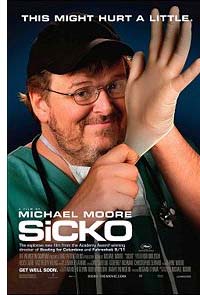
A Horrible Warning? Lessons for Ireland from Michael Moore’s Film, Sicko

Introduction Michael Moore’s film, Sicko, now on general release, dramatically highlights how the wealthiest country in the world, and one which spends a much larger percentage of its GDP on health than other developed countries, fails to provide an adequate and fair system of care for its citizens. The film carries its message through people’s… Read more »


Poverty and Inequality

Ireland has seen a dramatic economic boom over the past decade, with unprecedented levels of growth in employment and living standards. Unemployment has fallen very sharply and substantial numbers of migrants have been attracted to Ireland to work. Despite this, the numbers ‘at risk of poverty’ have grown – the ‘risk of poverty’ being a key measure of poverty among the EU’s indicators of social inclusion.1 There has also been considerable concern expressed about rising inequality and about core features of the strategy adopted by the Government to combat poverty.


Housing and Homelessness

If, as predicted, the number of new houses built during 2007 shows a decline on the 2006 figure, this will represent a notable break with the significant upward trend in housing construction that has been such a feature of the past decade. Whereas 26,500 houses and apartments were built in 1995, the number rose to 49,812 in 2000 and to 93,419 in 2006. In other words, housing output in 2006 was more than 250 per cent higher than in 1995.


Health

Everyone agrees that ‘health’ will be one of the major issues in the coming General Election. In reality, however, it is not health but health services that will be the focus of debate. But the state of the nation’s health ought to merit some serious attention, and some promises of action, by those who would aspire to form the next government.


Educational Disadvantage

If you are a child or young person attending school in a disadvantaged area of Dublin, there is a 30 per cent chance that you will leave primary school with a serious literacy problem;1 only a 50:50 chance that you will sit your Leaving Certificate,2 and a 90 per cent probability that you will not go to college.3 In contrast, if you are a child or young person whose parents are from a professional background and you live in a prosperous part of Dublin, you have only a 10 per cent chance of leaving primary school with a serious literacy problem, you will almost certainly complete your Leaving Certificate and be part of the 86 per cent of young people in your area who go to college.


Migration

In its report, Migration in an Interconnected World, the Global Commission on International Migration noted: International migration has risen to the top of the global policy agenda. As the scale, scope and complexity of the issue has grown, states and other stakeholders have become aware of the challenges and opportunities presented by international migration.


Crime and Prisons

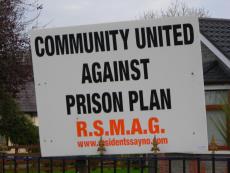
Tough on Crime or Tough on Criminals? While it may be difficult to predict the outcome of the forthcoming General Election, it is somewhat easier to make accurate predictions about the issues that will surface as the election campaign unfolds. Crime will almost certainly feature prominently and we can safely expect that the political parties… Read more »


Climate Change

If the Dáil we elect at the forthcoming General Election lasts a full term, it will oversee the whole five-year period of Ireland’s commitment under the Kyoto Protocol (2008–2012). It will also cover the period during which the international negotiations to agree new and more challenging commitments to reduce our climate-changing pollution will be conducted.


Alcohol and Drugs

One of the notable features of prosperous Ireland has been its level of spending on alcohol and illegal drugs. The Strategic Task Force on Alcohol report of 2004 calculated that the country’s annual expenditure on alcohol of nearly €6 billion of personal income in 2002 represented €1,942 for every person over fifteen years of age.1… Read more »


Development

Introduction The Government’s performance in recent years in relation to development cooperation has been hailed in many quarters as a considerable success. The decision in 2005 to re-instate the commitment to meeting the UN target of spending 0.7 per cent of GNP on development aid, and the achievement of the first interim target of 0.5… Read more »


working-notes-issue-55

Voting in Pursuit of Justice

The Forthcoming Election The imminence of the third General Election since the Irish economic boom began provides an opportunity to consider how far we as a people, residents of one of the wealthiest countries in the world, are concerned with eliminating poverty and injustice. It is without question that high levels of economic growth, which… Read more »


Ireland’s Asylum System – Still a Shambles?

Introduction Having worked overseas for more than ten years, I returned to live in Ireland in 1997. In the years during which I was away, both the pace and the scale of change in this country were significant; over the subsequent decade, however, they have been even more dramatic. Nowhere has this been more evident… Read more »


Asking the Right Questions: Christians, Muslims, Citizens in Ireland

Our neighbour, eight-year old Muhammad, arrived at the front door on Hallowe’en night in the guise of Darth Vader; he was flanked by two other children from the road, disguised as a pirate and the devil. Later, his eleven-year old sister, Selma, arrived on her own, gorgeously dressed as a witch. As they departed with their trick or treat goodies, I recalled the words of President McAleese, addressed to Muslims in Ireland at the tenth anniversary celebrations of the Islamic Cultural Centre in Clonskeagh, Dublin: ‘Your being here helps us and keeps challenging us to find ways to be joyfully curious about each other … we, I hope, will try our best to make Ireland a country of real welcome and a country of celebration of difference …’1 Are the President’s words realistic or are they naïve? I want to explore the kinds of questions we need to put to one another as Irish citizens so that obstacles to the realisation of the President’s hopes can be overcome.

 

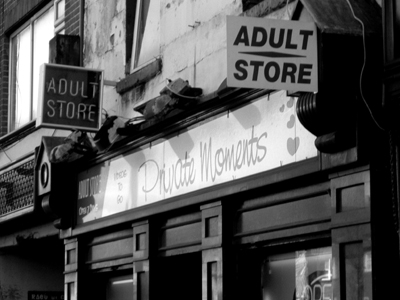
adult-store001

Trafficking and the Irish Sex Industry

At the Young Social Innovator of the Year Awards 2005, the Transition Year class of St Leo’s – founded by the Sisters of Mercy in 1839 – won the Global Citizenship Award. Their project, ‘Stop the Trafficking of Women into Ireland for Sexual Exploitation’, was inspired by stories of young girls and women whose experiences were so shocking that they could not be ignored.


Integration: A Challenge in Principle, in Policy and in Practice

The economic boom of the Celtic Tiger years has transformed Ireland from a country of origin into a country of destination. Sustained and stellar economic growth from the early 1990s not only persuaded thousands of Irish nationals to return but attracted non Irish national migrant workers in large numbers. They were responding to the recruitment efforts of Irish employers who, faced with the significant skill and labour shortages that were a consequence of the boom, began to look overseas to fill vacancies.


working-notes-issue-54

Working Notes – Issue 54 Editorial

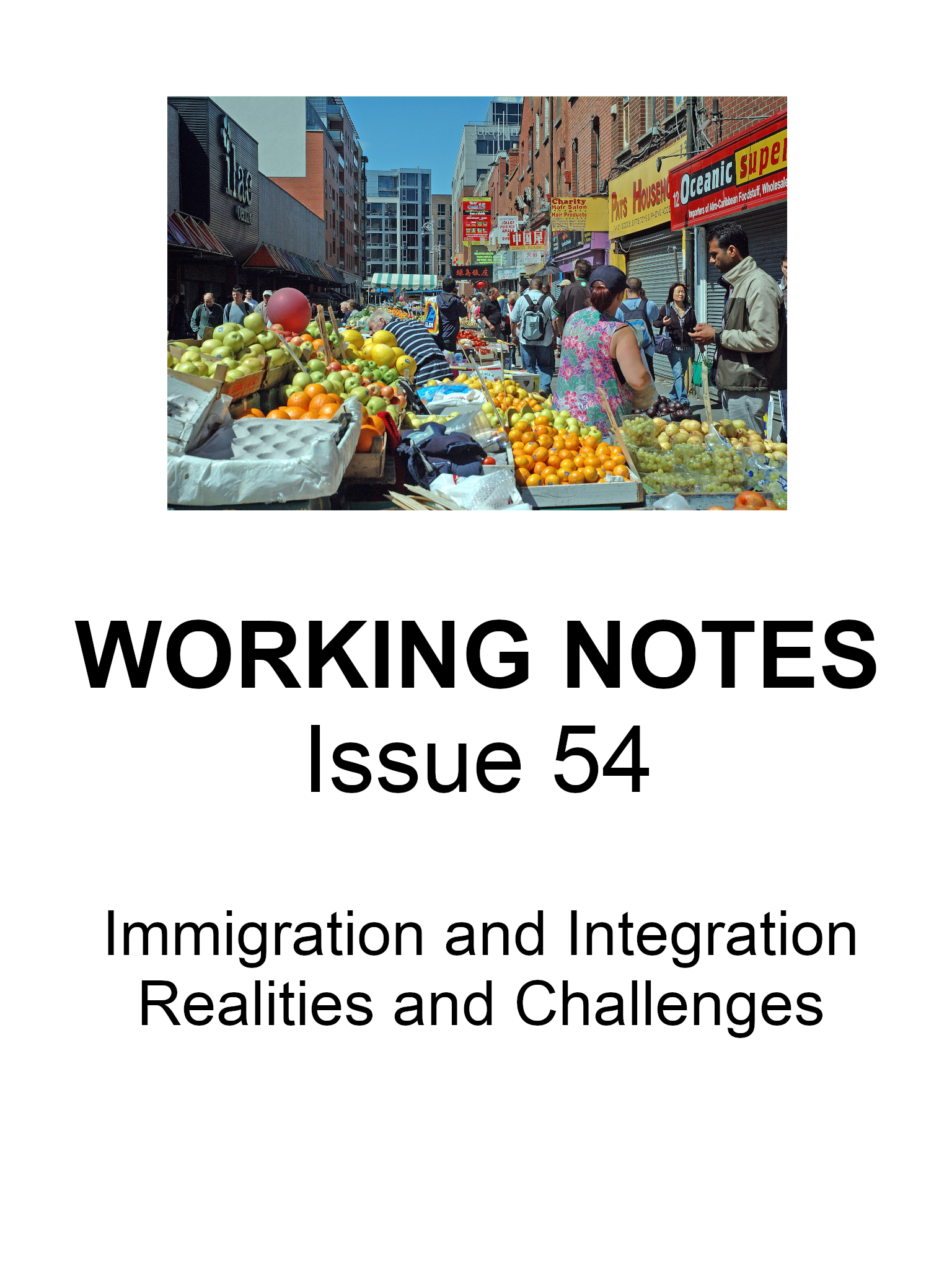
The cover of this issue of Working Notes features a colour photograph of a scene from Moore Street in Dublin just a few weeks ago. This street, like many other parts of Dublin, is now populated by many nationalities – immigrants who have come to live in this country. Ireland has become more colourful as… Read more »


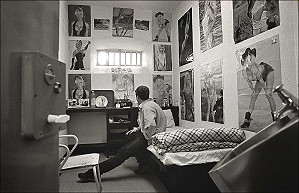
7.2.97. Dublin.Cell with occupant St Patricks in Mountjoy Prison. ©Photo by Derek Speirs

Rehabilitation – Are We for Real?

Introduction If money were scarce, and one had to prioritise where to invest in rehabilitative facilities within prison, where would you invest it? I suggest that the greatest return is likely to be found amongst the younger prison population who are still at a very decisive developmental period in their lives, namely the 16 -21… Read more »


Alternatives to Custody in Ireland

Ireland has seen a sharp increase in its prison population and a corresponding expansion of the prison estate over the last decade despite a reduction in the levels of recorded crime.  Indeed, since 1995 the prison population rate has grown from 57 per 100,000 of national population to 78 per 100,000 of national population in… Read more »


An Award Ceremony For Successful Criminals?

Imagine if we introduced an annual award ceremony for Ireland’s most successful criminals. Who might be present at such a gala event and who would be likely to receive nominations and awards? It is unlikely that such an event will ever happen but the very suggestion might help us think about some of the problems… Read more »


Working Notes – Issue 53 Editorial

St Patrick’s Institution for Young Offenders should be closed immediately. This recommendation appeared twenty-one years ago in the Whitaker Report on the penal system. It has been repeated forcefully by many over the years, most recently by the Inspector of Prisons in his fourth annual report made available in August. However St Patrick\’s remains open.… Read more »


Doing Business and Doing Good: The Role of Business Ethics

Down the ages, some currents of thought have seen business as incapable of being honourable, and barely able to be honest, since honest business will always be at a disadvantage in competition with dishonest business. On this view, neither business, banking, investment, profit-making, nor entrepreneurial initiative promote the good of individuals or society. Business ethics… Read more »


Mental Illness in Irish Prisons

Health Care Standards in Irish Prisons In June 2004, the Irish Prison Service published a statement of Health Care Standards, covering the care of those detained in Irish prisons and places of detention. The core aims of the Standards are stated as being: “to provide prisoners with access to the same quality and range of… Read more »


Still Waiting for Housing

The findings of the Local Authority Assessments of Social Housing Needs, carried out in March 2005, were released by the Department of the Environment, Heritage and Local Government in December 2005.


working-notes-issue-52

Working Notes – Issue 52 Editorial

The Report of the Expert Group on Mental Health Policy, A Vision for Change, was published in January 2006. In his introduction, Tim O\’Malley TD, Minister of State with special responsibility for mental health, states that the Report is intended to set out “a comprehensive policy framework for our mental health services for the next… Read more »