
Archives: Articles

IssueM Articles

Universal Health Insurance: What is it and would it be effective in Ireland?

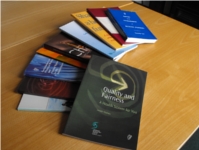
The Irish health care system is failing to meet the needs and expectations of Irish people in so many different areas where care ought to be provided.1 Dominating a range of failures in the system is the fact that care is provided in an inequitable manner. This is despite the stated commitment of the 2001 Health Strategy, Quality and Fairness, and of its 1994 predecessor, Shaping a Healthier Future, that ‘equity’ would be one of the core values underpinning Irish health care


Some Christian Perspectives on Health and Sickness

Introduction ‘There’s nowt so queer as folk’ – this, now non-politically correct, maxim from the North of England applies pretty well to the common human experience of taking good health for granted, while becoming anxious at the onset of illness. But, of course, there may be good reason for such anxiety – even minor ill-health… Read more »


working-notes-issue-60

Working Notes – Issue 60 Editorial

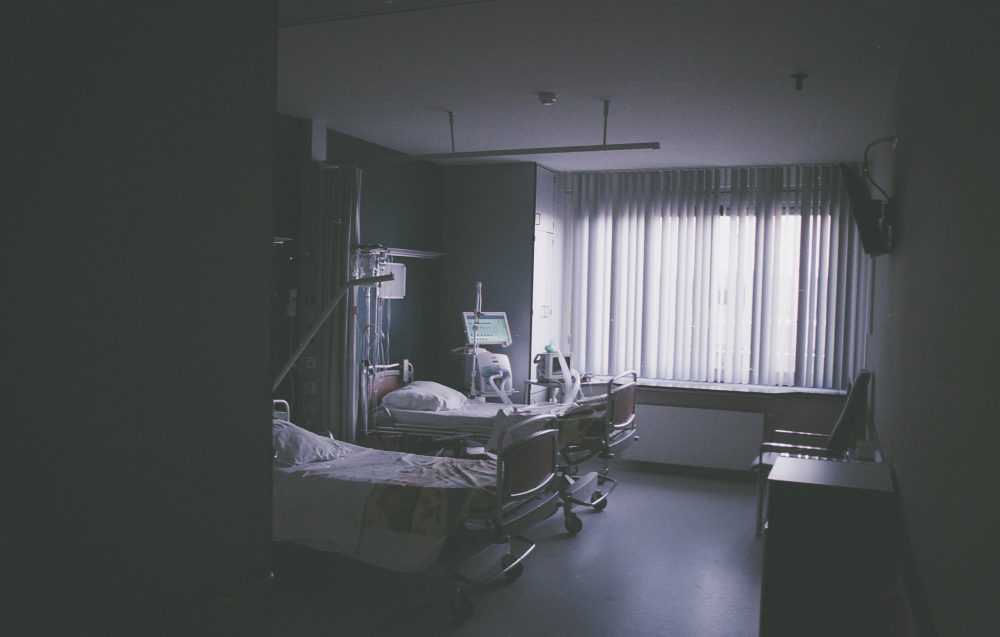
In a context of intense focus on the economic and financial difficulties facing the country, the Irish health system remains one of the few issues capable of taking centre stage in media and public discussion. We now find ourselves faced with not just the kind of health service crises that have characterised the past two… Read more »


Irish Health Services: Money, Inequality and Politics

On 10 March 2009, the Minister for Health and Children, Mary Harney TD, said in the Dáil that emerging pressures on the finances of the Health Service Executive (HSE) would mean that savings of €480 million would have to be made elsewhere in its budget over the course of the year. The HSE, however, said on 12 March 2009 that in order to meet the new pressures and stay within budget it would have to make savings in other areas amounting to over €1 billion.


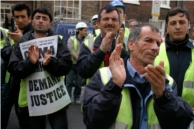
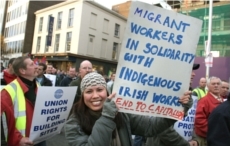
9.12.05.Dublin. Protest in support of Irish Ferries workers. ©Photo by Derek Speirs

Temporary Agency Work: Labour Leasing or Temping?

The word ‘temping’conjures up an era when young secretarial workers moved from assignment to assignment, almost like a rite of passage, until it was time to take up a desirable employment opportunity and settle down. Nowadays, people in skilled occupations such as nursing and information technology often avail of the services of temping agencies as a way ‘to see the world’.


Justice in Recession: Statement on the Current Economic Situation

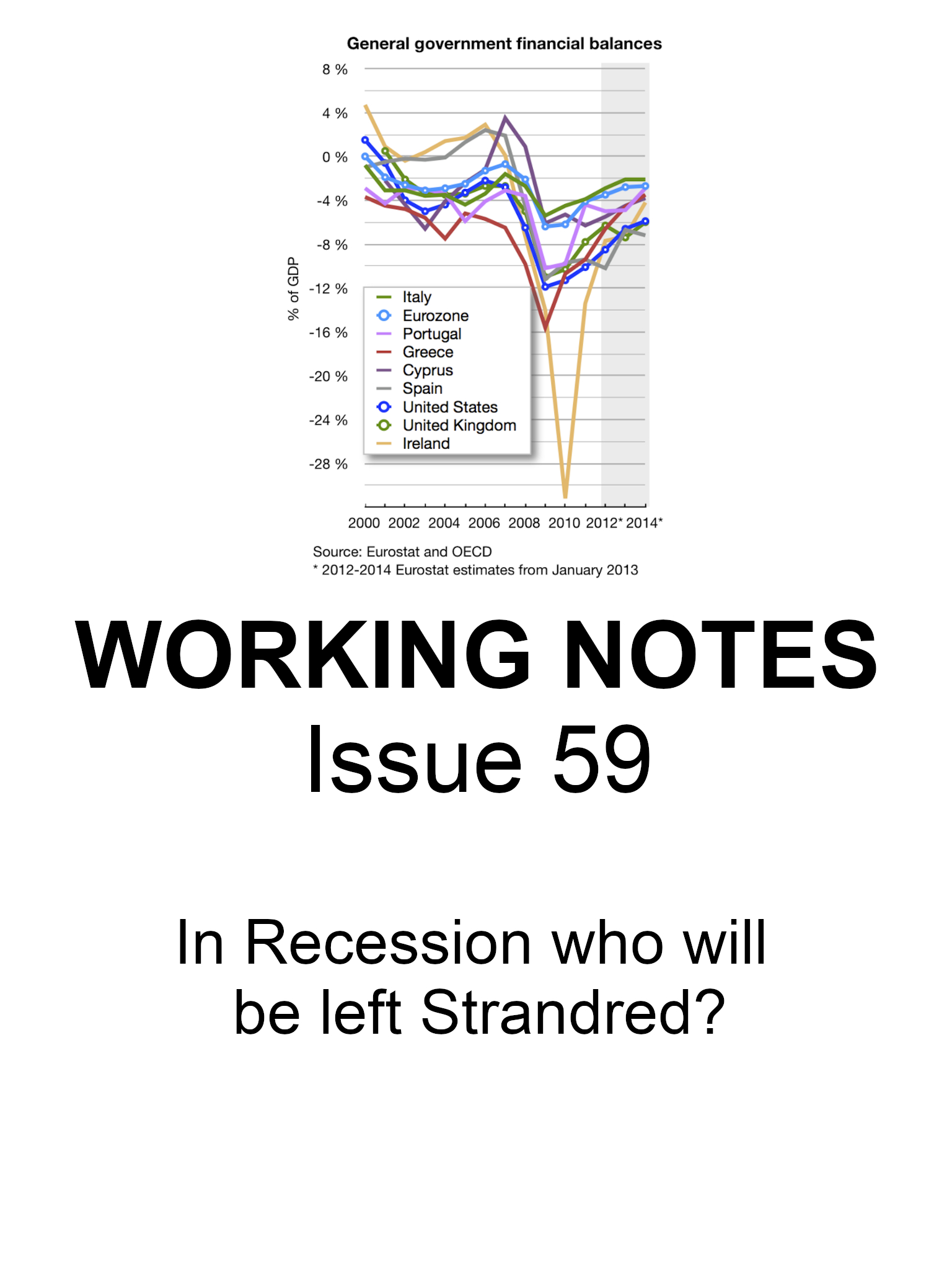
It is no exaggeration to say that people in Ireland are in a state of shock at the suddenness and severity of the downturn in the country’s economic situation. In so far as we thought about ‘Ireland after the Celtic Tiger’, most people assumed it would be a time where growth would be slower, but more sustainable, where there would be ‘a soft landing’ for house prices, and where the gains of the boom years would be consolidated. We did not envisage an economic recession, a deep and widespread crisis in the financial system, a sharp rise in unemployment, and considerable anxiety about the future.


working-notes-issue-59

Working Notes – Issue 59 Editorial

‘The past is a foreign country: they do things differently there’, L.P. Hartley famously wrote. Right now in Ireland, however, it is the present that feels like a foreign country. This is a place where we must adjust our assumptions and expectations and learn, or relearn, the skills to enable us deal with an economic situation that is the reverse of the favourable one to which we had become so acclimatised.


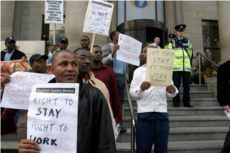
19.4.05. Dublin. Protest by Nigerian asylum seekers outside Leinster Hse & Dept of Justice asking for the right to stay & work and contribute to Irish society and some to stay with their families and Irish born children. ©Photo by Derek Speirs

The Immigration, Residence and Protection Bill 2008: Well-Founded Fears?

Context The Immigration, Residence and Protection Bill 2008 has come before the Dáil at a time when there has been a significant reduction in the number of new asylum claims being made in Ireland. In line with European trends, applications have dropped from a peak of 11,634 in 2002 to fewer than 4,000 in 2007.… Read more »


29.8.05. Dun Laoghaire. Participants in the Dun Laoghaire Refugee Project and P+L+U+S Appeal (Please Let Us Stay)- Leave to Remain for Aged-Out Minor Asylum Seekers- meet in Dun Laoghaire. Here Simret Teka speaking with Mekedelawit Solomon on her left and (on her immediate right-behind) Johnson Godwin. ©Photo Derek Speirs

Hidden Children: the Story of State Care for Separated Children

During the past ten years, over 5,300 children have come to the attention of the authorities in Ireland, having arrived here without the company of either of their parents. Many of these children, referred to as ‘separated children’ or ‘unaccompanied minors’, have experienced war and violence; some have been trafficked or smuggled into Ireland. They come from a wide range of countries, including Nigeria, Somalia, Ghana, Angola, Rwanda, China and parts of the Middle East and Eastern Europe.


Is Expansion of Prison Places for Women Needed? An Analysis of Statistics, 2003–2006

Current government prison policy envisages the closure of the Dóchas Centre in Mountjoy and the opening of new women’s prisons at Thornton Hall, in north Dublin and at Kilworth, Co. Cork, resulting in a doubling of the number of places for women prisoners. This radical expansion of prison capacity for female offenders is being justified by the authorities on the grounds that the existing facilities at Dóchas and in Limerick Prison are routinely overcrowded and that the prison building programme being undertaken at present needs to be ‘future proofed’ to cater for an on-going increase in the female prison population.


Jean Corston

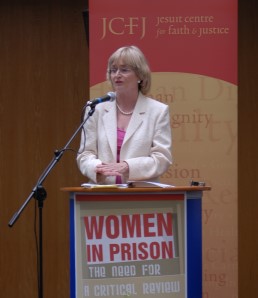
Women in Prison: The Corston Report

In March 2006, I was commissioned by the then Home Secretary, Charles Clarke MP, to undertake ‘a review of women with particular vulnerabilities in the criminal justice system’ of England and Wales. My report was published in March 2007.1 In December 2007, the Government issued an official response to the findings of the review.


23.6.08. Dublin. Mountjoy Prison. ©Photo by Derek Speirs

What Does God Think of Irish Prisons?

The April 2008 issue of Working Notes entitled, ‘Thornton Hall Prison – A Progressive Move?’, has inspired the following article, which is written from the viewpoint of Catholic theology. I have never been jailed myself; however, courtesy of the Department of Justice, Equality and Law Reform I had the privilege of visiting a number of Irish prisons some years ago. I also visit a friend who is currently serving a jail sentence.


Crime and Punishment: A Christian Perspective

At the height of the Northern Ireland Troubles, it was usual to distinguish between paramilitary prisoners and ODCs – ‘ordinary decent criminals’. The terminology is suggestive, even provocative: is it ever right to consider criminals as ‘ordinary’, much less ‘decent’? Certainly, it would be altogether wrong to trivialise the plight of victims, and especially victims of violent crime, by too lightly using a euphemism like ‘ordinary decent criminals’.


private-parking-cropped

Building Sustainable Communities – The Role of Housing Policy

The Barriers to Community Building sustainable communities is extremely difficult in Ireland today. In many urban areas, at least, the sense of community has almost disappeared. There are several reasons why this is so: First, increased mobility means that many people expect to move from one community to another and so may have fewer bonds… Read more »


working-notes-issue-58

Working Notes – Issue 58 Editorial

‘Women should be imprisoned only if the offences they have committed are of such seriousness that the protection of the public, or the interests of justice, require that they receive a custodial sentence’; ‘where women need to be imprisoned, they should be detained in small, geographically-dispersed, multi-functional custodial units, not large prisons’; ‘both custodial and… Read more »


Hospital or Prison? What Future for the Central Mental Hospital?

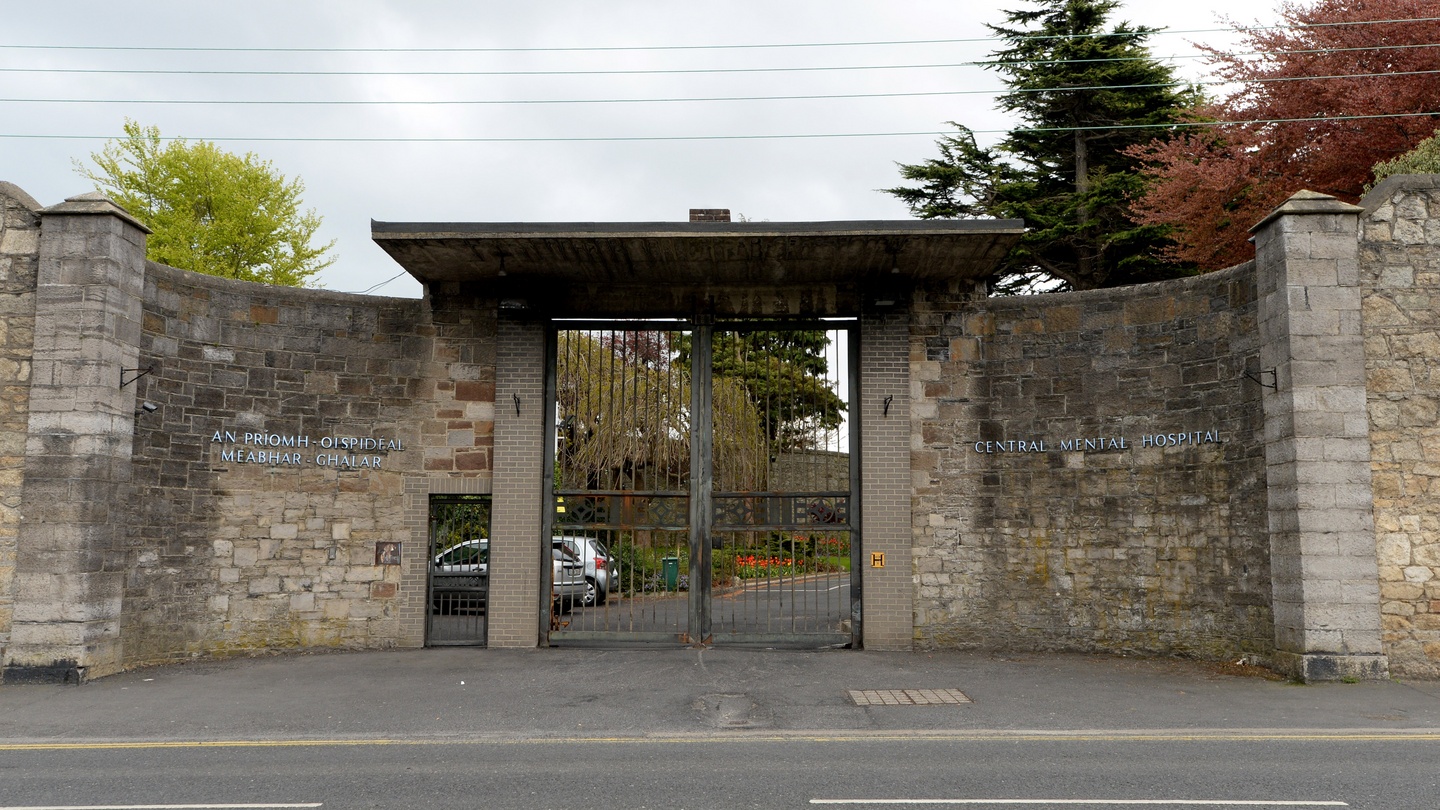
Introduction The Central Mental Hospital in Dundrum probably evokes a cold shiver in people as they pass by – that is, if they think about it at all. The perception of the hospital is influenced visually by the high walls, the imposing metal gates leading up a long avenue to another electronic gate, and the… Read more »


Is there a Need for the Women’s Prison to Move from Mountjoy to Thornton Hall?

Introduction The Report of the Committee of Inquiry into the Irish Prison System (the Whitaker Report), published in 1985, identified women in prison as a particularly vulnerable group. It recommended that, in so far as possible, women offenders should be given non-custodial penalties and that of those imprisoned the majority should be accommodated in an… Read more »


Ireland’s Women’s Prisons

Among Ireland’s fourteen prisons, there are two for female prisoners: one is the Dóchas Centre, the new female prison at Mountjoy; the other is located in the oldest prison in the country still in operation, Limerick Prison, a male prison where imprisoned women are accommodated on one corridor. Both are closed prisons. Prisons of varying levels of security, including open prisons, as are available for male prisoners in Ireland, are not provided for the female prison population.


4.11.06 Dublin Dochas womens Prison. ©Photo by Derek Speirs

The Ripple Effects of Imprisonment on Prisoners’ Families

To many in our society, the impact of imprisonment on prisoners and their families is a matter of little or no importance. In the face of everyday issues such as meeting financial demands, finding a balance between work and family commitments, and obtaining access to services in an inadequate health care system, the needs of prisoners and their families is not an issue of concern for many members of the public.


Gardaí and the Committee for the Prevention of Torture Reports

Introduction Towards the end of 2007, a young man, aged nineteen, from a deprived neighbourhood came to tell me that on the previous day he had been taken to a Garda Station for a drugs search, during the course of which he had beeng assaulted by several Gardaí. When no drugs were found on him,… Read more »


working-notes-issue-57

Working Notes – Issue 57 Editorial

In February 2008, the report on the Environmental Impact Assessment (EIA) of the proposed Thornton Hall prison complex was published. The scope of the Assessment did not extend to analysing in depth the impact of Thornton Hall on the prisoners who will be detained there. Yet the study’s Non Technical Summary confidently declared that: The… Read more »


Pedro Arrupe: Inspirational Jesuit Leader

Introduction Does it seem strange that the role model for a centre for business ethics and for a hostel for the homeless is the same person? The centenary of the birth of Pedro Arrupe has brought new interest in his life and work, which are being celebrated and commemorated this November, especially in his native… Read more »


What is Development? Promoting the Good of Every Person and of the Whole Person

The year 2007 marked the fortieth anniversary of the publication Populorum Progressio (The Development of Peoples), Pope Paul VI’s encyclical, and the twentieth anniversary of Sollicitudo Rei Socialis (The Social Concern of the Church), the encyclical issued by Pope John Paul II.1 In my view, commemoration of documents written many years ago is worthwhile only… Read more »


28.8.07. Leitrim. ©Photo by Derek Speirs

Homes not Hostels: Rethinking Homeless Policy

Most homeless people simply want a place they can call home. Some need varying levels of support to enable them to keep a home. But a key to their own front door is the symbol of the desires of homeless people.


How Much Equality is Needed for Justice?

Critics of Ireland’s decade-long economic boom often, with an eye to justice, express considerable concern about ‘rising inequality and about the core features of the strategy adopted by the Government to combat poverty’.1 This is so despite the fact that since 1994 the percentage of the population living in ‘consistent poverty’ appears to have fallen from 16 per cent to 7 per cent.2 However, since the late 1990s, ‘relative income poverty’ has persistently remained around 20 per cent, higher than it was in 1994.3 Would it be more just to return to a poorer but more equal Ireland, or is this the wrong kind of question to ask? Can we say instead that this is not a choice Ireland needs to make?