
Article Category: International Issues

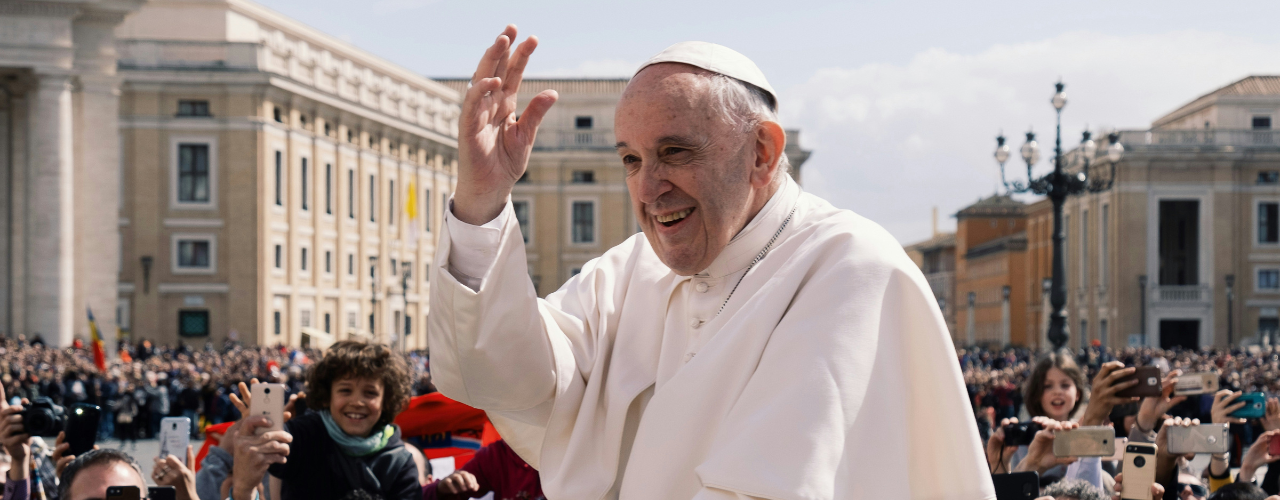
Pope Francis and his papacy: A turning point in Christian history?

Peadar Kirby Peadar Kirby is Professor Emeritus of International Politics and Public Policy, University of Limerick and Research Coordinator, Cloughjordan Ecovillage. His novel on the last of the Avignon popes, ‘Misean go Peñiscola’ won second prize in Comórtas Liteartha an Oireachtais 2024. The avalanche of tributes that followed the death of Pope Francis went far… Read more »
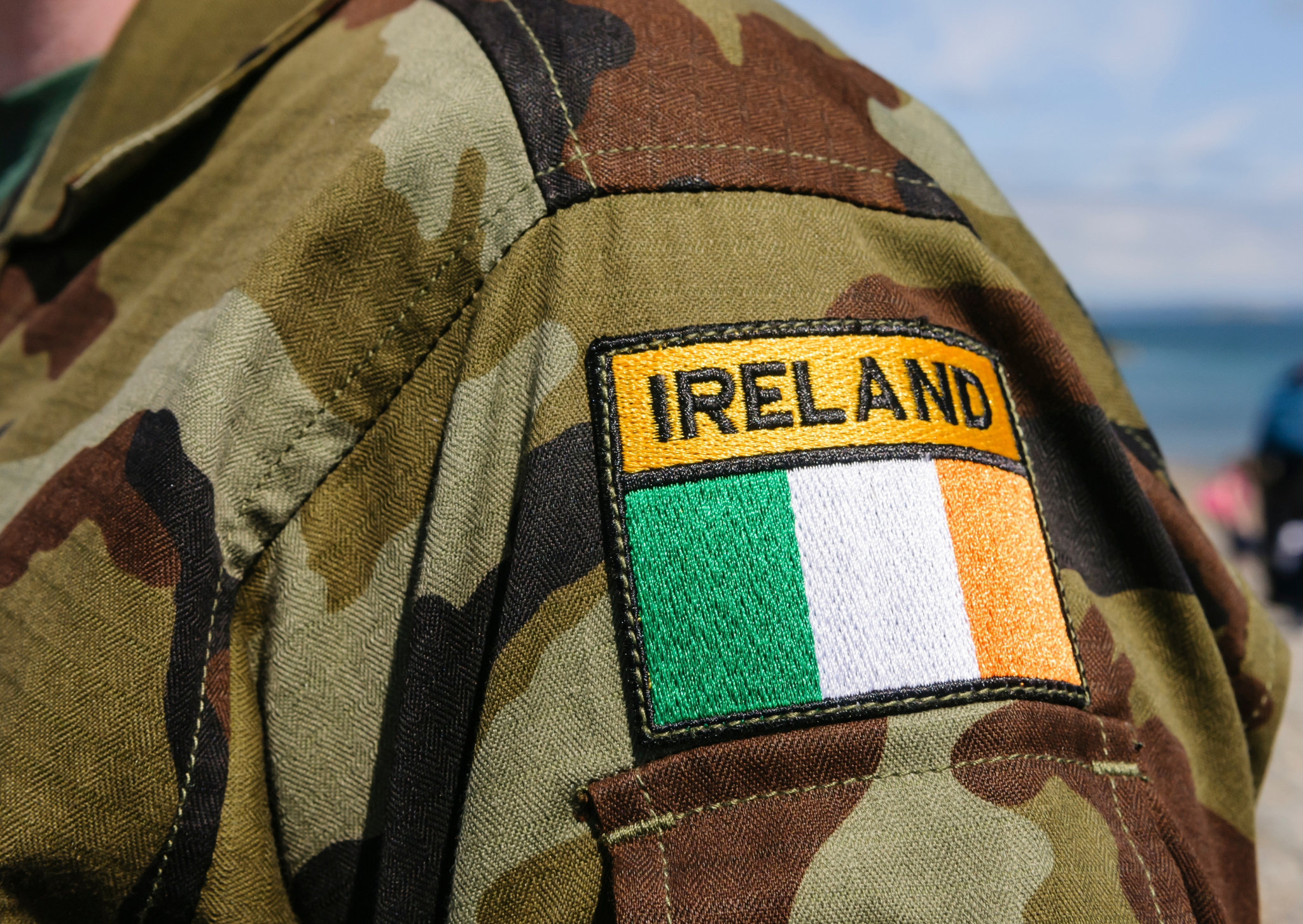
the arm of an Irish soldier with the Irish flag on their shoulder

Irish Neutrality, International Peacekeeping, and Policing

Prof. Tobias Winright Tobias Winright is Professor of Moral Theology at St. Patrick’s Pontifical University, Maynooth, and he is Associate Member of the Las Casas Institute for Social Justice, Blackfriars Hall, Oxford. INTRODUCTION: SITUATING IRELAND After visiting Ireland regularly for over 24 years, my family and I moved to Maynooth from the United States of… Read more »

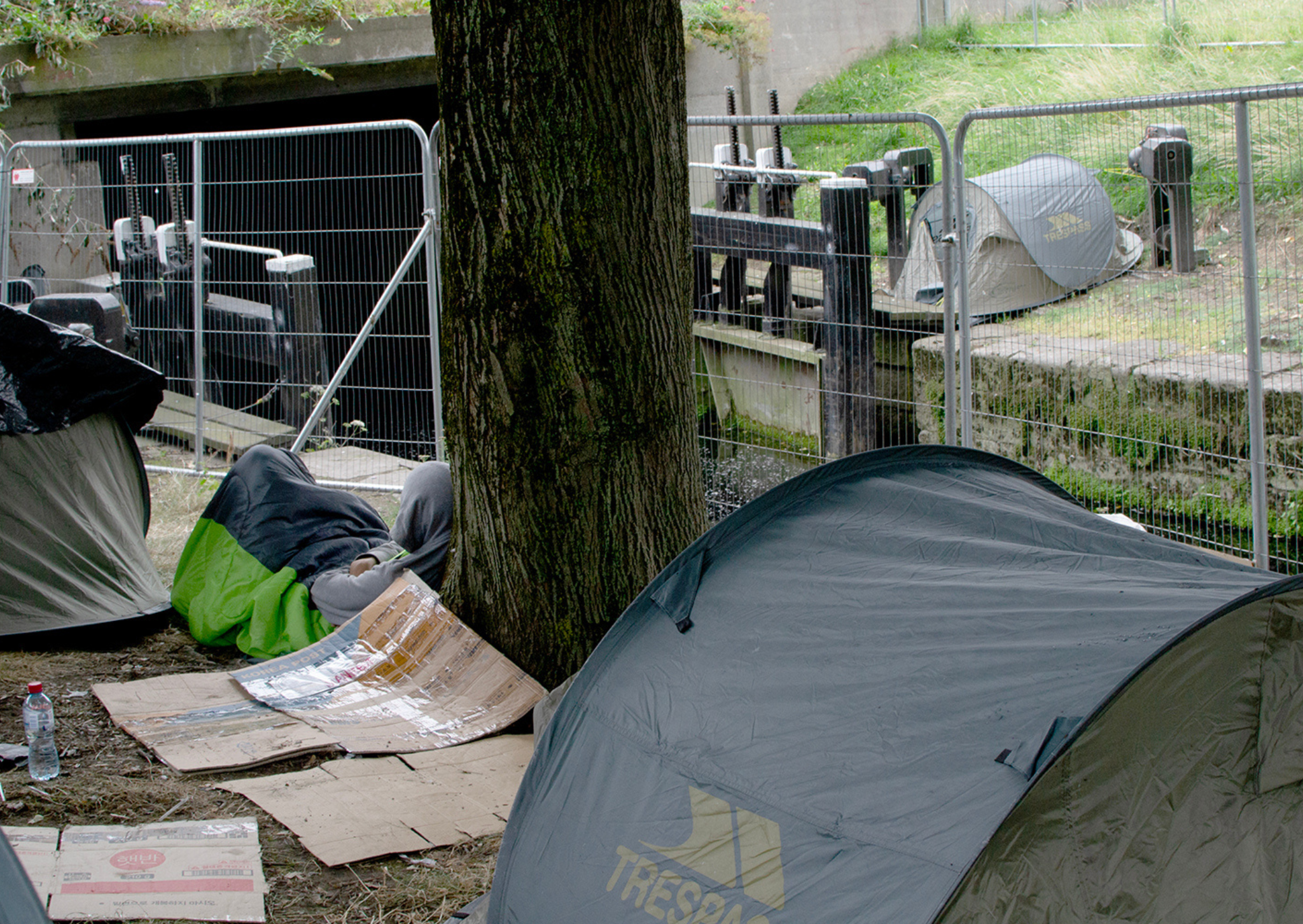
tents for refugees along the canals in Dublin

Well-Founded Fear of Reception in Ireland: No Accommodation, No Minimum Standards, No Red Lines

Eugene Quinn and David Moriarty Eugene Quinn is National Director of the Jesuit Refugee Service (JRS) Ireland, a position he has held since 2006. He was Chair of the Limerick Integration Working Group 2010-22. He was a member of the McMahon Working Group on the Protection Process, which reported to Government in June 2015. From… Read more »

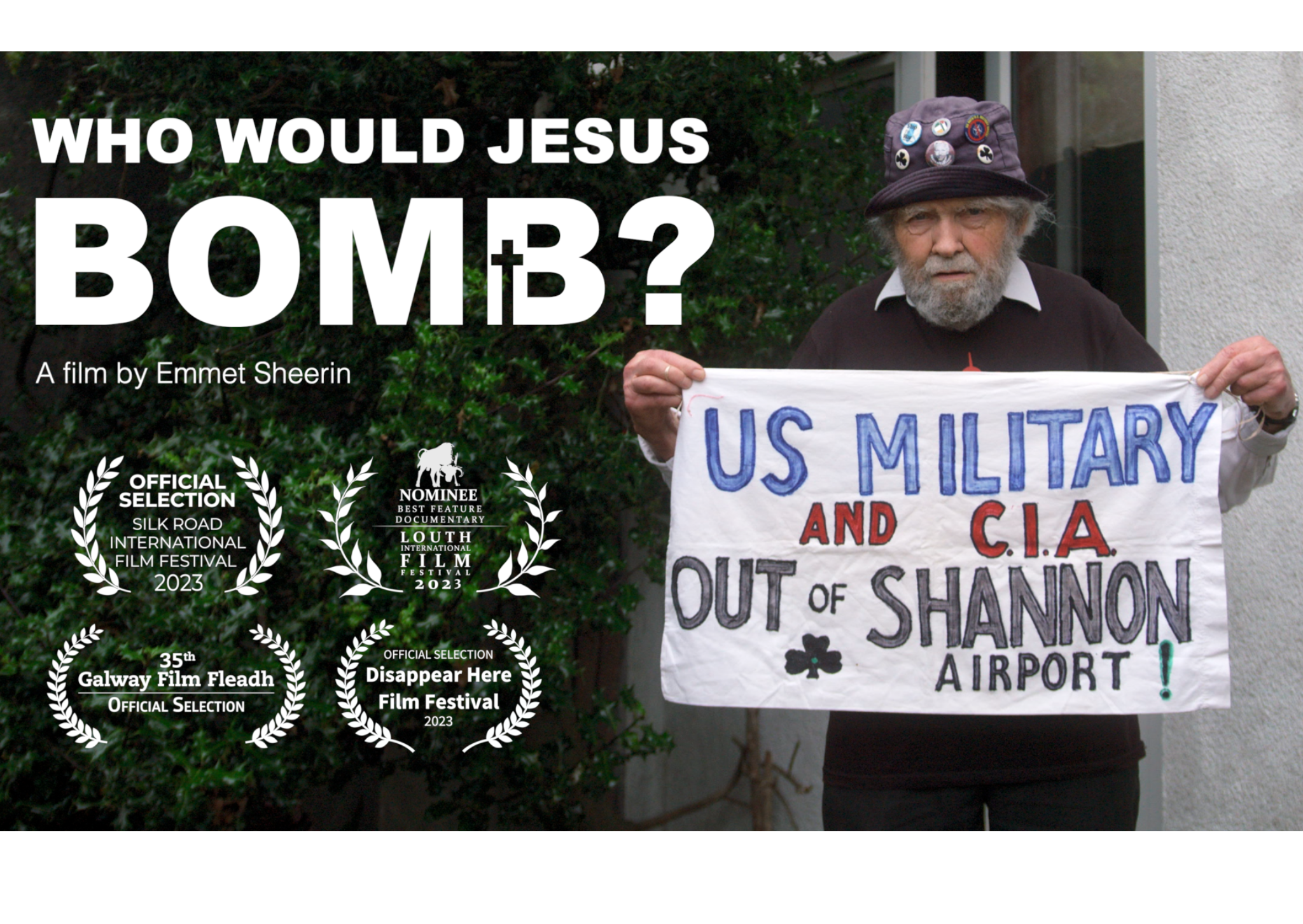
Who would Jesus Bomb? the poster for the short documentary that has an older looking gentleman holding a sign in protest of the Shannon airport allowing the US military to use it.

Can I Get a Witness: Who Would Jesus Bomb?

Dr Kevin Hargaden and Emmet Sheerin Kevin Hargaden is Director of the Jesuit Centre for Faith and Justice and its Social Theologian. Emmet Sheerin is an Irish documentary maker, he traveled to the Middle East as a human rights observer where his work involved monitoring and reporting on violations of human rights and international law.… Read more »

Working with Families from Direct Provision Centres in Cork

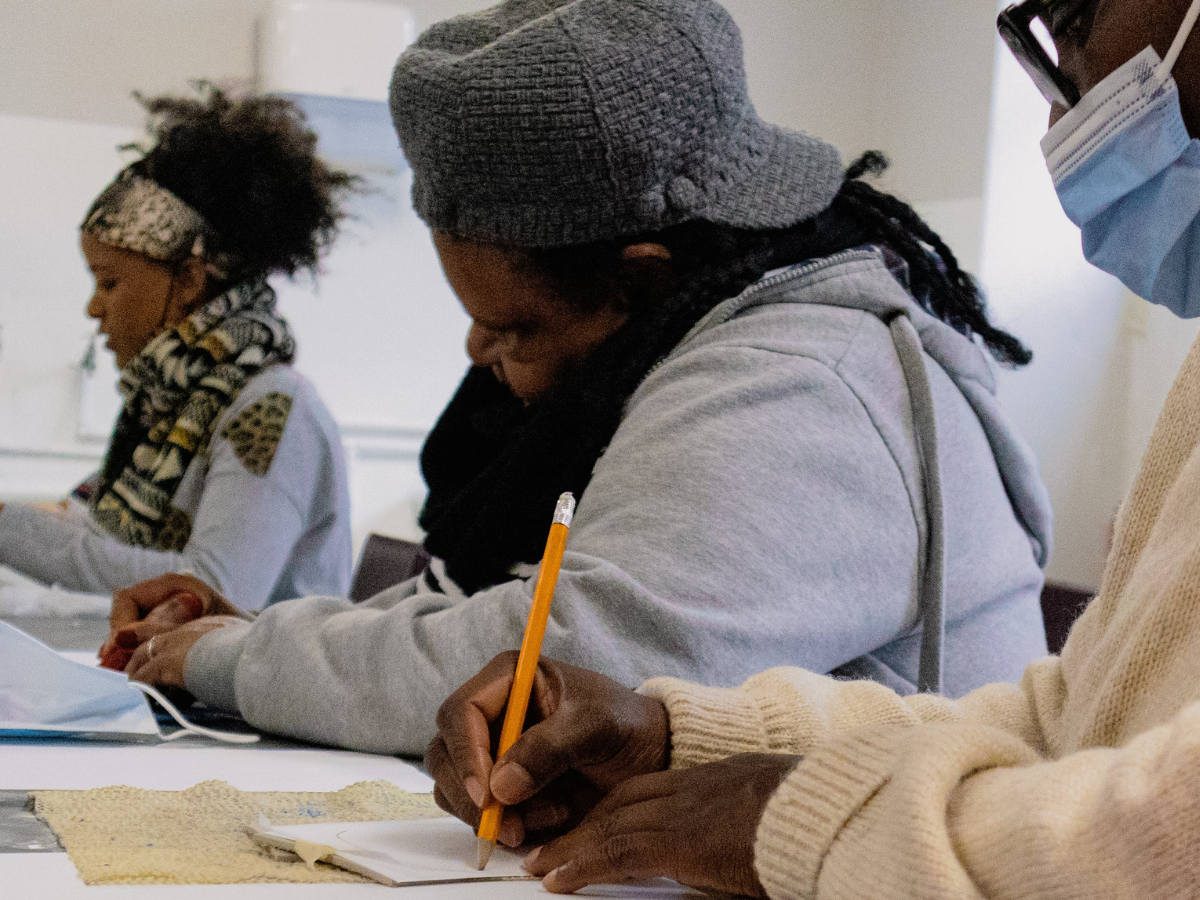
Several of the women I speak to tell me they were in Direct Provision for more than five years. They have had children in that time, children who still do not know anything other than sharing just one room with their family in an overcrowded centre full of people. When you have lived in an institution for a long period of time, the constraints can start to feel like safety. One woman tells me that she has had her papers for a couple of months and is preparing for the move out of the centre, but her relief at leaving is tinged with trepidation. At least in the centre, she says, there are always others to turn to, but “nobody looks out for you outside.”

Forced Displacement: Well-Founded Fear of Home

Global threats to human security and safety require a global response. On 17 December 2018, the UN General Assembly affirmed the Global Compact on Refugees (GCR).[16] The main objectives of the GCR are to: ease pressures on countries that welcome and host refugees; build self-reliance of refugees; expand access to resettlement in third countries; and support conditions in countries of origin for safe return. Undoubtedly, the GCR has admirable goals and a vision to effect positive change for refugees and forcibly displaced persons worldwide. However, the challenge is to ensure the high-level commitments translate into actions that address the needs on the ground and impact positively on the lives of forced migrants and their families.

A World of Flows, Woes and Foes: Growth, Capitalism and Climate Breakdown

That is the way we should be thinking about the planetary crisis, in terms of new opportunities for rethinking the good life, rethinking human relationships with each other, rethinking human relationships with the earth, and so on at this time. Contrast this to the dominant public discussion of this issue in terms of framing it (and therefore delimiting it) to a continuation of business as usual. The effect of this is to maintain capitalism, consumerism, and our lifestyles as they are now, but perhaps drawing on renewable energy to do so.

Forced Displacement in a Global Context

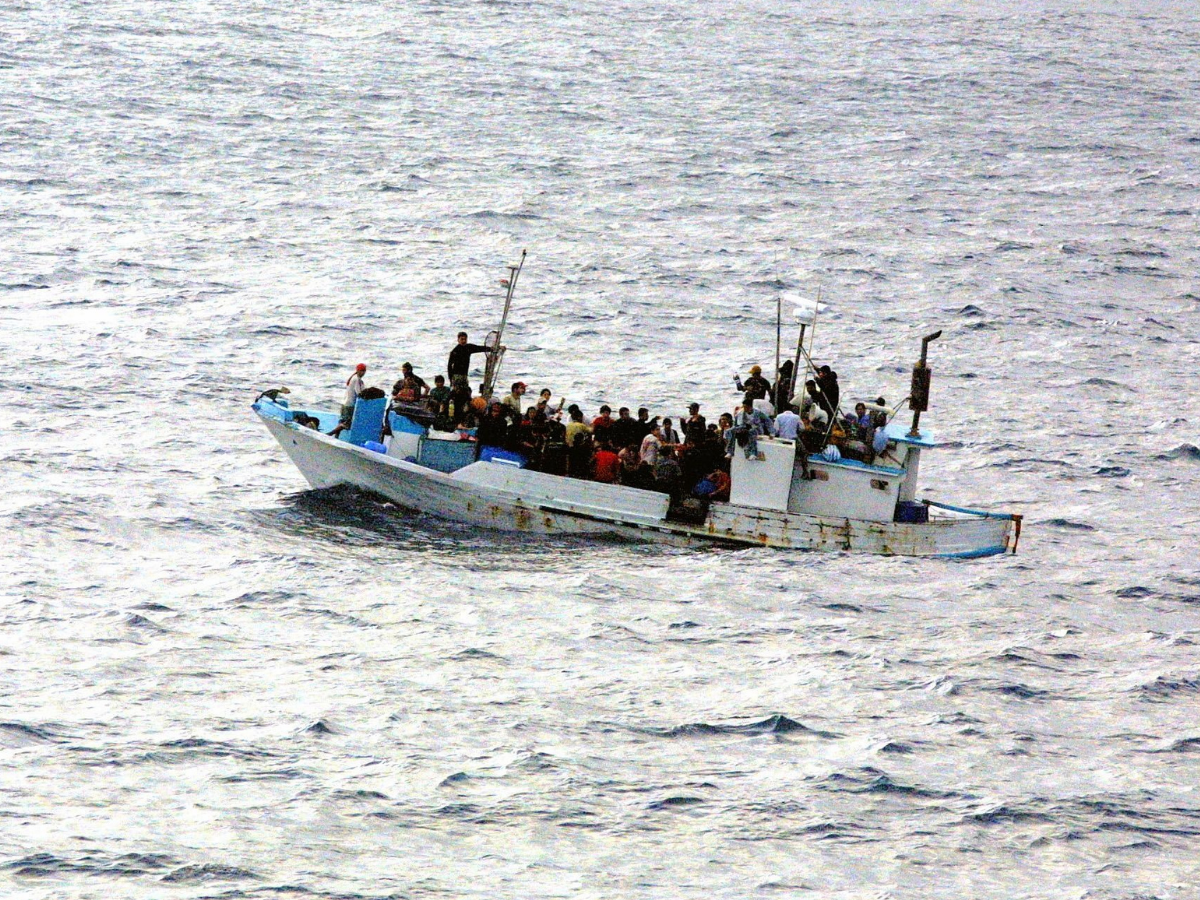
As the UN High Commissioner for Refugees (UNHCR) has recorded, between 1990 and 2010 there was a fairly consistent level of global forced displacement of between 30-50 million people per annum. However, the past 10 years have seen a significant increase in all forms of forced displacement, defined by UNHCR as displacement resulting from “persecution, conflict, violence, human rights violations or events seriously disturbing public order.”

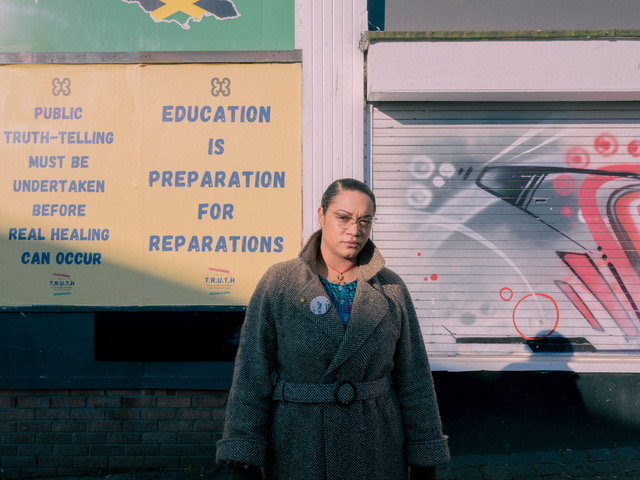
“I didn’t come to rock the boat, I was born in a boat that was already rocking”

“I tried to raise the point of who was Edward Colston, and why are these people saying the statue needs to come down? I was just floored, basically told to shut up, and that these people protesting were just ignorant and stupid. So, I just sat there crying silently and just feeling ostracised and disappointed because the other students were also not educated. So that’s where some of this began.”

Letter from the Director of the Jesuit Centre for Faith and Justice

  As we go to press with this issue of Working Notes, we at the Jesuit Centre for Faith and Justice are keenly aware of how the theme of “Integral Ecology” might appear distant from the pressing concerns of the pandemic. But appearances can deceive. While Pope Francis does not mention the risk of novel… Read more »

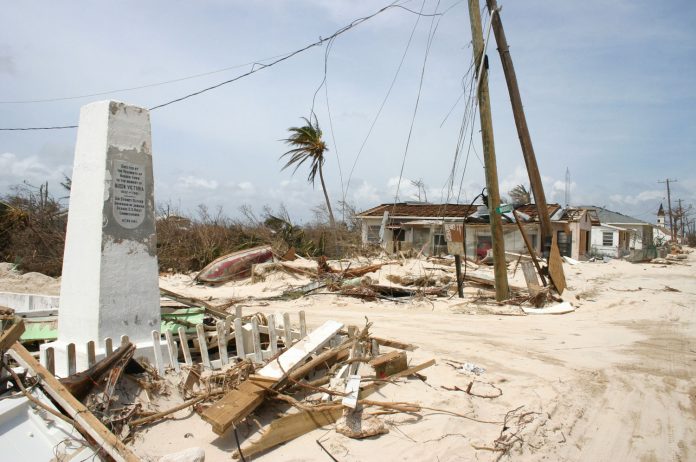
Debt Hurricane

Jubilee Caribbean (JCaribbean) is a newly formed non-governmental organisation, born out of the bigger Jubilee Campaigns from the turn of the millennium – Drop the Debt, Jubilee 2000 and Jubilee Debt Campaign – based in Grenada, but hoping to reach out to the wider English-speaking Caribbean islands. Due to our debt situation here, in the… Read more »

The War in Iraq – Is it still worth working for peace?

“It was an outrage, an obscenity. The severed hand on the metal door, the swamp of blood and mud across the road, the human brains inside a garage, the incinerated, skeletal remains of an Iraqi mother and her three small children in their still-smouldering car. Two missiles from an American jet killed them all –… Read more »

Interview with Pat Cox, Former President of the European Parliament

Edmond Grace: Over the past year you have spent some considerable time in Ukraine as EU observer to the Timoshenko case. How is the EU seen in that country? Pat Cox: For many Ukrainians, especially the young, their idea of Europe is of modernisation, values, the rule of law – especially the fight against corruption – and… Read more »

Interview with James K. Galbraith

Jean Merckaert and Solange de Coussemaker: You are aware that Italy, Spain and Portugal made the choice for Europe in order to distance themselves from their fascist past. Fifty years on, we are witnessing a strong rise of extremists in advance of elections. Has Europe lost its soul? James K. Galbraith: This is a real danger. The… Read more »

Elections 2014: A Turning Point for the European Social Model

For many people, particularly those struggling to make ends meet, the European Parliament elections can seem very remote from the reality of their lives. It is tempting to either ignore the elections entirely or use them to make a statement about national politics or the personality of candidates. This would be a mistake. Over the… Read more »

destitution

Bridging the Protection Gap: Immigration Detention and Forced Migrant Destitution

Introduction Asylum and migration has been at the forefront of European Union policymaking for many years, but especially so during the last decade. The gradual enlargement of the Union and the disappearance of internal borders has obliged national governments and EU institutions to fundamentally re-think how refugees and migrants are welcomed into European society. Indeed,… Read more »

Ogujebe camp-MRaper

The World Mobilised: The Jesuit Response to Refugees*

Three core insights came together for Fr Pedro Arrupe SJ when he launched Jesuit Refugee Service 30 years ago this week. The first compelling factor was his compassion for the refugees in their suffering. He wrote to the Society on 14 November 1980 ‘…last year, struck and shocked by the plight of thousands of boat people and refugees, I felt it my duty…,’.

Europe: What is Pope Benedict Thinking?

It may seem strange, as Ireland prepares for its second vote on the Lisbon Treaty on October 2, 2009, to focus on the vision of Europe of the current pope. After all, are his views not essentially religious and are Ireland’s concerns with Lisbon not, in the main, economic, social and political? At first glance,… Read more »

Towards the Lisbon Treaty Referendum: The View from Europe

The title proposed to me implies a double focus: actually, a double double focus. If the rest of this edition of Working Notes offers perspectives on Europe, my task is to discuss perspectives from Europe. Two doublets are implicit in the title: ‘The view’: but whose view? The view of the political establishment in Brussels?… Read more »

From LIBERTAS to CARITAS

Euro barometer surveys consistently show that Irish people have a positive attitude towards the European Union. Research on how people voted in the referendum on the Lisbon Treaty found that this positive attitude was the strongest single factor affecting people’s voting decisions.1 It also found that a low level of knowledge of what was in… Read more »

Taking Our Rightful Place Ireland, the Lisbon Treaty and Democracy

The Irish electorate has voted in favour of many European treaties since the original treaty of accession in 1971. Until the Nice Treaty any deal struck by Irish negotiators with their European partners included generous financial incentives. These incentives are indisputable and easily grasped. They have been our point of entry into Europe up till now and no other vision has been offered by our political leaders, who now have left it too late to redeem their failure of leadership. They have appealed too often and too eagerly to narrow self-interest and, as a result, they have lost the ability to inspire any generous sentiment.

Ireland, Europe and Catholic Social Teaching: Shared Values?

In May this year, on the last stretch of the ancient pilgrim route to Santiago de Compostela in Spain, etched on a large stone, for all to see, were the words ‘No Irish in EU’. The pilgrim route celebrates St James the Apostle and has been walked by Christians for well over a thousand years, and by Kerrymen since the 1400s!1 Given the history of Irish Christianity, and its importance in the founding of Europe from the 6th century, it shocks to realise that in 2009 there are people who do not want us in the European Union.

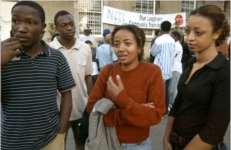
29.8.05. Dun Laoghaire. Participants in the Dun Laoghaire Refugee Project and P+L+U+S Appeal (Please Let Us Stay)- Leave to Remain for Aged-Out Minor Asylum Seekers- meet in Dun Laoghaire. Here Simret Teka speaking with Mekedelawit Solomon on her left and (on her immediate right-behind) Johnson Godwin. ©Photo Derek Speirs

Hidden Children: the Story of State Care for Separated Children

During the past ten years, over 5,300 children have come to the attention of the authorities in Ireland, having arrived here without the company of either of their parents. Many of these children, referred to as ‘separated children’ or ‘unaccompanied minors’, have experienced war and violence; some have been trafficked or smuggled into Ireland. They come from a wide range of countries, including Nigeria, Somalia, Ghana, Angola, Rwanda, China and parts of the Middle East and Eastern Europe.

Migration

In its report, Migration in an Interconnected World, the Global Commission on International Migration noted: International migration has risen to the top of the global policy agenda. As the scale, scope and complexity of the issue has grown, states and other stakeholders have become aware of the challenges and opportunities presented by international migration.

Ireland’s Asylum System – Still a Shambles?

Introduction Having worked overseas for more than ten years, I returned to live in Ireland in 1997. In the years during which I was away, both the pace and the scale of change in this country were significant; over the subsequent decade, however, they have been even more dramatic. Nowhere has this been more evident… Read more »