
Article Category: Housing Policy

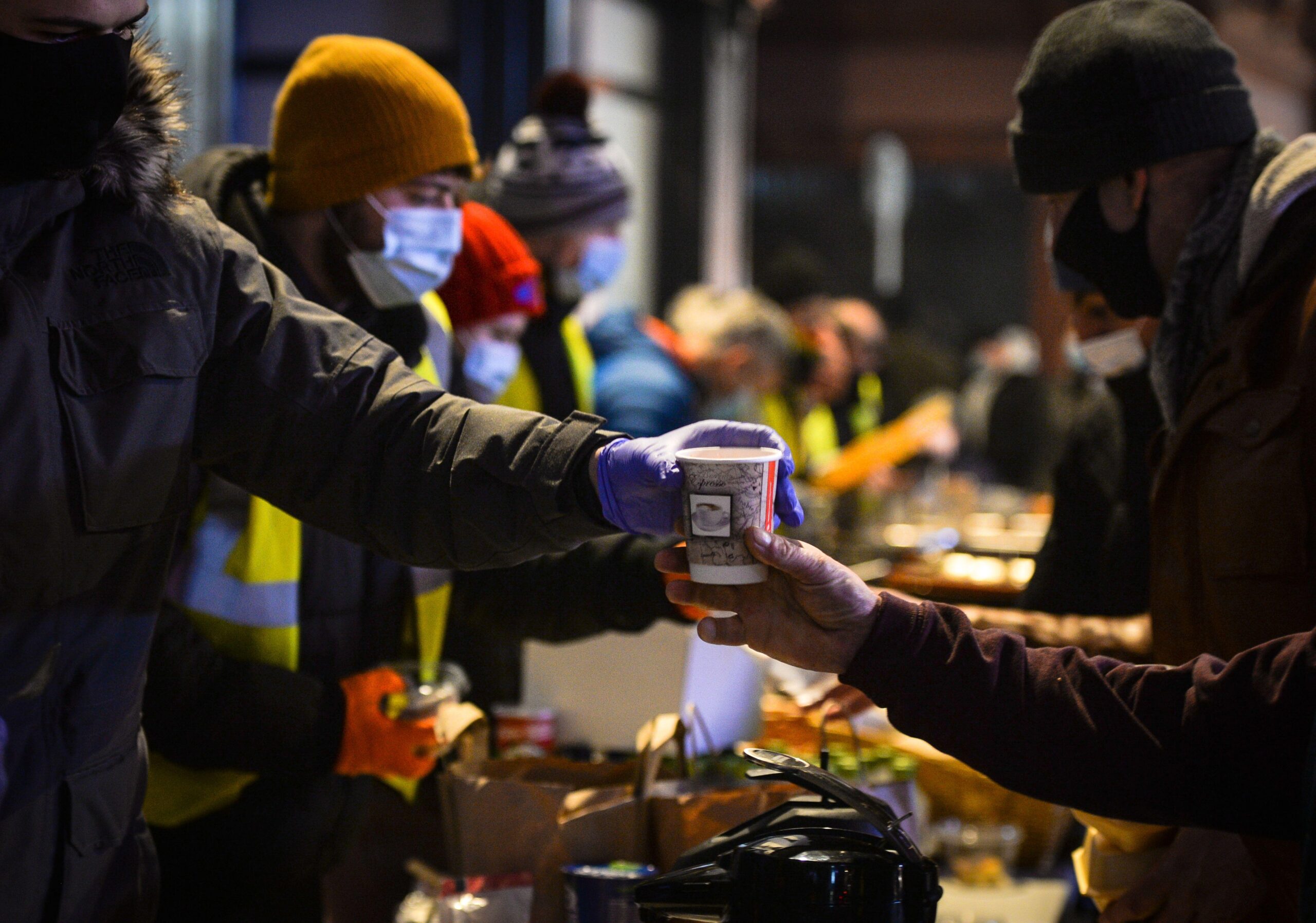
Food Provision for People Experiencing Homelessness: An International Snapshot

Divya Ravikumar-Grant in association with Professor Saoirse Nic Gabhainn and Professor Colette Kelly Affiliation: Health Promotion Department, University of Galway Divya Ravikumar-Grant is an assistant lecturer in health promotion and nutrition at ATU Sligo. She is a registered dietitian with a master’s in health promotion. Divya has also worked as a researcher on several health… Read more »

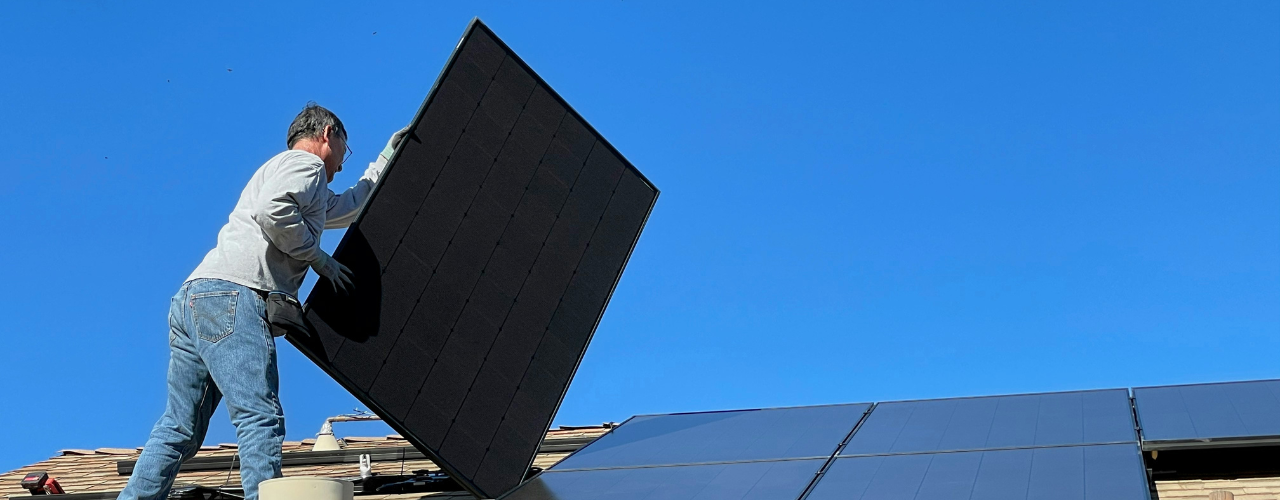
Buildings and climate change: How building decarbonisation can help mitigate climate change

Davide Dell’Oro SJ Davide Dell’Oro, SJ is an Italian priest of the Society of Jesus. He is currently a visiting scholar at Politecnico di Milano, where he researches building decarbonisation and climate change mitigation and adaptation. He has a Ph.D. and an MSc in Civil Engineering-Architecture from Politecnico di Milano. He was a visiting scholar… Read more »

Ireland in Crisis – How Can Intelligent People Be So Stupid

Views from Above and Below Ireland is at a crossroads, indeed it is in crisis. But the cause of the crisis is not some external agency or force. The cause of the crisis is within. There are two ways of looking at Ireland’s economic fortunes. There is a view from the top and a view… Read more »

Raising the Social Wage

Written by Dr. Laura Bambrick Dr Laura Bambrick is the Social Policy & Employment Affairs Officer at the Irish Congress of Trade Unions. Congress is the umbrella body for 46 unions and seven associate members, representing over 700,000 workers and their families, and the largest civil society organisation on the island of Ireland. Introduction The… Read more »

Where Is My Mind: Traveller Accommodation and Mental Health

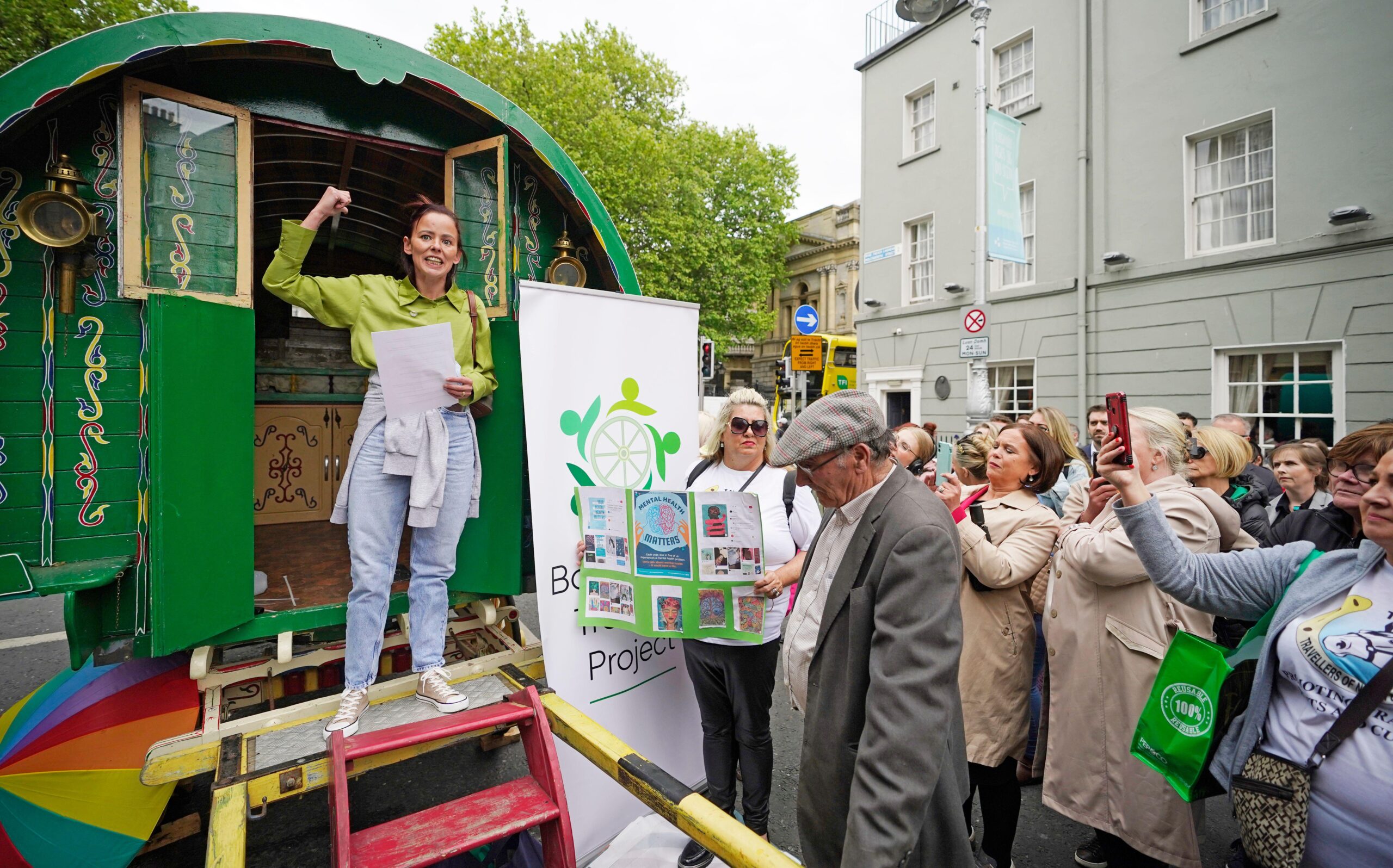
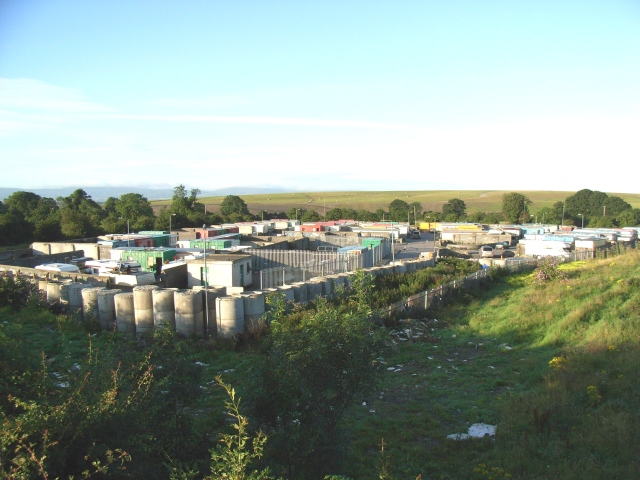
Many Travellers continue to live on sites such as the ones described above, motivated by a deep cultural yearning for proximity to kin, and for some it is preferable than to be placed in a house, in a hostile housing estate, many miles from anyone who knows them, cares for them or will support them. The family, including respect for the older generations and the celebration of marriage and children, is at the heart of Traveller culture. The importance of these values cannot be overstated, and in a context where Travellers find themselves excluded from mainstream services that the settled community take for granted, the safety of the family unit becomes ever more important.

Power Issues: Energy Poverty in Irish Traveller Communities

“I can’t afford to keep the place warm. The second the heater goes off it’s freezing, there’s no double glazing, no insulation. The children go to bed early with extra blankets, it’s the only way to keep them warm […] I sit up with a candle rather than turn on the lights because I can’t afford the electric.”

Rehabilitating Vacancy

Most people identify vacancy and dereliction based on how something looks – whether it is run down, in poor condition, or unoccupied. While this is undoubtedly a quick way of spotting buildings and sites in need of attention, it excludes properties that might be vacant or derelict but don’t match these subjective aesthetic registers – perhaps not visible from street level or where exteriors are maintained. In some cases, a neighbour might mow the lawn of an adjacent vacant home to avoid it becoming an eyesore. Likewise, vacant units in apartment buildings can be especially difficult for anyone assessing vacancy from the street level.

Editorial

I have suggested that rehabilitation is a noble pursuit because it is a creative act and requires vision and imagination. But these insightful essays, taken as a whole illustrate that rehabilitation is an act of hope.

Co-op Care – the Case for Co-operative Care in Ireland

Co-operatives in the care industry are currently not the norm in Ireland and suffer from their niche position. For the potential of elder care co-operatives to be fulfilled a number of supports and initiatives would need to be implemented.[35] These include support from other co-operatives, increased awareness of co-operatives among care beneficiaries and care sector providers and greater support from the State.

Housing Rights for Disabled People

At present there are few options for disabled people to acquire the necessary supports to live independently. This is having a significant impact on disabled people and their families. Disabled people are aging in the family home with their parents. There is a denial of a right to live independently, coupled with an onus on families to provide care when they are aging.

Editorial

Reading these essays, the threads that interconnect the different elements of care in our society are clear. When you lack care for one aspect of existence it is easy to imagine this seeping into all other areas.

Working with Families from Direct Provision Centres in Cork

Several of the women I speak to tell me they were in Direct Provision for more than five years. They have had children in that time, children who still do not know anything other than sharing just one room with their family in an overcrowded centre full of people. When you have lived in an institution for a long period of time, the constraints can start to feel like safety. One woman tells me that she has had her papers for a couple of months and is preparing for the move out of the centre, but her relief at leaving is tinged with trepidation. At least in the centre, she says, there are always others to turn to, but “nobody looks out for you outside.”

100 Years of Irish Housing

Housing ownership in Ireland has bestowed an enduring set of values. But if there is any lesson from 100 years of Irish housing it is that housing policy can diminish, or it can reinforce, social and economic inequality.

“Family Hubs”: Lives on Hold

Jesuit Centre for Faith and Justice · “Family Hubs” Lives On Hold Introduction Many policy changes in Ireland in recent years have been launched and branded in terms of “hubs”. The language and proximate adjectives are attractive to policymakers. Hubs are innovative, dynamic, and quick to change and adapt to new opportunities and potential. Yet,… Read more »

In Evidence We Trust

As the community and voluntary sector is increasingly shaped by the need to constantly generate evidence of outcomes, practitioners can become attuned to the expectation of the “knowledge” which should be produced.

Ageing, Risk and Housing in Ireland

In the early 1990s, Professor Anthony Clare addressed a Dublin conference audience of some 300 people. It was an inspiring address and among the words that resonated were the following: “‘The elderly’ are not ‘them, out there’; ‘the elderly’ are us, writ large writ later.” Pithy and fundamentally true, it is a good starting point… Read more »

Lifelong Harm of Trauma and Homelessness

Dalma Fabian INTRODUCTION Rates of homelessness are rising in almost all EU countries with a 150% increase in Germany from 2014 to 2016, a 20% rise in the number of people in emergency shelters in Spain over the same period, and an 8% increase in Denmark between 2015 and 2017. In the Netherlands 4,000 children… Read more »

Crisis Ruins and their Resolution? Ireland’s Property Bubble Ten Years On

Cian O’Callaghan Cian O’Callaghan is Assistant Professor of Geography at Trinity College Dublin. His recent research, which was funded by the IRC, has concerned the impacts of Ireland’s property bubble and associated crisis, with a particular focus on housing. What your sandwich says about you In a well-known advert for Bank of Ireland, a young… Read more »

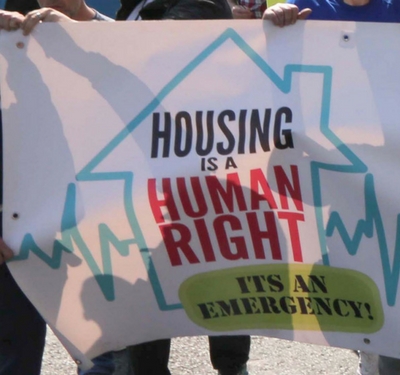
housing-is-a-human-right

A Constitutional Right to Housing – A Tale of Political Sidestepping

Jerome Connolly IntroductionThere is in the Sherlock Holmes canon a particular and often-quoted phrase which comes to mind when scrutinising the housing policies of successive Irish governments over the last two decades. The phrase refers to an incident concerning a dog guarding stables from which a racehorse had been stolen during the night. The curious… Read more »

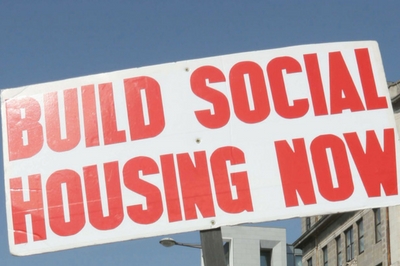
build-social-housing-now

Homelessness and Social Housing Policy

Peter McVerry SJ, Eoin Carroll and Margaret Burns Homelessness The Continuing Rise in Homelessness The most disturbing aspect of the current housing crisis is, of course, the extent to which individuals and families are experiencing homelessness. While homelessness has been rising since at least 2013 there has been a particularly marked increase since 2015. As… Read more »

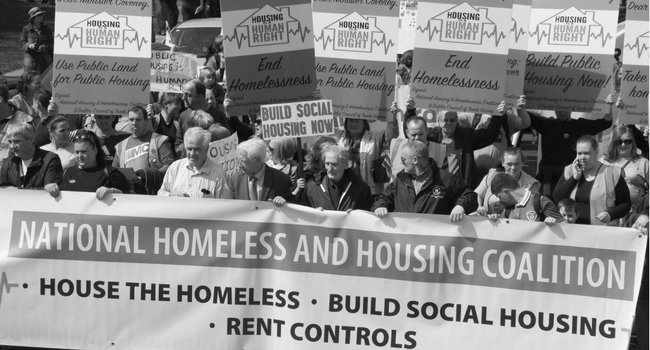
house-the-homeless

Rebuilding Ireland: A Flawed Philosophy – Analysis of the Action Plan for Housing and Homelessness

Margaret Burns, P.J. Drudy, Rory Hearne and Peter McVerry SJ Introduction Providing affordable, quality and accessible housing for our people is a priority … The actions of the New Partnership Government will work to end the housing shortage and homelessness. (Programme for Government, May 2016) Against a background of deepening public concern about the increasing… Read more »

cover-issue-80

Working Notes – Issue 80 Editorial

When Ireland became an independent State it inherited some appallingly bad housing conditions. This was most notoriously the case in the severely deprived areas of inner-city Dublin, but inadequate and overcrowded housing which lacked basic facilities was also prevalent in towns and villages and rural areas around the country. Over the following seven decades, significant… Read more »

Catholic Social Teaching and Housing

‘Have youse (yis) no homes to go to?’ – the traditional, plaintive cry of long-suffering publicans, trying to clear their premises after closing time, can sound somewhat hollow and ironic to many in today’s Ireland. We live at a time when housing supply does not meet demand; when, in the wake of the collapse of the property bubble, home-owners may struggle to meet mortgage repayments and many fear re-possession; where those in negative equity may find themselves unable to move from their current home even when there are pressing family or financial reasons for them to do so; where waiting lists for social housing are at an alarmingly high level, and where many are unable to access or remain in private rented accommodation because of unaffordable increases in rents in many areas.

buy_rent

The Private Rented Sector: the Case for Regulation

In the past, those with good jobs and reasonable incomes in Ireland might have aspired to purchase a home. However, after a short few years of house price falls subsequent to the economic crash in 2008, the purchase price of houses has been escalating again, meaning that owning a home may now be impossible even for households that are relatively well-off. Therefore, they have no option but to rely on accommodation provided by private landlords.

House Keys on Stack of Money isolated on a white background

Recent Trends and Developments in the Owner-Occupier Sector in Ireland

Cathal O’Connell and Joe Finnerty Introduction This article examines the recent experiences of the owner-occupier sector in Ireland, with reference to historic trends in home-ownership, the impact of the economic crash on the housing system and the consequences that followed, and the current and pending challenges faced by the sector. Given the links between the… Read more »