

Article Category: Penal Reform

Consuming Injustice: Food and Irish Prisons

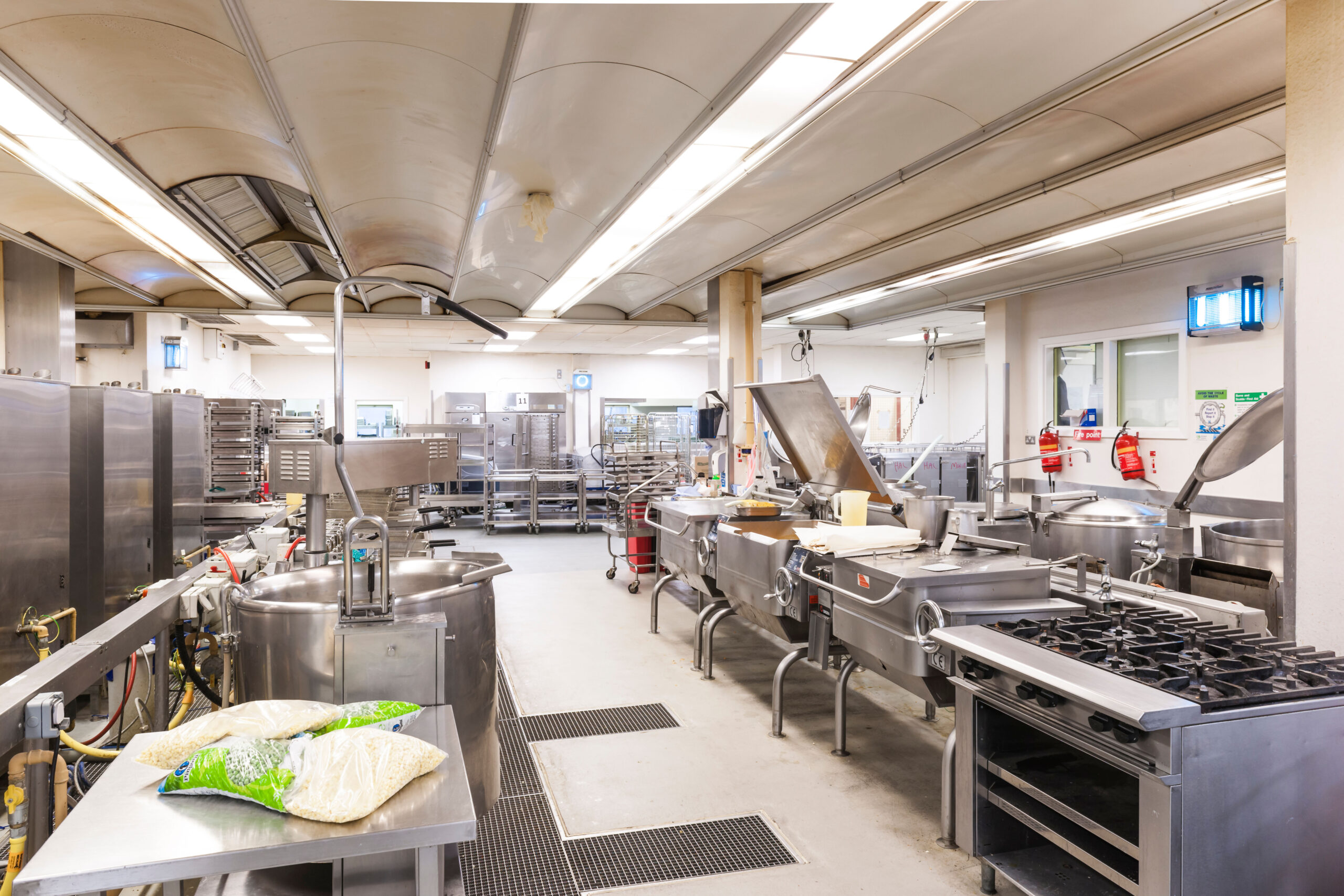
Keith Adams Keith Adams is Penal Policy Advocate at the Jesuit Centre for Faith and Justice, Dublin, and a doctoral candidate at Leuven Institute of Criminology. NOT ONLY CALORIES Every aspect of prison life is subject to rules. Whether the rules or standards are applied fairly, promptly, or in good faith is for an entirely… Read more »

Penal Reform    

From Philanthropy to Solidarity: Diverse Expressions of Prisoner Advocacy and Support

Introduction As soon as the modern prison was established, concerns about the treatment of prisoners were expressed from many quarters. With a focus on Irish prisons and prisoners, this essay examines some of the people and organisations involved who conveyed compassion for the plight of prisoners, advocated for improved prison conditions, and supported penal reform.… Read more »

Penal Reform    

the arm of an Irish soldier with the Irish flag on their shoulder

Irish Neutrality, International Peacekeeping, and Policing

Prof. Tobias Winright Tobias Winright is Professor of Moral Theology at St. Patrick’s Pontifical University, Maynooth, and he is Associate Member of the Las Casas Institute for Social Justice, Blackfriars Hall, Oxford. INTRODUCTION: SITUATING IRELAND After visiting Ireland regularly for over 24 years, my family and I moved to Maynooth from the United States of… Read more »

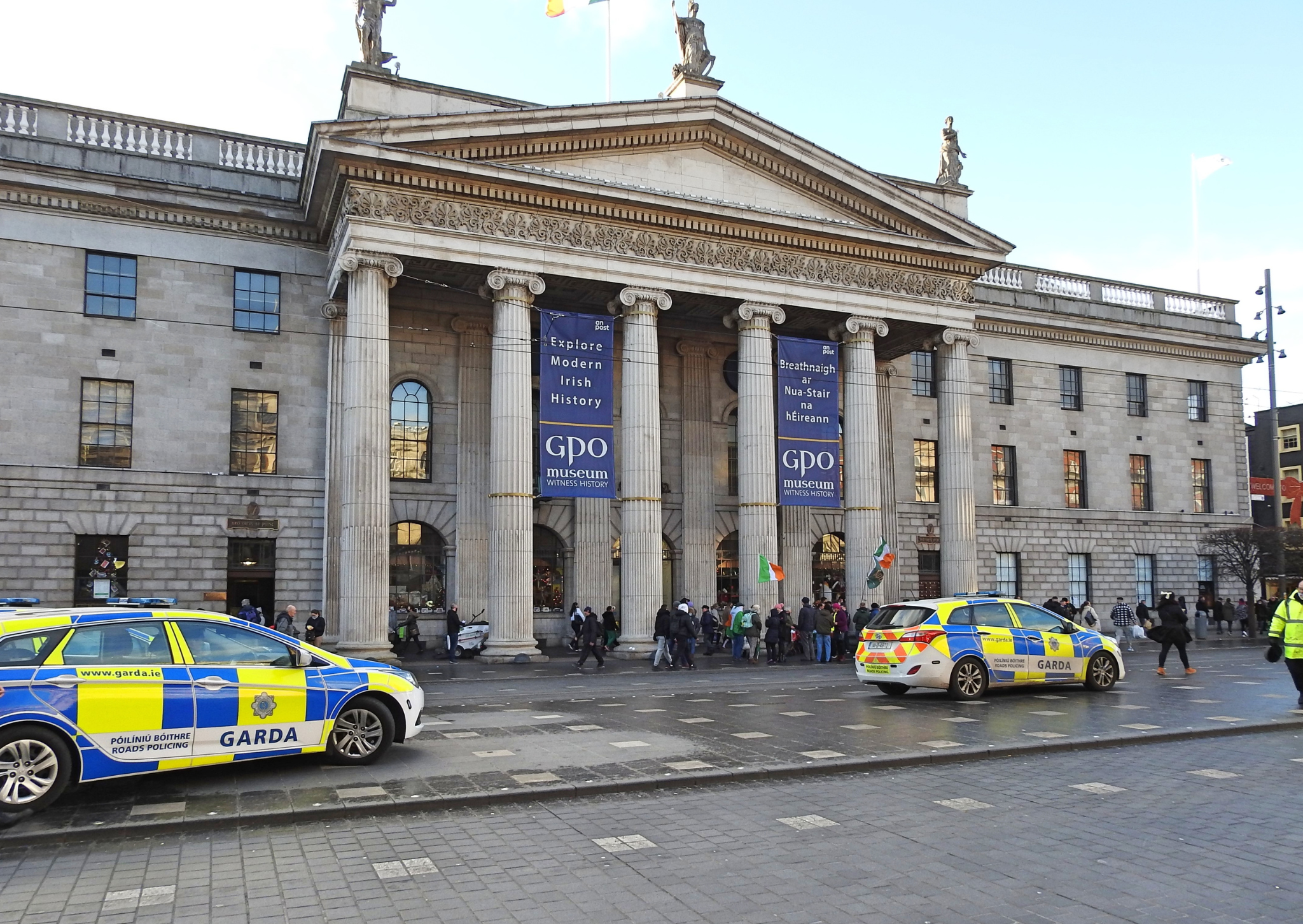
two Garda Cars parked outside the GPO Museum

Stretched to the Limit: Policing in Dublin’s North-East Inner- City

Children’s access to an illicit drug free
environment is not possible. There are knock on
effects for their life chances – restricted
education opportunities or a pathway to
serious crime. As the neglect of these areas
continues, the illegal drug industry could
become integral to the economy of the
area

Irish Travellers and Prison: Discrimination, Education, and Lateral Violence

Travellers are loose threads in the fabric of Irish society. They exist at the edges rather than being interwoven into the whole. This is often excused by settled people as being their choice, and even their fault. We have all heard about, and read about in the media, Travellers’ propensity to crime and disruption. But what we don’t hear about is Travellers’ struggles to exist and find their place in a society that was designed for a settled lifestyle.

Prisoner Rehabilitation: Challenges, Risks Upon Release, and Barriers to Integration

A decision on parole for an applicant is to take into account that the parole applicant “has been rehabilitated and would, upon being released, be capable of reintegrating into society.”[13] However, the 2019 Act does not contain a definition of rehabilitation, or how it is to be measured, so both parole applicants and Parole Board members may be in the dark as to the basis on which decisions are to be made in terms of rehabilitation, despite the several other factors on which their decision is made being based in law. The Act creates legal uncertainty about rehabilitation by omitting to define it.

Penal Reform    

“Advise, assist and befriend”: Client Perspectives on Probation from the 1980s to Present-day

“Advise, assist and befriend” was first introduced into the Irish probation lexicon under the Probation of Offenders Act 1907 which was enacted prior to Ireland’s independence from Britain. Section 4 of the Act provides that the probation officer must ensure that the person under supervision abides by the terms of their order and in doing so is required to “advise, assist and befriend” them. 

Editorial

I have suggested that rehabilitation is a noble pursuit because it is a creative act and requires vision and imagination. But these insightful essays, taken as a whole illustrate that rehabilitation is an act of hope.

A Year in Irish Prisons: Chaplains’ Annual Reports

The determined efforts and commitment of Prison Chaplains in the difficult working environment of prisons is clearly evident. While the support of the Irish Prison Service for chaplaincy is regularly acknowledged, the annual reports also highlight shortcomings within the prison system and the wider criminal justice system. 

Editorial

Reading these essays, the threads that interconnect the different elements of care in our society are clear. When you lack care for one aspect of existence it is easy to imagine this seeping into all other areas.

How I[reland] Learned to Stop Worrying and Love the Prison

The distinction of the Irish pastoral penal policy was, first, the prisoner was viewed not as a defective person with skewed attitude and amoral values. Instead, they were understood as someone who most likely had fallen on hard times, crime was seen as a result of poverty and a lack of opportunity, which was felt to be endemic in Ireland. There was empathy with the prisoner.

Penal Reform    

False Accounting: Why We Shouldn’t ask People Who Commit Crimes to Pay their Debts to Society

It does not work to replace ‘paying your debts’ with ‘repairing the harm’, then. Drawing on the work of penal theorist Antony Duff, we suggest the metaphor of “fulfilling a civic obligation” as an alternative tool to guide our responses to crime. Duff argues that, done very differently, “criminal punishment could and should be inclusionary, as something we can do, not to a ‘them’ who are implicitly excluded from the (law-abiding) community of citizens, but to ourselves as full, if imperfect, members of that community.”[15]

Confines, Wards and Dungeons: Some Reflections on Crime and Society in Times of Covid-19

Jesuit Centre for Faith and Justice · Confines, Wards And Dungeons “Denmark’s a prison”, says Hamlet in Shakespeare’s play. “Then is the world one”, Rosencrantz responds. To which Hamlet replies: “A goodly one; in which there are many confines, wards and dungeons.” The analogy between a given society – or even the world – and… Read more »

Penal Reform    

crime_and_prison

Understanding Crime in Prison

Beth Duane INTRODUCTION Prison life in Ireland is not exempt from crime. While the common belief holds that a person receiving a custodial sentence will be stripped of opportunities to commit crime, research has shown that this is not always the case. Although little is known about the prevalence of crime in Irish prisons, violence… Read more »

Penal Reform    

crime_and_sin

Theological Reflection: Remembering the Gap Between Crime and Sin

Kevin Hargaden INTRODUCTION While in the popular imagination, crime and sin tend to be joined in the same universe, when we look to the Christian tradition, we find a much more nuanced account of how these two concepts relate. While few would object to discussions of criminality, there is a knee-jerk hesitancy to engage any… Read more »

A More Humane Approach to Addressing Harm

Tim Chapman INTRODUCTION The core value of the common good, which sustains community and justice, is being eroded in modern society.1 Globalisation has provided many material comforts, but resulted in an underlying sense of insecurity and risk.2 Many people have lost the experience of solidarity with others that community and religion offered in the past. They feel… Read more »

Penal Reform    

Psychology and the Penal System

Introduction In this article, I intend to look back and draw contrasts between the current situation of Irish prisons and what prevailed when I joined the prison service, as one of the group of four psychologists, newly employed in 1980. Although the prison system in 1980 was under considerable strain and was preoccupied with the… Read more »

Penal Reform    

Dublin. Dochas womens prison. ©Photo by Derek Speirs

Exploring the Policy Process: The Genesis of the Dóchas Centre

What might good prison policy look like in practice? In an article in The Guardian in May 2012, Halden Prison in Norway, which opened in 2010, was described as ‘the most humane prison in the world’.1 Yet the prison is, in fact, a high-security jail accommodating about 250 prisoners found guilty of the most serious offences, including murder, manslaughter, and sex offences.

Penal Reform    

Transforming Healthcare in Irish Prisons

There are fourteen prisons across the Republic of Ireland, catering mainly for men but also women (who represent around 3.5 per cent of the prison population) and young offenders. Most of these prisons are high security facilities – there are only two open prisons in the State, which cater for just over 5 per cent of prisoners. The most recent annual report of the Irish Prison Service shows that 17,318 people were committed to prison in 2011, an increase of 0.8 per cent on the 2010 total of 17,179.

Penal Reform    

Focus Ireland Prison In-Reach Service

On any given day in Ireland, prison doors open and men and women step out into the daylight. But what happens to them when those heavy doors close behind them? The bleak truth for a great number is that they have no home to go to and nobody to welcome them upon their release. Many will be back inside prison within a year.

Penal Reform    

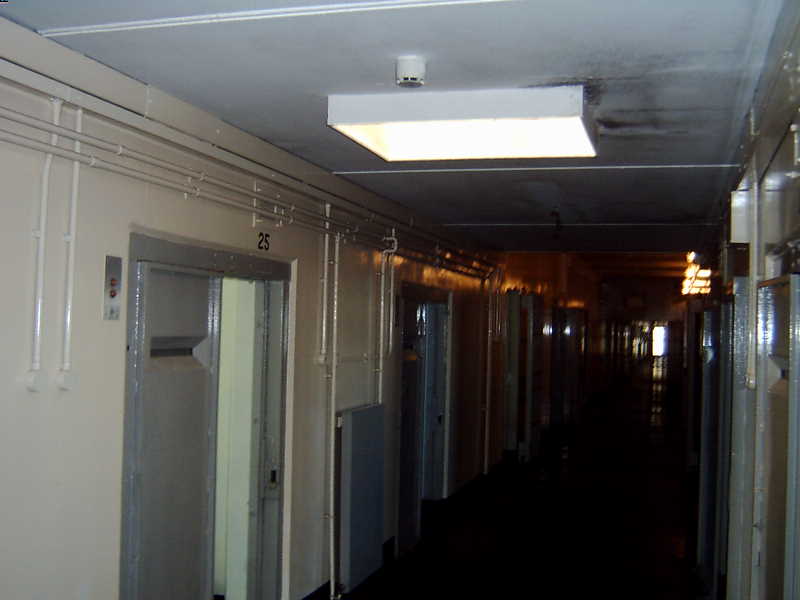
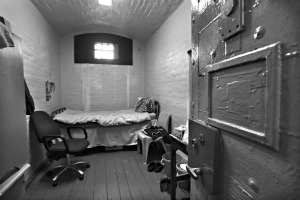
6.5.10 Dublin. Mountjoy Prison Cell. ©Photo by Derek Speirs

Redefining Standards Downwards: The Deterioration in Basic Living Conditions in Irish Prisons and the Failure of Policy

The phrase ‘redefining standards’ might be assumed to imply a commitment to higher, more rigorous, standards, along with the more effective enforcement of such standards. In the case of the Irish prison system, however, we have seen over the past two decades alarming examples of where standards have been re-defined downwards, so that, for a majority of those detained in our prisons, basic living conditions have significantly deteriorated and the experience of being in prison has become even more burdensome and damaging.

Penal Reform    

6.5.10 Dublin. Mountjoy Prison Cell. ©Photo by Derek Speirs

Overcrowding and Cell Capacity in Irish Prisons

Any discussion of prison conditions or overall prison policy in Ireland cannot but give close attention to the question of the overcrowding that is pervasive throughout the prison system.

Penal Reform    

Is Expansion of Prison Places for Women Needed? An Analysis of Statistics, 2003–2006

Current government prison policy envisages the closure of the Dóchas Centre in Mountjoy and the opening of new women’s prisons at Thornton Hall, in north Dublin and at Kilworth, Co. Cork, resulting in a doubling of the number of places for women prisoners. This radical expansion of prison capacity for female offenders is being justified by the authorities on the grounds that the existing facilities at Dóchas and in Limerick Prison are routinely overcrowded and that the prison building programme being undertaken at present needs to be ‘future proofed’ to cater for an on-going increase in the female prison population.

Penal Reform    

Jean Corston

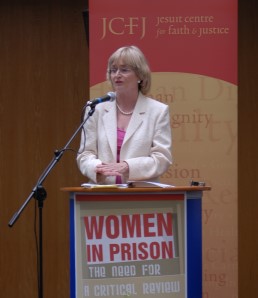
Women in Prison: The Corston Report

In March 2006, I was commissioned by the then Home Secretary, Charles Clarke MP, to undertake ‘a review of women with particular vulnerabilities in the criminal justice system’ of England and Wales. My report was published in March 2007.1 In December 2007, the Government issued an official response to the findings of the review.

Penal Reform    

23.6.08. Dublin. Mountjoy Prison. ©Photo by Derek Speirs

What Does God Think of Irish Prisons?

The April 2008 issue of Working Notes entitled, ‘Thornton Hall Prison – A Progressive Move?’, has inspired the following article, which is written from the viewpoint of Catholic theology. I have never been jailed myself; however, courtesy of the Department of Justice, Equality and Law Reform I had the privilege of visiting a number of Irish prisons some years ago. I also visit a friend who is currently serving a jail sentence.

Penal Reform