Author: Keith Adams

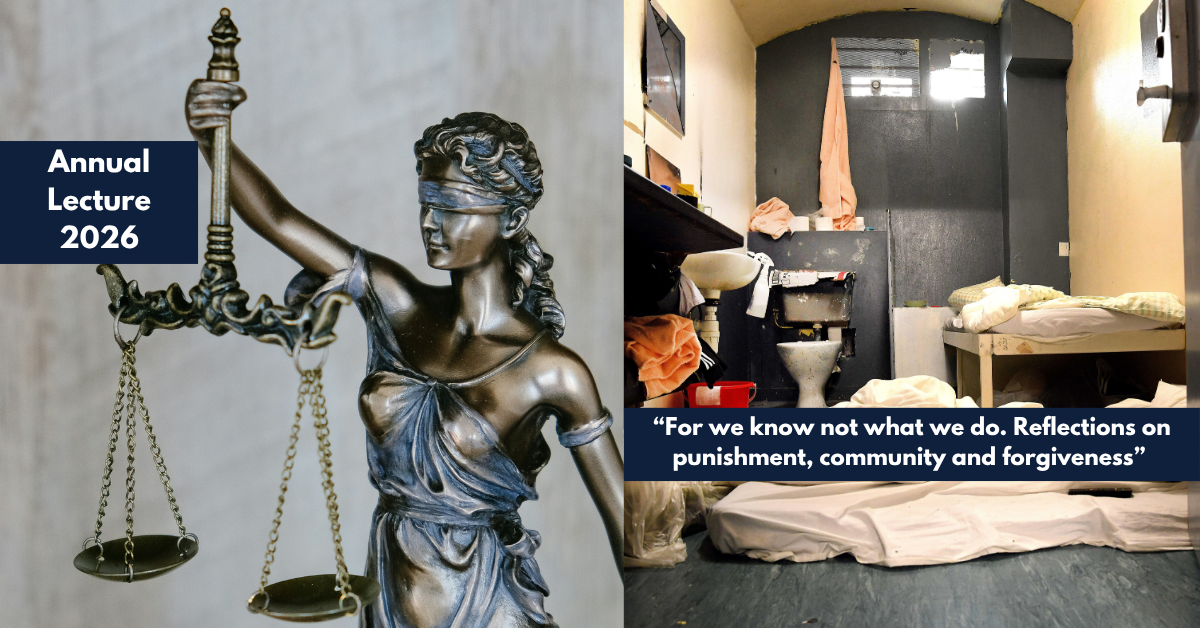
JCFJ Annual Lecture 2026

This year’s paper, “For we know not what we do. Reflections on punishment, community and forgiveness,” will be delivered by Prof. Dr. Pieter De Witte, KU Leuven on Tuesday, 21st April. It promises to be a stimulating event as we consider the role of punishment and the place of prison in society. This is particularly… Read more »

News  

The Psychiatric Prisoner Paradox

Though this ordeal, the State has inflicted immeasurable harm and suffering on Patrick Sibanyoni. There is the immediacy and acuity of the pain from being in prison with a psychiatric illness. There is the potential for greater unnecessary disability over his life as his condition worsened without treatment.

Prison Has No Waiting List

Those caught in this situation are often too unwell to stand trial, condemned to spend an indeterminate time in an overcrowded prison. Prisons, which have a deleterious effect on those with stable mental health, exacerbate the rapid fraying of a person’s mind. It is not too much to draw an equivalence to torture.

“Crimes” of the Future

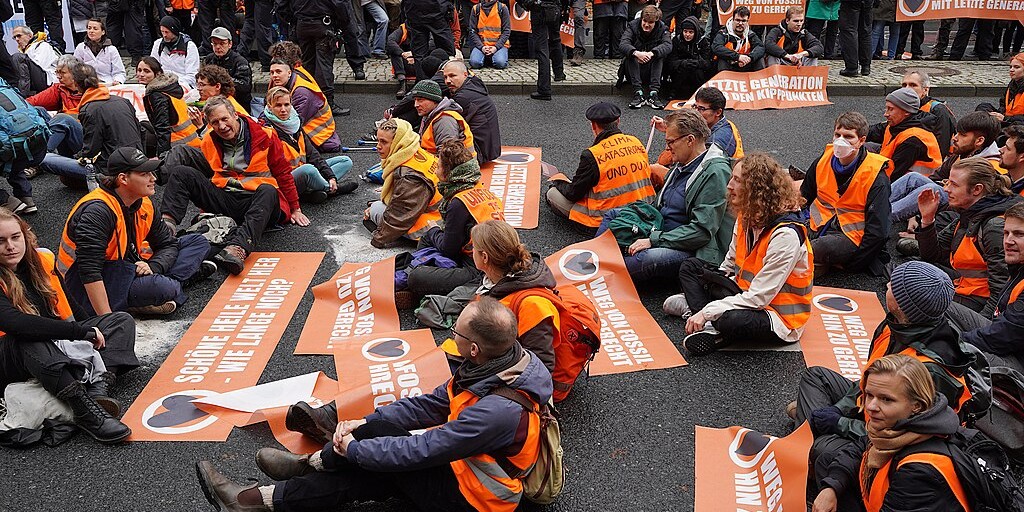
If a more populist right Government, than the incumbent coalition, were to emerge in Ireland, then they have an arsenal of tools to further suppress peaceful democratic protest and respond punitively to protestors.

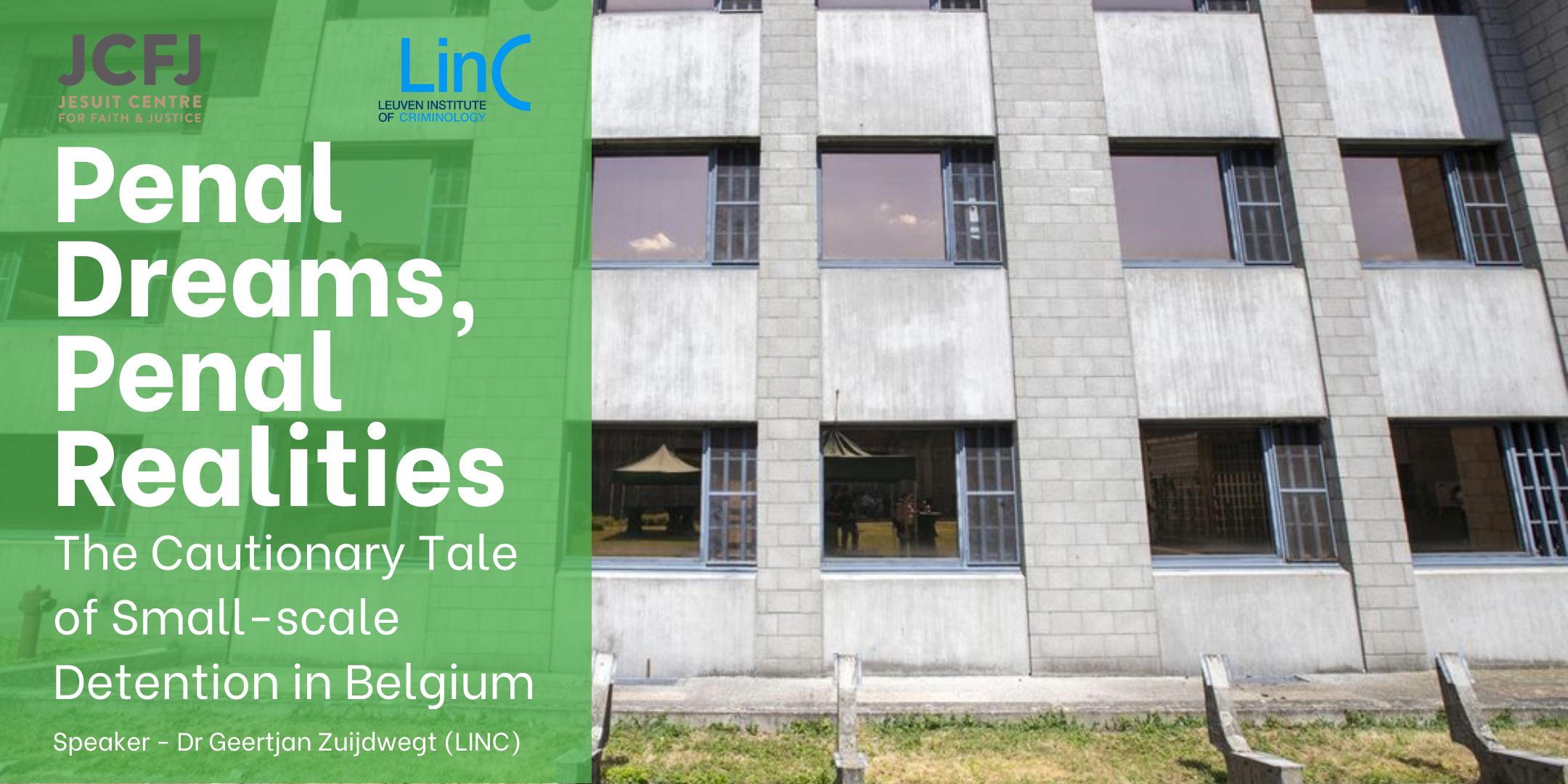
JCFJ Expert Seminar – “Penal Dreams, Penal Realities: The Cautionary Tale of Small-scale Detention in Belgium”

On 13th March 2025, the Jesuit Centre for Faith and Justice welcomed Dr Geertjan Zuijdwegt—criminologist and theologian at KU Leuven—for an expert seminar on small-scale detention and the Belgian experience of implementing this modality of punishment.

Danger Rolling Through Ireland’s Cities and Towns

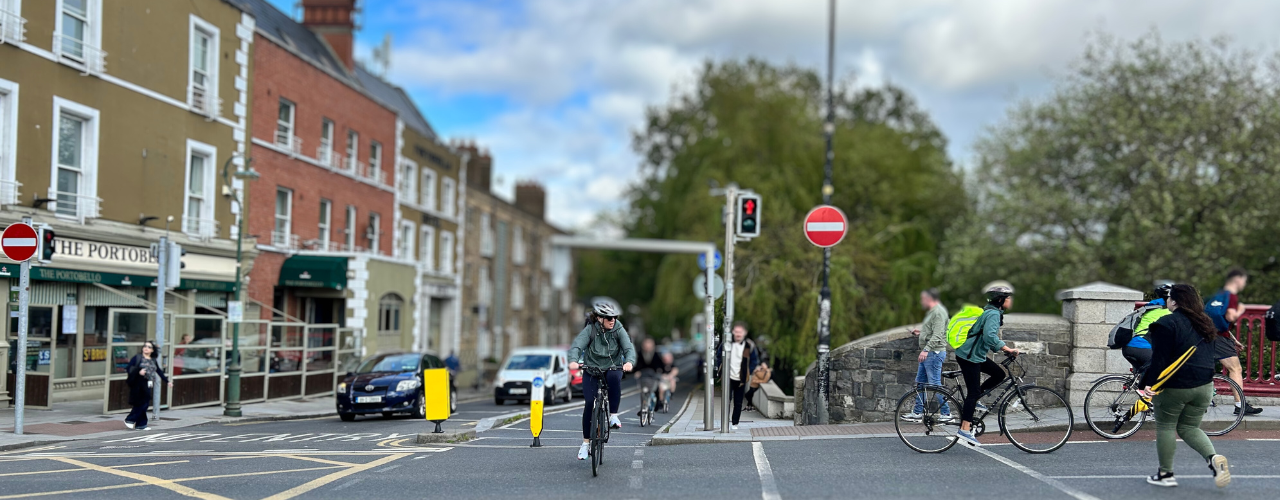
Forced to take an indirect route to work or a night out because of “no-go” streets. Hurriedly crossing the road due to serial law-breaking and aggressive behaviour. Speeding up on your bicycle as a “single male” aggressively follows. Children unable to go to school on their own—even the shortest distance—without needing to be delivered to the school gate in the parental car.

Knife Offences: The Sharp End of Deterrence

“What is the moral basis for punishing someone, perhaps hard, in order to prevent entirely different people from committing equivalent acts, when those we punish to a large extent are poor and highly stigmatised people in need of assistance rather than punishment?”

News  

Thornton Hall Prison: A Bad Idea That Refuses to Die

A new prison at Thornton Hall was a bad idea in 2005, and it still remains so.

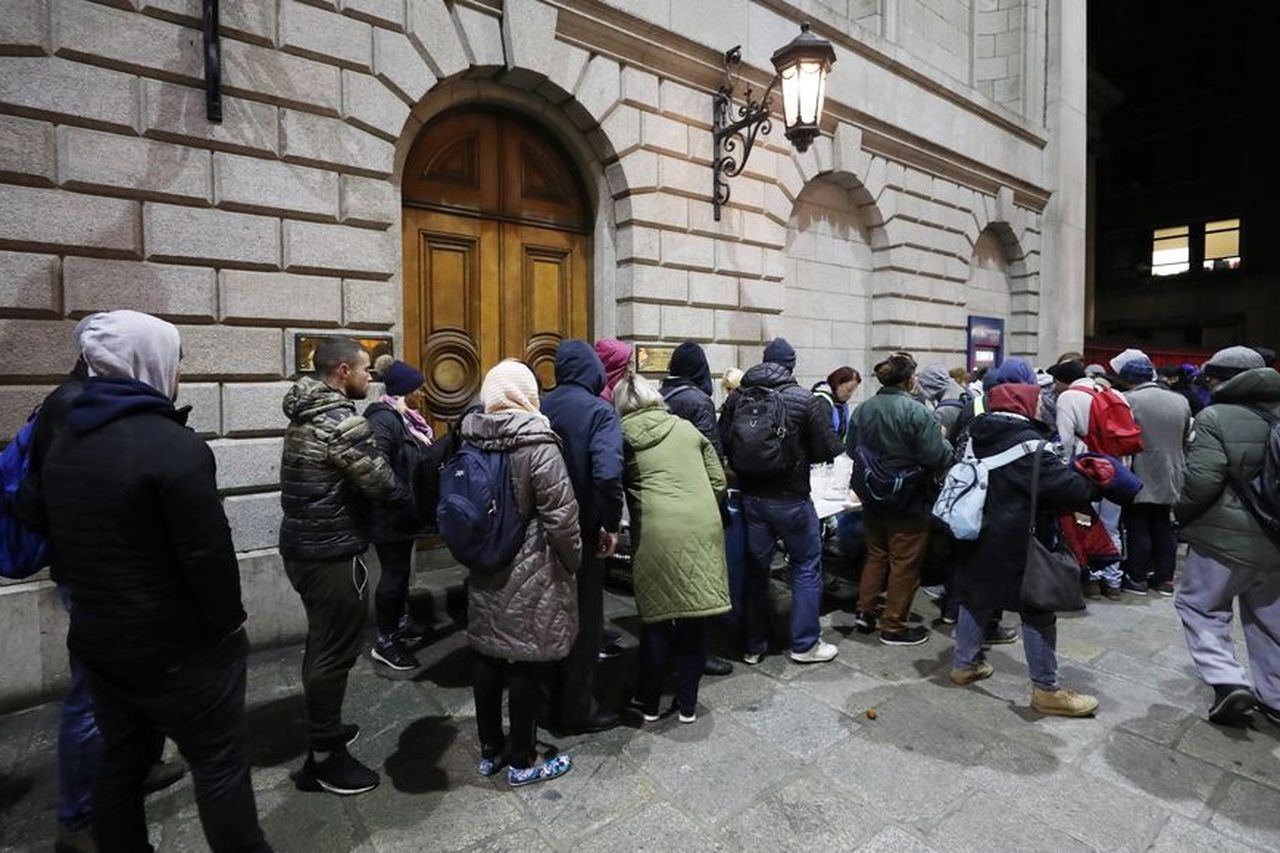
The Uncomfortable Optics of Soup Kitchens

The question of how people ended up with “multiple and complex needs” is avoided to focus on regulation, form- filling and box-ticking; all wrapped in the language of concern.

Institutionalisation – No Place in Modern Ireland?

By vividly bringing to life the “bystander effect” and its attendant social forces, Keegan avoids these binaries of past and present and encourages us to ask whether we would say anything or, instead, turn a blind eye to pervasive institutionalisation in our own time.

Budget 2025 – A Pathway to More Homelessness and Prisons

On Tuesday, the Government outlined its spending priorities for 2025. I am not sure if past Budgets have ever been properly transformative—or even had the potential to reimagine a fairer society—but Budget 2025 has firmly put this notion to bed.

An image of a truck coming into a construction site

The Opportunity Cost of Prison Expansion

When campaigning finally begins in earnest for the next General Election, debates around criminal justice, policing and prisons will dominate. A key talking point for Fine Gael candidates will be the delivery of an additional 1,100 prison spaces in the six years up to 2030. With Fine Gael holding the Justice portfolio for over 13… Read more »

Prison Expansion: The Population Growth Fallacy

Rhetoric will inevitably increase as a “tough on crime” arms race will ensue between the three largest parties, with Independents upping the ante from local townhall meetings. At the very least, politicians need to stop identifying population growth as a predictor of future prison capacity. Maybe, instead of motioning to the public that their hands are tied, an honest response is that they want to put more people in prison for longer.

Prison Overcrowding: Between Two Visits of Committee for Prevention of Torture

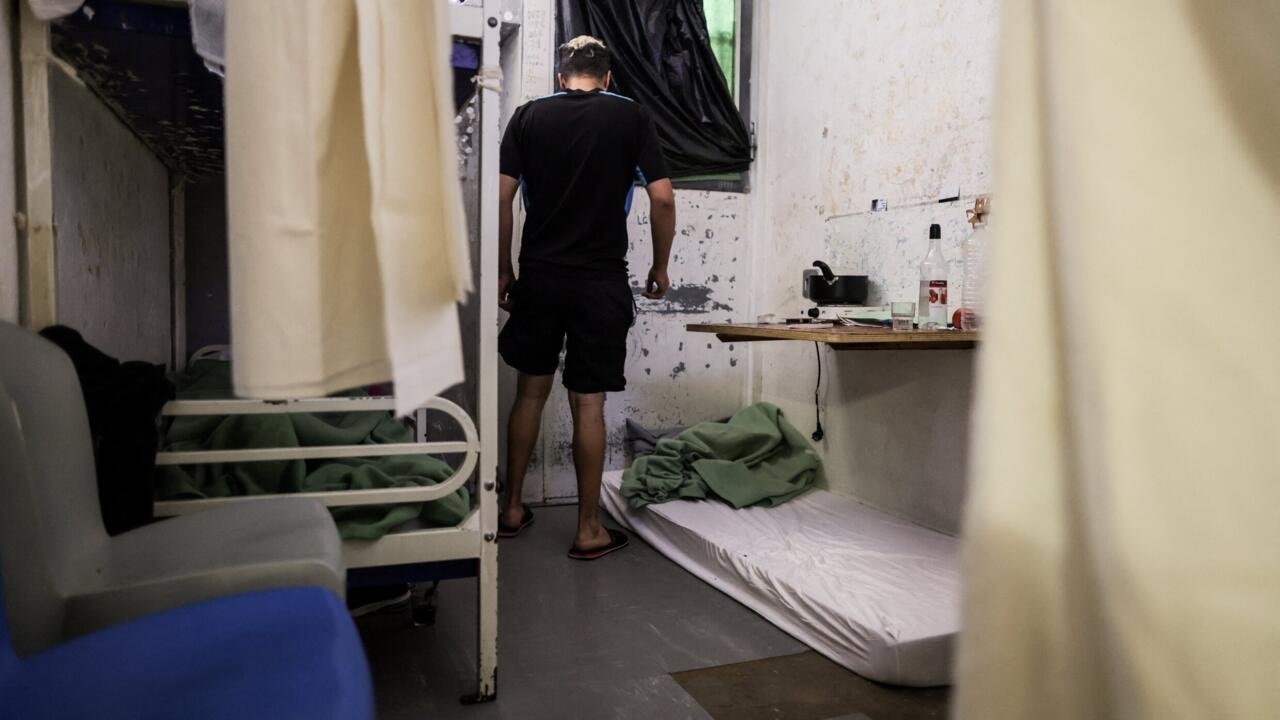
Fast forward five years, what are the CPT likely to find in relation to overcrowding when they visit Ireland later in 2024? In April last year, there were almost 200 prisoners on mattresses on floors, five times what the CPT experts found in 2019. During the summer, the Inspector of Prisons wrote specifically to the Minister for Justice in relation to these “degrading conditions” as mattresses were adjacent to toilets. By any criteria of inspection, the experience of imprisonment by many will have greatly deteriorated in the interim period.

Prisoners’ Sunday – Reflections on a New Prison

The new prison testifies to a societal failure … [w]e have an obligation to provide something better than a brighter prison.

Active transport

Choose Your Weapon: Cars or Fists?

Causing the death of a pedestrian or cyclist will continue to be treated as manslaughter but the statutory response to careless and dangerous driving resulting in serious injury is not served by meagre fines for motorists who do not even have a driving ban imposed. Lifetime driving disqualifications must be on the table of sanctions as a driver who has caused injury has visibly demonstrated an inability to safely operate a motor vehicle

Welfare Reports, Feral Youth, and Child Imprisonment

Considering how we begin to end violence in society, Allegra McLeod, from University of Chicago, urges us to “expand our understanding of violence beyond individualized disorder and the immediate scene of interpersonal harm” and unearth its political and economic roots. This can be difficult when a victim has experienced extreme violence and long-lasting harm. But the ambition of criminal justice systems should be the tempering of violence in society and not just meting out more violence in response to the initial offense. Louk Hulsman, a Dutch criminologist, warns that we create a counter-reality when we only understand an individual in the context of their offense, completely isolated from “his environment, his friends, his family, the material substratum of his world.”


Irish Government Gives Up On Penal Reform

Placing the State’s current programme of prison expansion alongside a historical understanding of penal reform or a more contemporary understanding of penal moderation, it becomes clear that the Irish Government has thrown in the towel on penal reform as it is commonly understood, despite its adoption of advocates’ rhetoric.

Overcrowding diminishes prisoners’ dignity

Research has shown repeatedly that more prison spaces does not solve overcrowding. Today’s commitment of an additional 620 beds is based on the development of around 400 new cells which is the final nail in the coffin of any ambition for “one prisoner, one cell”. Even the conservative proposal of a cap at 4,000 prisoners is not considered by the Department. We are staring into a future of double-ups, triple-ups and rampant overcrowding.

‘National Conversation’ is a loaded term

Maybe serious channels for dialogue, listening and understanding are being developed by the Office of An Taoiseach and other departments. But if, as I suspect, the real intention is not for understanding but a focus on building consensus about the issue of societal violence, we may be asked to travel a different path. One of punishment rather than understanding.

The multiplier effect of prison overcrowding

Prison overcrowding affects prisoners’ ability to attend education, work, appointments and social activities, and puts a strain on stretched in-prison psychological and addiction supports. There are few, if any, downsides to having fewer people in a prison.

Prisoners’ Sunday: Going Beyond Sympathy

  This weekend marks Prisoners’ Sunday, a moment in the year prompting us to pause and consider the men, women, and children who inhabit our prisons and places of detention. People in prison are rarely the recipients of sympathy. Their concerns and travails barely register with the general public. In fact, public opinion on penal… Read more »

Prison Buildings are Not Enough

Because prisoners depend on prison staff for their most basic needs, the research concludes that it is critical to the concept of trauma-informed practice how staff exercise their power and authority in staff-prisoner relationships.

Prison’s Mission Creep

As a society, we should always be seeking to reduce both our prison population and the role of the prison. What we are currently experiencing is a mission creep—the gradual expansion beyond its original aims or goals— which is very difficult to row back once it becomes ingrained.

The Allure of Carceral Feminism

If a ‘carceral feminism’ rises with a reliance on the Irish criminal justice system, then a shift will imperceptibly occur where gender-based violence becomes more narrowly defined as an individual crime rather than a broad social and political problem.