
Angela Kenny
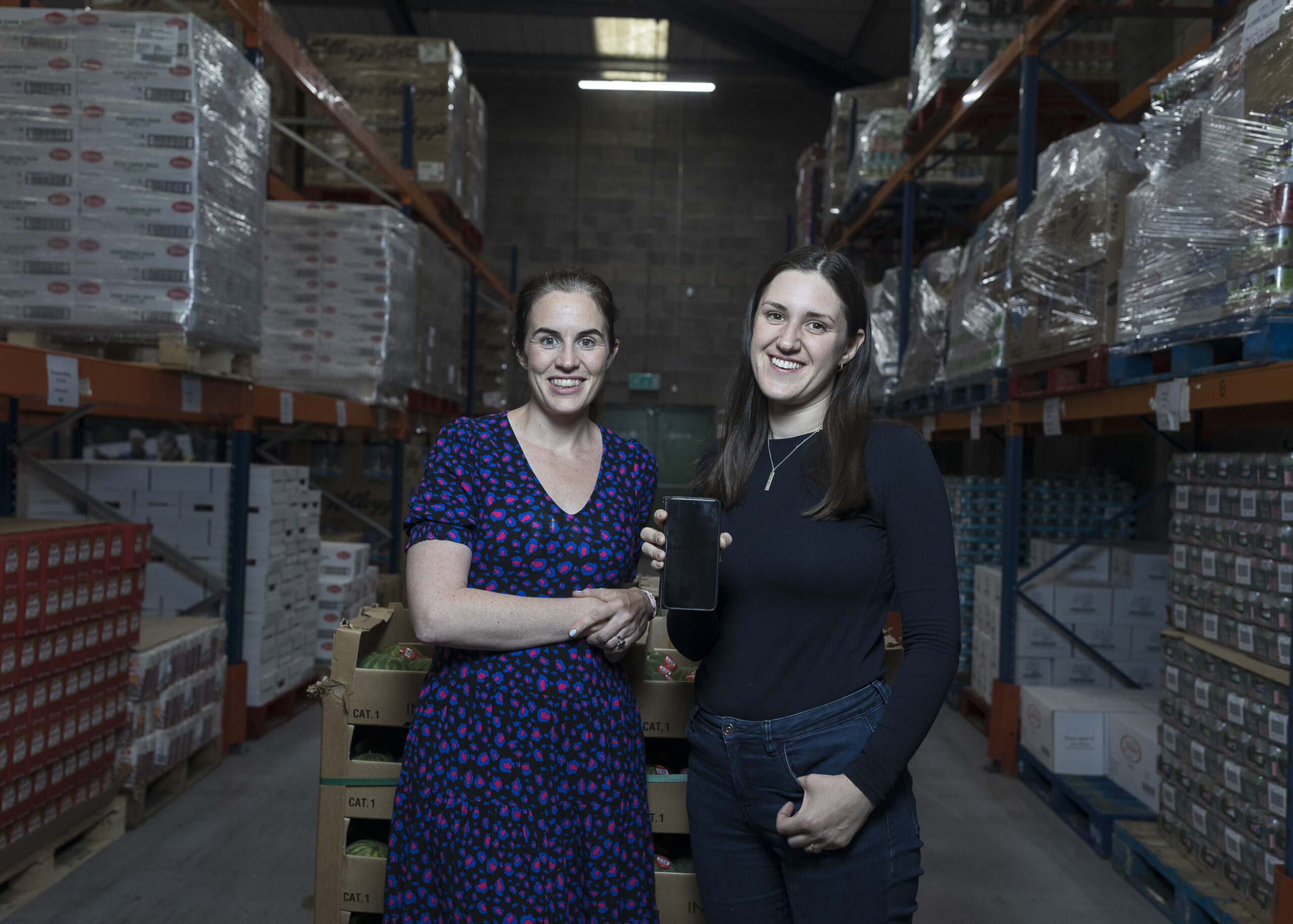
Angela Kenny is Advocacy Manager at FoodCloud. After an early career in advertising Angela changed direction and is now focused on advancing climate policies to protect our precious planet, for our current and future generations.
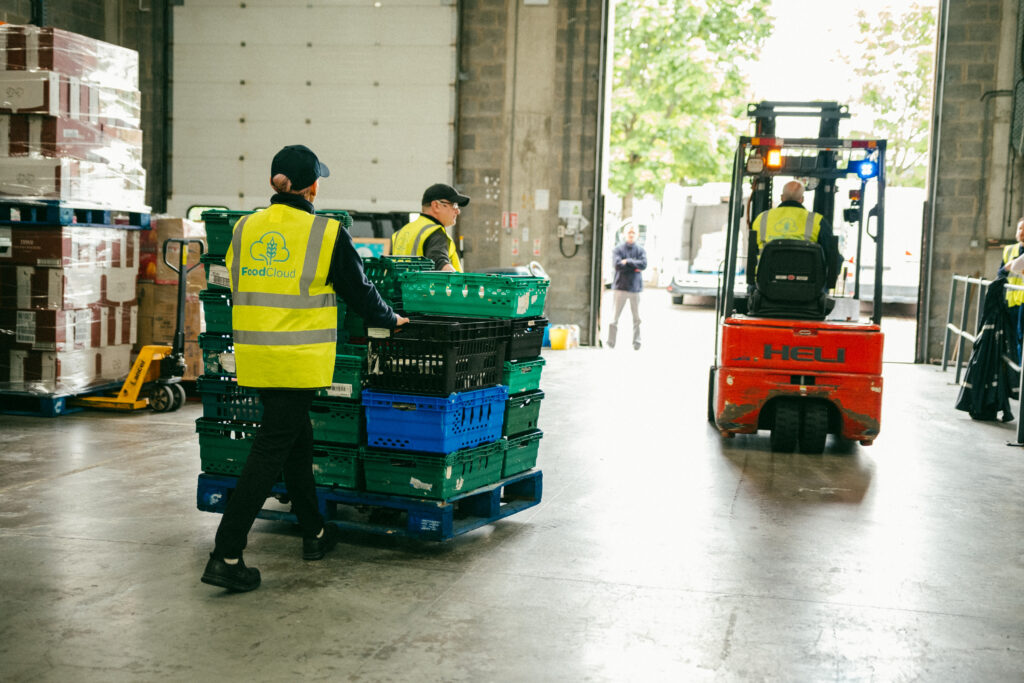
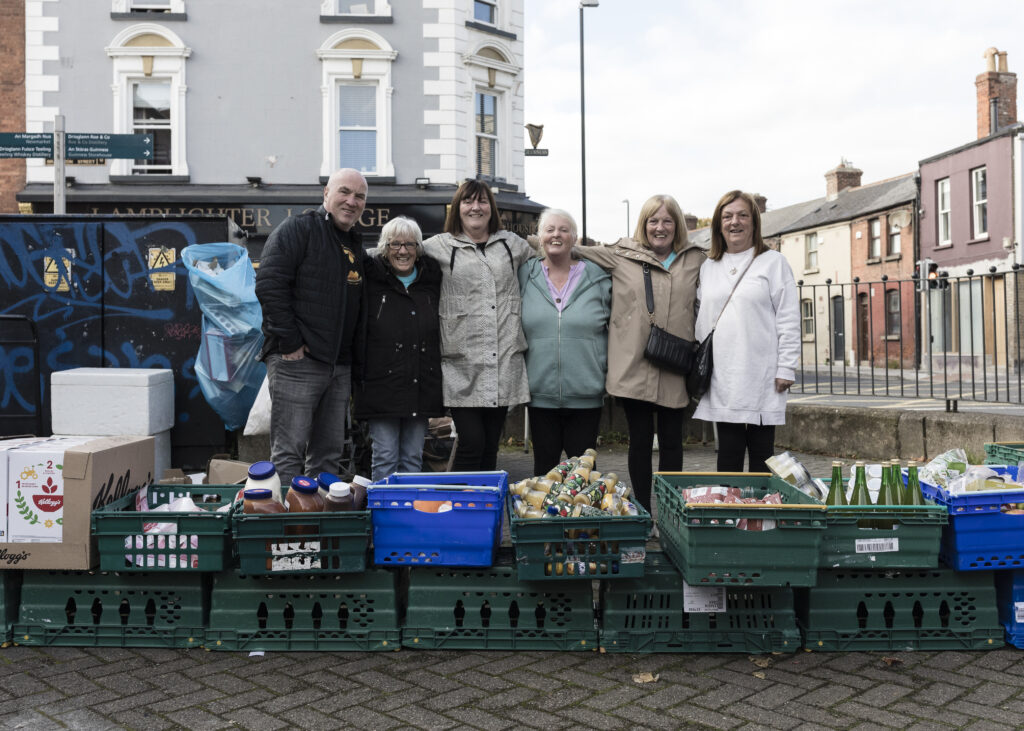
On a damp morning in Dublin, volunteers at a local community centre gather around crates of bread, fruit, and ready-to-cook meals. There’s chatter, laughter, and the familiar rhythm of people working together. Only hours earlier, much of this food was destined for landfill. Now, thanks to FoodCloud, it will
be transformed into hot meals at a community lunch, packed into food parcels, or placed on the table of a family wondering how to stretch their weekly budget.
FoodCloud’s work is rooted in a stark reality. Around the world, hunger and waste exist side by side. On one hand, millions struggle to put food on the table. On the other, tonnes of edible food are thrown away every day. As Pope Francis warned in 2013: “Throwing away food is like stealing from the table of those
who are poor and hungry.”1 That statement feels even more pressing in 2025.
A WORLD DROWNING IN WASTE
Food waste is often invisible. It happens in quiet moments, a forgotten bag of salad leaves, a loaf going stale on the counter, an over-ordered pallet at a supermarket. But taken together, the numbers are staggering. Imagine leaving a supermarket with four full shopping bags. As you cross the car park, you
drop one on the ground, and keep walking without looking back. That’s how Dana Gunders, a scientist at the Natural Resources Defense Council, describes humanity’s daily relationship with food.2 Globally, up to 40% of all food produced never gets eaten. The United Nations estimates that one billion meals are
wasted every single day. In the EU alone, that adds up to 59 million tonnes annually, about 132 kilograms per person. Ireland’s share in 2023 was 835,000 tonnes.
The damage is not only moral, but environmental. Every discarded apple or loaf of bread carries a hidden carbon footprint: the land cleared, the water used, the fertiliser spread, the energy consumed, the fuel
burned to transport it. Globally, the food system accounts for 34% of greenhouse gas emissions. Of that, food waste alone is responsible for up to 10%, four times the impact of the entire aviation sector. Unlike
some climate challenges, this one is solvable. Reducing food waste is a tangible, immediate action. It requires no futuristic technology or radical inventions. The food already exists. The challenge is to move it into the right hands.
HUNGER AMID ABUNDANCE
And yet, alongside this mountain of waste, hunger is rising. Our global food system already produces enough to feed the world’s population of eight billion. Still, the UN’s 2025 State of Food Security report estimates that up to 720 million people went hungry last year.3
The imbalance is starkest in Africa, where Concern Worldwide reports that one in five people face hunger each day. Even more troubling: despite the UN’s Sustainable Development Goal of Zero Hunger by 2030,
the number of people going hungry has risen by 152 million in just five years.
Ireland is not immune. Here, one in eleven people live in some form of food poverty. Parents go without so their children can eat. Older people stretch pensions that no longer cover weekly groceries. Community organisations see the strain daily. FoodCloud’s own 2025 survey of nearly 700 community partners reflects the trend. Sixty-three percent reported a rise in demand for food. Almost one in five said they are struggling to meet it.
HOW FOODCLOUD WORKS
FoodCloud’s model is both simple and sophisticated. It provides two core solutions:
- Redistribution hubs in Dublin, Cork, and Galway take in large volumes of surplus food. Staff and volunteers then break it down into smaller, manageable amounts, which are distributed to charities and community groups.
- The Foodiverse technology app connects retailers directly with charities. Details of surplus food are uploaded in real time, and local groups can collect items themselves.
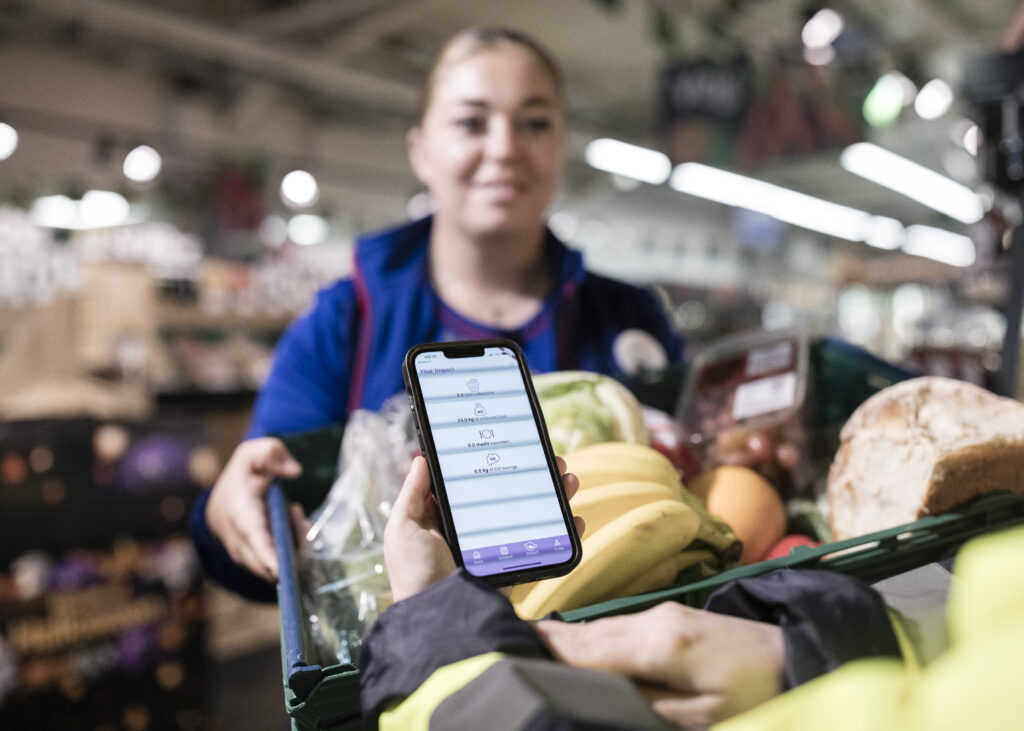
This combination of physical infrastructure and digital innovation makes FoodCloud unique. It means food can move quickly from point of surplus to point of need. And it means charities can rely on regular supplies of fresh, nutritious food, something often out of reach for the people they support.
The impact goes beyond meals. Charities save money on food costs, allowing them to redirect limited resources into core services. Volunteers form new connections through food distribution. Communities gain resilience.
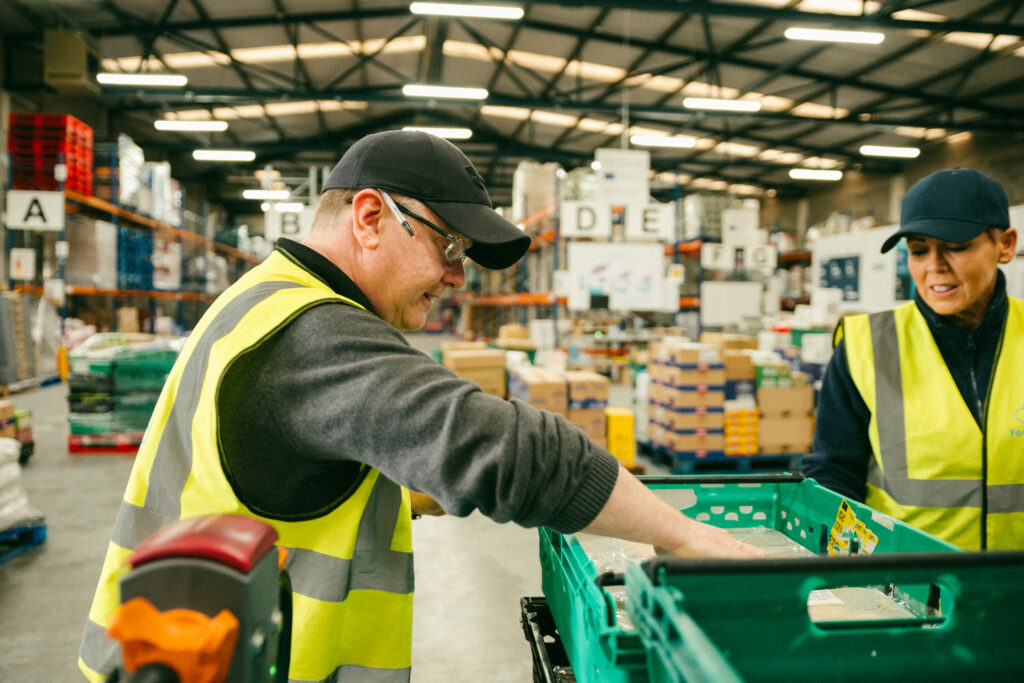
The Islamic Relief Centre in Clongriffin describes how the partnership has transformed its mobile food bank:
We can now offer a wider variety of fresh produce, dairy, and baked goods, bringing
not only sustenance but also a sense of dignity to our service users. By reducing
our food costs, we’ve been able to reinvest in additional supplies and strengthen our
outreach. This ensures even more people benefit from our services.
Stories like this are echoed across Ireland. They remind us that when food is wasted, it’s not just
carbon emissions or euros lost–it’s human lives, opportunities, and dignity squandered.
FROM LOCAL ACTION TO GLOBAL CHANGE
FoodCloud’s vision extends far beyond Ireland. The integration of the Foodiverse technology into food redistribution networks is enabling the development of “virtual foodbanking” and it is proving to be a powerful tool for international change. Traditional food banks often require heavy infrastructure: warehouses, refrigerated trucks, and large staff teams. In contrast, virtual foodbanking allows community organisations to connect directly with local food donors. This reduces transport costs, lowers emissions,
and increases access to food sources that may otherwise have been out of reach. The model is particularly promising in low- and middleincome countries, where the need is greatest and resources are scarce.
In Kenya, for example, FoodCloud has partnered with Food Banking Kenya (FBK) and The Global FoodBanking Network to integrate Foodiverse into daily operations. The results have been quite transformative. Since its launch, FBK has redistributed over 500
WHY IT MATTERS NOW
The clock is ticking. The United Nation’s Sustainable Development Goal 12.3 – to halve food waste by 2030 – is only five years away, and the world is not on track. Without urgent action, both the climate crisis and the hunger crisis will worsen. Yet this is one of the few global challenges where solutions are not only
known, but proven. Every day, FoodCloud demonstrates that redistributing surplus food works, for the environment, for communities, and for individuals. Crucially, fighting food waste is something everyone can take part in. Project Drawdown, the independent nonprofit advancing science-based climate solutions, identifies reducing food waste as an “emergency brake” for climate change. It’s one of the most immediate and impactful actions we can all implement right now.
EVERYONE HAS A ROLE
Changing the narrative around surplus food requires a shift in mindset across the food system and in our own homes. Everyone can look at their own daily interactions with food and assess what change they could make.
- Food businesses can audit supply chains, identify areas of surplus, and partner with redistribution networks to ensure no edible food is discarded.
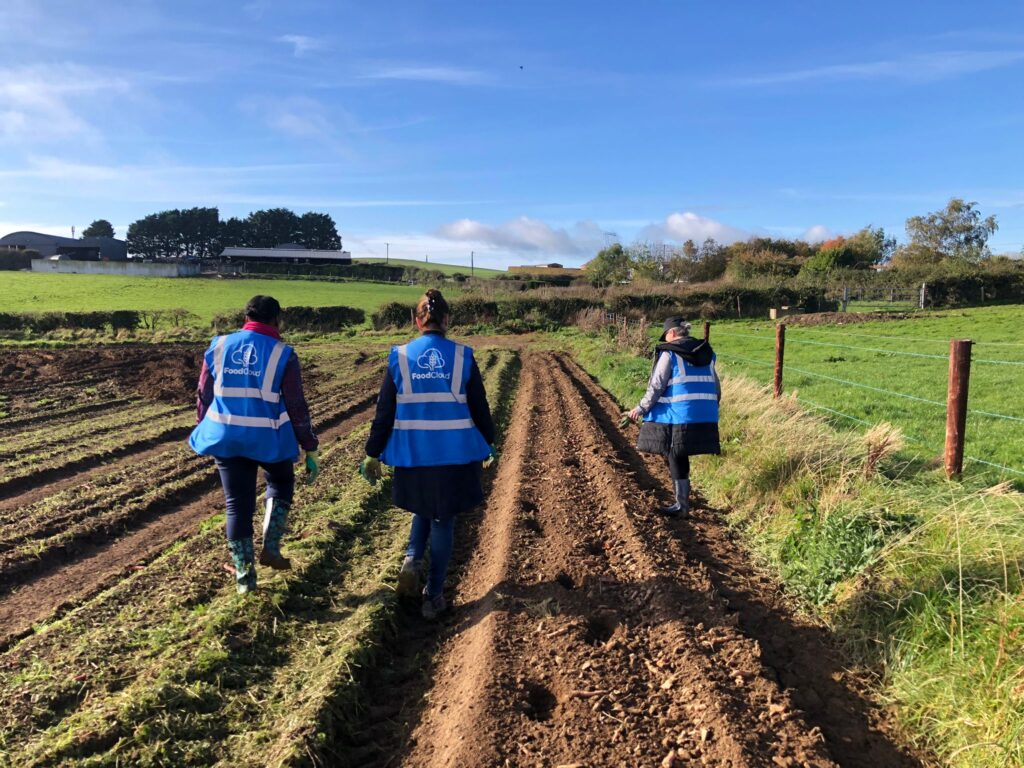
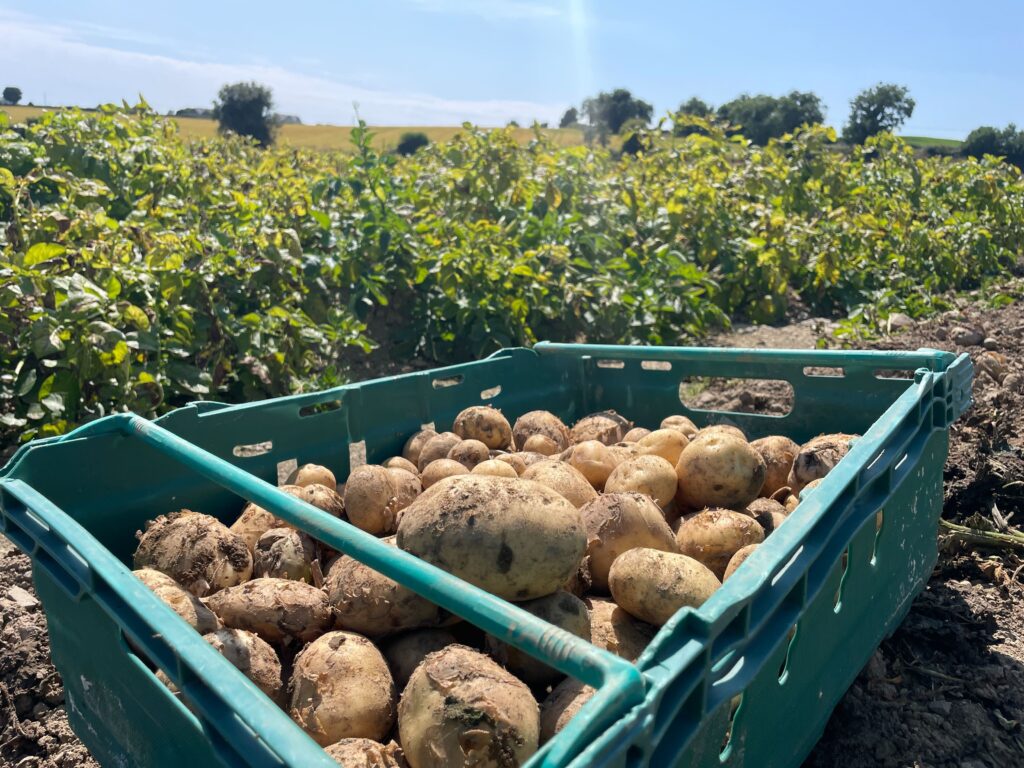
- Growers can work with organisations like FoodCloud and our Growers’ Project to ensure that the fruits of their labour are eaten, not wasted.
- Communities can collaborate with redistribution projects to ease the burden on neighbours facing food insecurity.
- Individuals can play their part by planning meals carefully, storing food wisely, saving leftovers, and volunteering with FoodCloud or local food sharing projects. Small habits, repeated widely, add up to big change.
Above all, we must begin to see food differently. Not as disposable, but as precious. Each loaf, each apple, each meal carries value, for our planet, our communities, and our shared humanity.
PICKING UP THE BAG
FoodCloud’s vision of a world where no good food goes to waste is not just aspirational. It’s practical, necessary, and achievable. It represents a future where climate responsibility, community resilience, and
human compassion meet. The choice is ours. Do we continue to drop that metaphorical shopping bag in the car park and walk away? Or do we turn back, pick it up, and share it with someone who needs it?
Join us on our mission to transform surplus food into opportunities to make the world a kinder place. Find us at https://food.cloud/
- Reuters, ‘Wasting food is like stealing from poor, Pope says’, Reuters, 5 June 2013, www.reuters.com/article/lifestyle/wasting-food-is-likestealing-from-poor-pope-says-idUSBRE9540P2/ ↩︎
- Dana Gunders, ‘Why I Wrote the Waste-Free Kitchen Handbook’, NRDC, 29 September 2015, www.nrdc.org/bio/dana-gunders/why-iwrote-waste-free-kitchen-handbook ↩︎
- UN,’The State of Food Security and Nutrition in the World (SOFI) Report – 2025’, World Food Programme, 28 July 2025, www.wfp.org/publications/state-food-security-and-nutrition-world-sofi-report ↩︎