

Divya Ravikumar-Grant in association with Professor Saoirse Nic Gabhainn and Professor Colette Kelly
Affiliation: Health Promotion Department, University of Galway
Divya Ravikumar-Grant is an assistant lecturer in health promotion and nutrition at ATU Sligo. She is a registered dietitian with a master’s in health promotion. Divya has also worked as a researcher on several health promotion and nutrition projects. Divya is finishing her PhD in the field of food provision for the homeless population, which is based on her preliminary research in this field.
AN INTRODUCTION FROM THE EDITORIAL TEAM
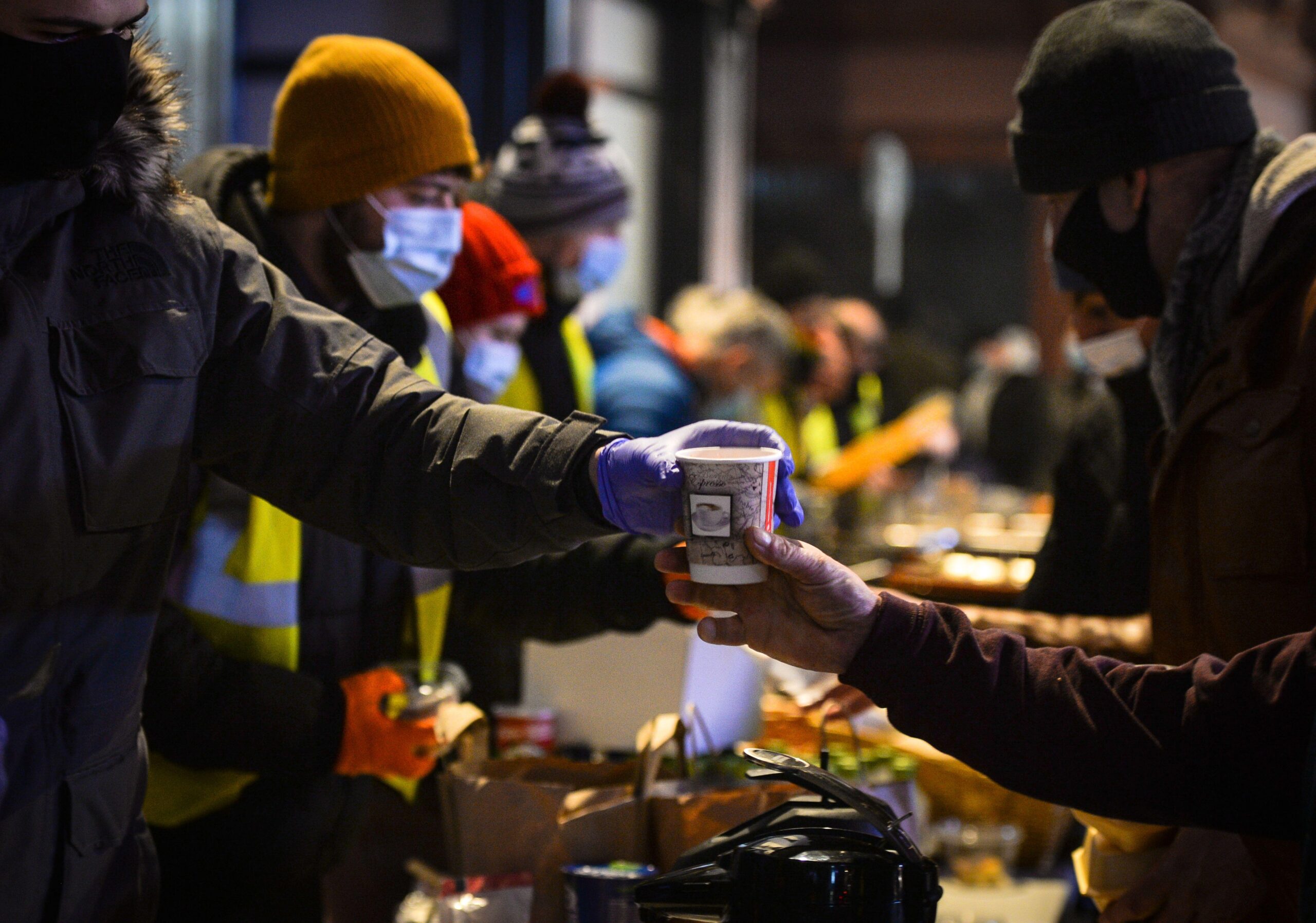
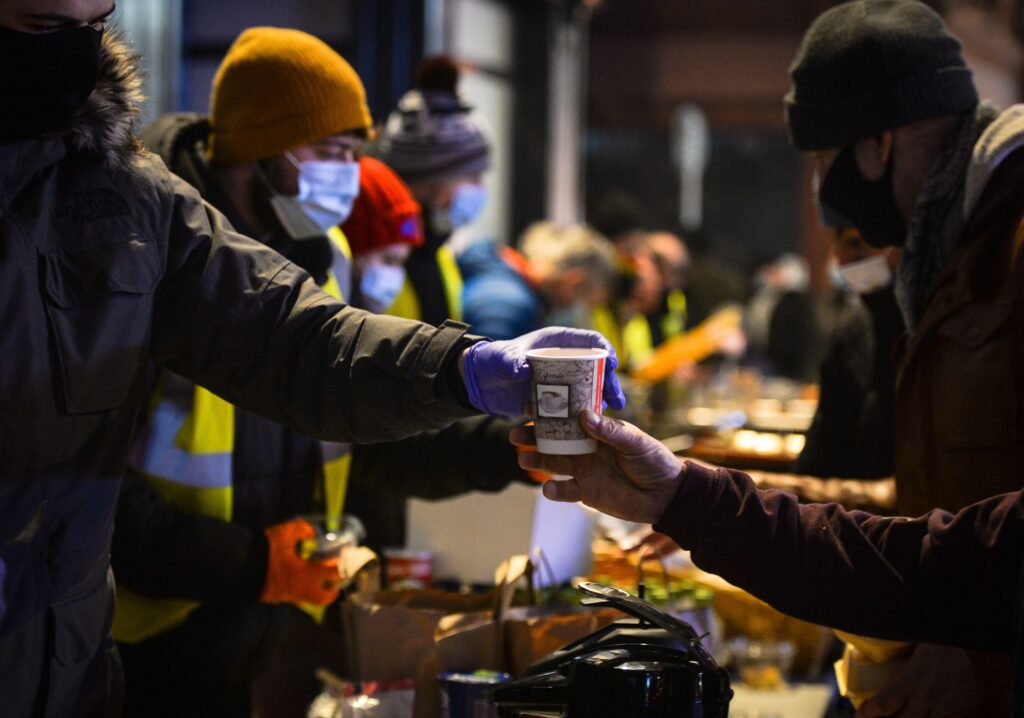
In early January 2025, news broke that Dublin City Council were planning to ban (or severely restrict) on-street soup kitchens through the creation of new bye-laws and regulations.1 The timing could hardly be worse. Both daily and nightly temperatures were plummeting, already creating increased hardship for people sleeping rough and those with emergency hostel accommodation.2 Potentially adding to this
hardship, now on-street soup kitchens and other food provision were at risk. A warm meal and a hot
drink can be life-saving before a person lies upon a few layers of cardboard in a shop entry way, or
whiling away the hours in a city centre hostile to your presence and very existence.
This proposed ban on soup kitchens has been in the pipeline for a number of years, following a 2021
review and council plans in 2023.3 The Taoiseach’s Dublin City Taskforce report on the city centre
provided new impetus and political cover to ban on-street food provision.4 Yet, the report makes
no recommendations for how the charities and voluntary organisations could continue to provide
these food services which are relied on by many individuals and families.
It is estimated that around 24 volunteer food services are operating on the streets of Dublin, offering food to those who are homeless and experiencing food poverty.5 In the accompanying debate surrounding the potential regulation, a councillor noted that “food poverty is a major issue and regardless of whether the people in the queues are homeless, they need food.”6
Considering homeless service providers, this essay will propose that in order to improve healthy eating amongst people experiencing homelessness, there should be a focus on improving food skills amongst service providers by equipping them with appropriate resources and knowledge to provide nourishing meals that are nutritionally adequate. Based on research for an ongoing PhD project that examines the determinants of the nutritional quality of food provided to the homeless population, the co-development of food-based guidelines with relevant stakeholders, and testing the feasibility of food-based guidelines for use in homeless services, this essay will sketch out this position in five sections: sources of food available to people experiencing homelessness; the overall health of people experiencing homelessness;
understandings of food poverty; types of food provision available to care for this cohort of people; and a brief summary of best practice and guidelines in this area.
FOOD SOURCES WHEN HOMELESS
Food provision for people experiencing homelessness is an under-researched area that is often left to the discretion of social service providers that work in homeless services. These providers have a number of competing priorities and may lack the nutrition knowledge and food skills required to plan, prepare, and cook food for people experiencing homelessness.7
Meal provision for people experiencing homelessness can take many forms: soup kitchens; on-street food provision services for people sleeping rough; homeless day centres that provide light meals such as soup and sandwiches; residential services such as hotels, B&Bs and hostels that may provide all meals throughout the day or just selected meals. Meals in these settings have also been shown to contain
high amounts of saturated fat and sodium.8

Furthermore, meals provided within these settings can vary in terms of nutritional content, meaning that people experiencing homelessness may not be able to gain sufficient nutrition from the food provided to
them throughout the day. US-based research demonstrated that meals provided to the homeless population do not meet the daily recommended amounts of fibre, vitamins, and minerals.9 People experiencing homelessness found it challenging to consume the daily recommended amounts of servings from each food group.10 Fruit and vegetable consumption has also been reported as low amongst
people experiencing homelessness across Europe.11 Food provided through emergency accommodation in the Irish setting has been shown to be highly calorific and contain high amounts of fat and salt. Breakfast often consists of fried foods and other foods may not be offered throughout the day.12
This leaves service users to source food throughout the rest of the day for themselves and their families. However, a lack of cooking facilities, insufficient time to queue for use of cooking facilities, limited access or a lack of access to storage facilities such as a fridge, freezer or cupboard space can make it incredibly difficult to feed oneself or one’s family within homeless settings.13 This can result in a high consumption of takeaway and fast foods in order to manage hunger after breakfast is served. Service users in these
settings are often forced to rely on foods with long shelf lives such as breakfast cereal, crisps and instant noodles.14
HEALTH OF PEOPLE EXPERIENCING HOMELESSNESS
Food habits such as these have resulted in poorer metabolic health amongst members of the homeless population.15 This has signalled the need for a cultural shift in our assumptions from one that anticipates that people experiencing homelessness are underweight to one that accounts for the possibility of the
hunger-obesity paradox. The hunger-obesity paradox describes a state of both obesity and hunger within a person experiencing homelessness.16 This theory arises from the increased consumption of cheap, energy-dense and nutrient poor foods within the homeless population and the consequent impact on
metabolic health and obesity. Along with this, the lack of reliable and consistent food may result in people experiencing homelessness consuming more in one sitting due to a lack of assurance around their next meal.17
Over 50% of people experiencing homelessness in the USA can be categorised as obese.18 Similar rates of over 50% were also reported in a US-based study with young people experiencing homelessness.19
In Ireland, consumption of cheap-energy dense and nutrient poor food and the resulting impact on digestive health has been voiced by participants, with specific focus on weight gain and digestive discomfort.20 In an Irish setting, abdominal obesity was found in over 90% of the 252 participants from the homeless population.21 The risk of chronic disease is also a concerning issue amongst people experiencing homelessness, with two thirds of a German population suffering from at least one chronic disease.22 Cardiovascular risk burden and morbidity and mortality are also higher amongst people experiencing homelessness.23
UNDERSTANDINGS OF FOOD POVERTY
On a broader level, food poverty continues to be a global issue, with the United Nations reporting that in 2020, 928 million people experienced severe levels of food insecurity.24 Food poverty or food insecurity refers to the inability to maintain consistent access to food that is nourishing, safe, and
contributes to growth and an active life.25 It can be categorised across four dimensions: availability, referring to sufficient amounts of food production within a specific region; access, which addresses food availability on a household level; utilisation highlights the biological ability of one’s body to process food;
and stability refers to the ability to access nourishing food consistently, regardless of economic and societal factors.26
Simplistic views of food poverty or food insecurity can result in rudimentary approaches to tackling this issue among homeless populations. Such approaches include increasing the number of food banks and other types of charitable food services that are available to food insecure populations.27 Previous research indicates that the majority of the approaches to food provision centre around food assistance
programs and lack government-run initiatives to tackle this systemic issue.28 A rightsbased approach to food poverty can shift this responsibility back to the government and aid researchers, practitioners, and policymakers in accounting for social responsibility in their work. Currently, third sector organisations, such as charitable food services, are forced to provide solutions to the issue of food insecurity rather
than the onus falling back on governmental organisations.29
TYPES OF FOOD PROVISION
The process of food provision can also result in issues related to a decline in service user dignity, resulting from the inability to exert control over one’s food choices. Feelings of gratefulness for the availability of food can conflict with a desire to have more food choices that are of higher nutritional value. Some service users expressed the lack of dignity experienced: “The financial price is okay. The emotional and social price you pay is a lot more. […] You have to give a lot of pride up to go to a food bank.”30
An inability to control food choices for oneself and one’s family has been previously reported in Irish homeless settings.31 As mentioned above, this is further impeded by the practical barriers to nutrition, such as a lack of access to cooking and storage facilities and an ability to prepare appropriate foods for one’s children:
“You know the baby jars… you can’t keep giving them. I’d like to give her… proper
(food)… be able to cook it and give it to her… vegetables and meat… she should
be having that at her age.”
Reshaping the approach to food provision for people experiencing homelessness to one that accounts for the right to food has the potential to move this topic from political aspiration to legal obligation.32 Viewing food provision in this way can also mobilise individuals to confront their government officials in an effort to garner support.33
The need for guidance around food provision has been highlighted by service users in the Irish context, particularly given the fact that service users are spending increased lengths of time in homeless services.34 This is particularly relevant with the Irish homeless population continuing to rise and
over 16,000 people currently experiencing homelessness.35 Although academic and charitable organisations have developed guidelines to improve the nutritional quality of food provided to people experiencing homelessness, there is a lack of evidence on the implementation and feasibility of such
guidance. There is also a need for a tailored nutrition resource to aid service providers in providing healthy food to people experiencing homelessness.
GUIDELINES AND BEST PRACTICE
The Queen’s Nursing Institute in the United Kingdom published guidelines to aid healthcare practitioners in addressing poor nutrition within the homeless population. However, this guidance primarily focused
on identifying and addressing malnutrition within this population.36 In the Irish context, the Food Safety Authority of Ireland has produced guidance on on-street food provision for people experiencing homelessness, however, this guidance focuses specifically on food safety when preparing meals for
people sleeping rough.37 The United States Department of Agriculture provides guidance on food provision within homeless settings; however, this document focuses on food safety and nutrition for specific population groups such as the elderly or breastfeeding women and is provided in the form of a list of links.38
In 2012, the Hunger Coalition and the Congressional Hunger Center in California developed a toolkit to aid service providers in planning and preparing food for people experiencing homelessness. The toolkit contained useful information on healthy eating, reading nutrition labels, cooking with limited access to cooking facilities, and food safety. However, this toolkit was designed to teach homeless service providers how to educate homeless service users on food skills.39 Unfortunately, this toolkit did not address the knowledge and skill levels of homeless service providers directly as the overall aim of this programme was to teach homeless service users. Food quality within homeless shelters was improved by focusing on making healthy swaps to improve food quality, for example, favouring white bread over whole grain bread.40 This study interviewed ten directors of homeless shelters and reported that only one of these shelters had internal nutrition standards. This study also highlighted that food donations from private or corporate partners can be detrimental to efforts aimed at improving the nutritional quality of food provided to the homeless population.41
The pressure associated with tight budget constraints within homeless services has also been highlighted.42 Budgetary constraints can also contribute to the need for homeless services to make use of donated foods due to financial pressure. For this reason, healthier food donations have been suggested as an important avenue for improving the nutritional quality of food provided to people experiencing homelessness.43 The ‘Iron Gate Tulsa Daily Menu Standards,’ developed in 2023 focuses
on providing social service providers with a visual aid to help them determine appropriate portion sizes and the breakdown of food groups in each meal. This guidance was produced to aid homeless services in standardising meal provision within this setting.44 With service providers being considered the gatekeepers of food within homeless services, they are well placed to improve the nutritional quality of
food provided in these settings.45
CONCLUSION
With homeless service providers having the most regular contact and service provision with
people who are experiencing homelessness, I propose that in order to improve healthy eating in this population there should be a focus on improving food skills amongst service providers by arming them with appropriate resources and knowledge to provide nourishing meals that are nutritionally adequate.
The limited literature available in the field of nutrition and homelessness indicates that there is a need for a tailored approach to food provision for people experiencing homelessness. Initiatives to improve healthy eating amongst people experiencing homelessness should focus on improving food skills amongst service providers and arming them with appropriate resources and knowledge to provide nourishing meals that are nutritionally adequate. A practical approach to food provision is needed that accounts for the competing priorities of homeless service providers and the constrained budgets.
Footnotes
- The Dublin InQuirer covered the emerging plans when initially floated, speaking not only with people who use the services but also covering the ensuing debate by local councillors within the Dublin City Chambers. For the full account, see Laoise Neylon, ‘Dublin City Council Says It Doesn’t Plan to Ban Soup Runs, Just Regulate Them’, City Desk, Dublin InQuirer, 7 January 2025, https://www.dublininquirer.com/dublin-citycouncil-says-it-doesnt-plan-to-ban-soup-runs-just-regulate-them/. ↩︎
- Many emergency homeless hostels require occupants to vacate the premises during daytime hours. ↩︎
- Olivia Kelly, ‘Bylaws Would Ban “Well-Meaning” on-Street Soup Kitchen Runs to Dublin Homeless’, Dublin, The Irish Times, 27 December 2024,https://www.irishtimes.com/ireland/dublin/2024/12/27/on-street-soupkitchens-to-be-banned-under-new-dublin-city-council-bylaws/. ↩︎
- The authors recommend that Dublin City Council develop and enact new bye laws to regulate on-street charitable services such as soup kitchens and other services. See Dublin City Taskforce, Capital City: Dublin City Taskforce Report (Dublin, 2024). ↩︎
- Samantha Libreri, ‘Concerns Permit System Threatens Dublin Soup Kitchens’, RTE, 17 January 2025, https://www.rte.ie/news/ireland/2025/0117/1491321-dublin-soup-kitchens-council-permits/. ↩︎
- Neylon, ‘Dublin City Council Says It Doesn’t Plan to Ban Soup Runs, Just Regulate Them’. ↩︎
- Divya Ravikumar et al., ‘Diet Quality, Health, and Wellbeing Within the Irish Homeless Sector: A Qualitative Exploration’, International Journal of Environmental Research and Public Health 19, no. 23 (2022): 15976. ↩︎
- C. J. Frost et al., ‘Improving the Nutritional Quality of Charitable Meals for Homeless and Vulnerable Adults: A Mixed Method Study of Two Meals Services in a Large English City’, Journal of Hunger & Environmental Nutrition 11, no. 1 (2016): 14–28; Katherine A. Koh et al., ‘Nutrition for Homeless Populations: Shelters and Soup Kitchens as Opportunities for Intervention’, Public Health Nutrition 19, no. 7 (2016): 1312–14; Michelle Share and Marita Hennessy, Food Access and Nutritional Health Among Families in Emergency Homeless Accommodation (Focus Ireland, 2017). ↩︎
- Courtney R. Lyles et al., ‘Nutritional Assessment of Free Meal Programs in San Francisco’, Preventing Chronic Disease 10 (2013); Lisa G. Sisson and Deborah A. Lown, ‘Do Soup Kitchen Meals Contribute to Suboptimal Nutrient Intake & Obesity in the Homeless Population?’, Journal of Hunger & Environmental Nutrition 6, no. 3 (2011): 312–23. ↩︎
- Elizabeth J. Adams et al., ‘Nutritional Needs, Resources, and Barriers among Unhoused Adults Cared for by a Street Medicine Organization in Chicago, Illinois: A Cross-Sectional Study’, BMC Public Health 23, no. 1 (2023): 2430 ↩︎
- Kristina Langnäse and Manfred J. Müller, ‘Nutrition and Health in an Adult Urban Homeless Population in Germany’, Public Health Nutrition -4, no. 3 (2001): 805–11; Catherine M. Rushton and Erica Wheeler, ‘The Dietary Intake of Homeless Males Sleeping Rough in Central London’, Journal of Human Nutrition and Dietetics 6, no. 5 (1993): 443–56; Claire Hickey and Dáithí Downey, Hungry for Change: Social Exclusion, Food Poverty and Homelessness in Dublin; a Pilot Research Study (Focus Ireland, 2003); Share and Hennessy, Food Access and Nutritional Health Among Families in Emergency Homeless Accommodation. ↩︎
- Ravikumar et al., ‘Diet Quality, Health, and Wellbeing Within the Irish Homeless Sector’; Share and Hennessy, Food Access and Nutritional Health Among Families in Emergency Homeless Accommodation ↩︎
- Ravikumar et al., ‘Diet Quality, Health, and Wellbeing Within the Irish Homeless Sector’; Share and Hennessy, Food Access and Nutritional Health Among Families in Emergency Homeless Accommodation. ↩︎
- Hickey and Downey, Hungry for Change; Ravikumar et al., ‘Diet Quality, Health, and Wellbeing Within the Irish Homeless Sector’. ↩︎
- Seena Fazel et al., ‘The Health of Homeless People in High-Income Countries: Descriptive Epidemiology, Health Consequences, and Clinical and Policy Recommendations’, The Lancet 384, no. 9953 (2014): 1529– 40; Katherine A. Koh et al., ‘The Hunger–Obesity Paradox: Obesity in the Homeless’, Journal of Urban Health 89, no. 6 (2012): 952–64; Langnäse and Müller, ‘Nutrition and Health in an Adult Urban Homeless Population in Germany’; J. Scott et al., ‘The Prevalence of Diabetes, Pre-Diabetes and the Metabolic Syndrome in an Irish Regional Homeless Population’, QJM: Monthly Journal of the Association of Physicians 106, no. 6 (2013): 547–53. ↩︎
- Koh et al., ‘The Hunger–Obesity Paradox’. ↩︎
- Koh et al., ‘The Hunger–Obesity Paradox’; Chery Smith and Rickelle Richards, ‘Dietary Intake, Overweight Status, and Perceptions of Food Insecurity among Homeless Minnesotan Youth’, American Journal of Human Biology 20, no. 5 (2008): 550–63. ↩︎
- Erin M. Taylor et al., ‘Health Risk Factors and Desire to Change Among Homeless Adults’, American Journal of Health Behavior 40, no. 4 (2016): 455–60. ↩︎
- Irene Hatsu et al., ‘Unaccompanied Homeless Youth Have Extremely Poor Diet Quality and Nutritional Status’, International Journal of Adolescence and Youth 24, no. 3 (2019): 319–32; Smith and Richards, ‘Dietary Intake, Overweight Status, and Perceptions of Food Insecurity among Homeless Minnesotan Youth’. ↩︎
- Ravikumar et al., ‘Diet Quality, Health, and Wellbeing Within the Irish Homeless Sector’; Share and Hennessy, Food Access and Nutritional Health Among Families in Emergency Homeless Accommodation. ↩︎
- Scott et al., ‘The Prevalence of Diabetes, Pre-Diabetes and the Metabolic Syndrome in an Irish Regional Homeless Population’. ↩︎
- Langnäse and Müller, ‘Nutrition and Health in an Adult Urban Homeless Population in Germany’. ↩︎
- Jo-Hanna Ivers et al., ‘Five-Year Standardised Mortality Ratios in a Cohort of Homeless People in Dublin’, BMJ Open 9, no. 1 (2019): e023010; Charlotte Jones et al., ‘Cardiovascular Disease Risk Among the Poor and Homeless – What We Know So Far’, Current Cardiology Reviews
5, no. 1 (2009): 69–77; D. Menezes et al., ‘Mortality Outcomes in People Experiencing Homelessness across England: A Population-Based Study’, European Journal of Public Health 30, no. Supplement_5 (2020). ↩︎ - BMC Medicine, ‘Food Insecurity: A Neglected Public Health Issue Requiring Multisectoral Action’, BMC Medicine 21, no. 1 (2023): 1–2. ↩︎
- The State of Food Insecurity in the World. (Food and Agriculture Organisation of the United Nations, 2015). ↩︎
- Food Security Information for Action Practical Guides: An Introduction to the Basic Concepts of Food Security. (Food and Agriculture Organisation of the United Nations, 2008). ↩︎
- Amy Erbe Healy, ‘Measuring Food Poverty in Ireland: The Importance of Including Exclusion’, Irish Journal of Sociology 27, no. 2 (2019): 105–27. ↩︎
- Christina M. Pollard and Sue Booth, ‘Food Insecurity and Hunger in Rich Countries—It Is Time for Action Against Inequality’, International Journal of Environmental Research and Public Health 16, no. 10 (2019); Carol Richards et al., ‘Food Security in Welfare Capitalism: Comparing Social Entitlements to Food in Australia and Norway’, Journal of Rural Studies 43 (2016): 61–70. ↩︎
- Martin Caraher and Sinéad Furey, The Economics of Emergency Food Aid Provision (Springer International Publishing, 2018). ↩︎
- Julie Schweitzer et al., ‘Negotiating Dignity and Social Justice in Community Food Access Spaces’, Safer Communities 23, no. 2 (2024): 171–86. ↩︎
- Ravikumar et al., ‘Diet Quality, Health, and Wellbeing Within the Irish Homeless Sector’; Share and Hennessy, Food Access and Nutritional Health Among Families in Emergency Homeless Accommodation. ↩︎
- Lawrence O. Gostin, Global Health Law (Harvard University Press, 2014). ↩︎
- Ana Ayala and Benjamin Mason Meier, ‘A Human Rights Approach to the Health Implications of Food and Nutrition Insecurity’, Public Health Reviews 38, no. 10 (2017); Gostin, Global Health Law. ↩︎
- Ravikumar et al., ‘Diet Quality, Health, and Wellbeing Within the Irish Homeless Sector’. ↩︎
- ‘Monthly Homelessness Report: August 2025’, Department of Housing, Local Government and Heritage., August 2025. ↩︎
- Anne Coufopoulos, ‘Food, Nutrition and Homelessness: Guidance for Practitioners’, The Queen’s Nursing Institute, 2012. ↩︎
- ‘On-Street Provision of Food to the Homeless’, Food Safety Authority of Ireland, 2025. ↩︎
- ‘Food and Nutrition Resource Guide for Homeless Shelters, Soup Kitchens, and Food Banks.’, United States Department of Agriculture., 2009. ↩︎
- Sabrina Hamm, ‘Homeless Nutrition Education Toolkit: A Resource for Nutrition Educators and Emergency Food Providers’, Sacramento Hunger Coalition, 2012. ↩︎
- Koh et al., ‘Nutrition for Homeless Populations’. ↩︎
- Koh et al., ‘Nutrition for Homeless Populations’. ↩︎
- Frost et al., ‘Improving the Nutritional Quality of Charitable Meals for Homeless and Vulnerable Adults’. ↩︎
- Ravikumar et al., ‘Diet Quality, Health, and Wellbeing Within the Irish Homeless Sector’; Marianna S. Wetherill et al., ‘Food Is Medicine for Individuals Affected by Homelessness: Findings from a Participatory Soup Kitchen Menu Redesign’, Nutrients 15, no. 20 (2023). ↩︎
- Wetherill et al., ‘Food is Medicine for Individuals Affected by Homelessness’. ↩︎
- Ravikumar et al., ‘Diet Quality, Health, and Wellbeing Within the Irish Homeless Sector’; Verena T. Vaiciurgis et al., ‘Food Provision to Support Improved Nutrition and Well-Being of People Experiencing Disadvantage–Perspectives of Service Providers’, Public Health Nutrition 27, no. 1 (2024). ↩︎