

Keith Adams
Keith Adams is Penal Policy Advocate at the Jesuit Centre for Faith and Justice, Dublin, and a doctoral candidate at Leuven Institute of Criminology.
NOT ONLY CALORIES
Every aspect of prison life is subject to rules. Whether the rules or standards are applied fairly, promptly, or in good faith is for an entirely different discussion, but surrounding even the most mundane activity in prison lie national and international standards. This is the case with food in prison.
The European Prison Rules is clear that “prisoners should be provided with a nutritious diet that takes into account their age, health, physical condition, religion, culture, and the nature of their work.”1 It continues that the three meals should be provided with “reasonable intervals between them,”2 and that “the requirements of a nutritious diet, including its minimum energy and protein content shall be prescribed in national law.”3 This represents very much a focus on minimum standards of dignity; three meals, evenly spaced, with adequate calorific content and macronutrients. This is the unambiguous domain of minimum standards, which are either realised or not.
As is common when human rights standards for prisons filter down from international to national level, a dilution occurs. The closer rules get to the physical prison, the more wiggle room is enshrined. In the Irish Prison Rules, a key section outlines that “[t]he Governor shall ensure that each prisoner is provided with a sufficient quantity of wholesome and nutritious food and drink each day and that food and drink shall be properly prepared, well presented and reasonably varied.”4 There is no mention of the spacing between meals. A former Inspector of Prisons noted, in a series of inspection reports during Covid-19 lockdown,5 that the Irish Prison Rules is broadly in compliance with international standards. But significantly, it is limited in its potential enforcement due to the insertion of the clawback clause, “as far as is practicable,”6 in relation to prison food. Concerns around the dietary, cultural and religious needs of prisoners are fulfilled “as far as is practicable,” subordinate to concerns of security and order.
A key example of divergence from international standards is the length of time between meals. Drawing on the last available prison inspection reports from 2021, the length of time between the final meal of
the day and breakfast the following day was typically 16 hours. As an example, in Castlerea prison, the times between breakfast and evening meal were 8.10am to 4.30pm, resulting in an overnight fast of almost 16 hours.7 In an open prison, Loughan House, it was a similar story. Breakfast starts at 8am while “tea” or the late afternoon meal is at 4.15pm,8 which again leaves an almost 16-hour break between served meals. In the Midlands prison inspection, one prisoner “explained that a small dish (e.g., a wrap) was provided at 16:00 in the afternoon and that he received no food [apart from the daily allocation of
bread and milk] until breakfast the next morning.”9 In many cases, where individual resources permitted, this length of time would have to be supplemented by additional snacks from the prison shop. Drawing on the principle of normalisation, the former Inspector of Prisons, evoking multiple prison standard frameworks, recommended that “scheduling around meal times be amended to ensure meals are served at reasonable intervals and at usual times reflected in the community.10 We await new inspection reports to be published by the Minister for Justice to see if progress has occurred.
FOOD IS POLITICAL
To the prisoner, issues and shortcomings around food are, naturally, of the highest concern. When a prisoner considers their daily bread, there is an added resonance here as they have no control over their meals in any sense. Having sufficient variety, the feeling of satiation, and dietary needs being accommodated are all important concerns for the prisoner. Others have focused on the provision of food in prison in the day-to-day life of those incarcerated and its meaning.11
But, to pull the focus back to a more panoramic perspective for a moment, I want to argue that using food as a lens can also tell us much more about the experience of prison, prison governance, and the interplay of politics with penal policy. As food which is fresh and wholesome nourishes the body, food which is decaying and rotten causes sickness and illness. This essay will provide a brief account of some
lesser-known food-related stories for the casual observer: firstly, the conditions in which some prisoners have to eat their meals; secondly, treatment of whistleblowers and accountability in Ireland; and, finally, prisoner labour in our prisons. By concluding that food is not a neutral site and that a narrow biomedical understanding of food should be eschewed,12 this essay will argue that food reveals institutional injustices. As a kindness to the reader, food-related or culinary puns will be kept to a minimum.
After being chastised by fellow food writers to avoid discussion of politics and social conditions, Anthony Bourdain, celebrity chef and travel documentarian, noted that “there is, of course, nothing more political than food”13 He provocatively suggests that if, in Thailand, being served a Lao style larb14 by a host missing three of his four limbs, then should he not ask “Hey there, fella … what happened to your
arm and legs?” We too can understand prison food in an entirely functional way—calories, variety, and timings—or we can dare to ask what injustices and political neglect are also there to be revealed.
MEALS AMID AEROSOL PLUMES
We are all familiar with the Hollywood treatment of mealtimes in prison—Shawshank Redemption or the Birdman of Alcatraz—with the large refectory where the prisoners are escorted in for mealtimes. They queue in an orderly line for food to be served on a plastic tray, and then have that meal at long benched
tables with hushed conversation out of earshot of the guards. A far cry from sitting on the edge of a bed, or standing in the corner, beside an unpartitioned shared toilet.
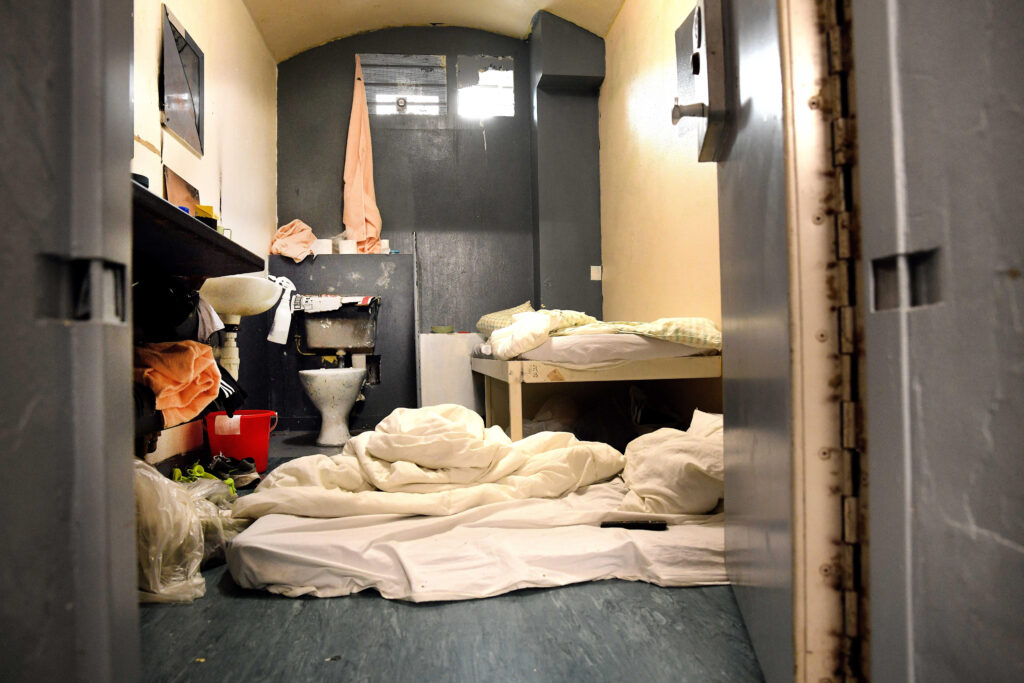
Yet, this is the experience for some people in our prisons. The foreword to the 2023 Annual Report of the Inspector of Prisons opens with an account of the “scourge of overcrowding,”15 painting an increasingly common vista within Irish prisons. During an inspection of Cloverhill Prison,16 it was discovered that, in
38 cells, four people were being held in a space measuring less than 12 square metres. Of the four people, one person would have a mattress on the floor of the cell. To give a sense of the space here, this typical cell is equivalent to a standard car parking space.17
While this revelation was startling enough, more shocking details were to come. In each small cell, there was a non-partitioned in-cell toilet, yet the four prisoners had to eat their breakfast, lunch and dinner within the boundaries of an enclosed car parking space. Three meals to be consumed in what was described as “highlyconfined, stuffy and malodorous spaces.”18
The conditions of our prisons are communicative to those who are confined there. Through the cells and spaces where they are held, we tell them a story about what we think of them. This is a story of how we
see their humanity and how we respect their human dignity. Having no choice but to eat their daily meals in close proximity to a toilet which is unscreened is to, for all intents and purposes, tell a person to eat shit.
Toilets are designed to rapidly and efficiently evacuate their contents in a downward motion. What is only becoming better known is the counter movement of the forced water creating an aerosol plume in the opposite direction.19 The strong upward jet of air rapidly spreads pathogenic particles up to five feet about the bowl.20 Through the use of lasers, engineering researchers concluded that toilet bowl water
contaminated by faeces can contain pathogen concentrations after dozens of flushes, with smaller particles remaining suspended in the air while larger particles settle on surfaces and create the potential for transmission of norovirus through hand to mouth contact.
(Credit: Moya Nolan)
Even closure of the toilet lid does not eliminate the aerosol plumes coming into the shared space of the cell.21
To imagine having to eat meals and sleep on bedding in small cells, where an unpartitioned toilet is flushed many multiples of times during the day, should turn our stomachs; an invisible coating of faecal matter on almost all surfaces. Yet, these are the conditions experienced by men in Cloverhill Prison and they have undoubtedly had their stomachs turned.
KITCHEN IRREGULARITIES
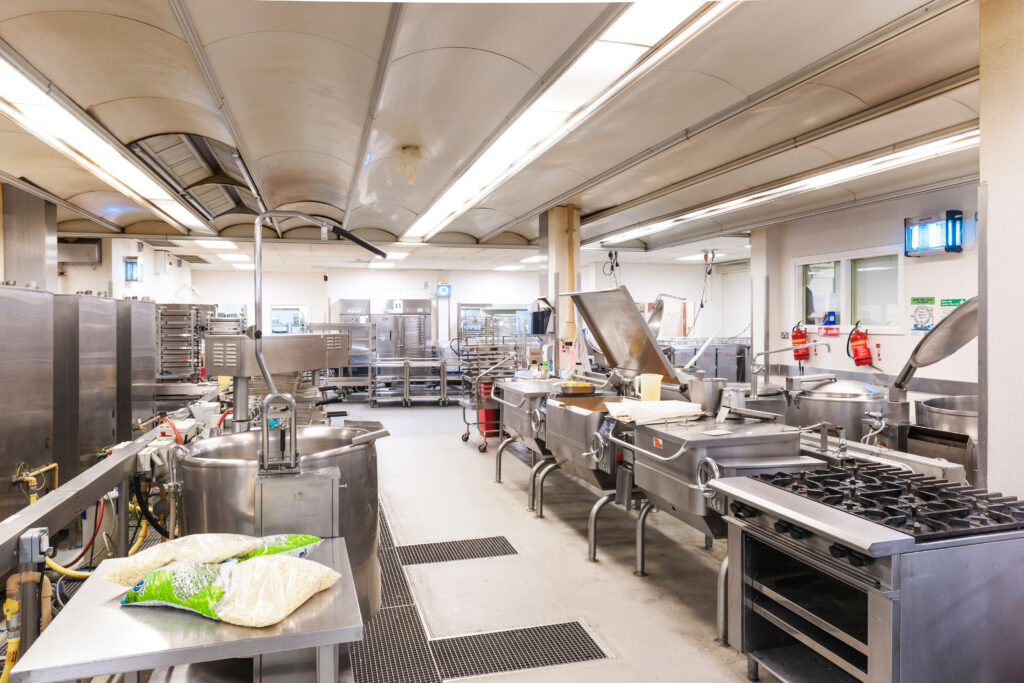
In 2013, Noel McGree was working a regular shift as a prison officer in the kitchen and catering section at the Midlands prison. One instinctive decision led to a chain reaction of events being set in motion. McGree said that he simply “refused to comply with a corrupt request.”22 He reports that he was told by a senior staff member to take food items from the prison kitchen to a waiting van. The food was to be used for the commercial food enterprises of that senior staff member. McGree declined, and his life, and that of his family, has been upended and destroyed over the course of twelve years.23 National print
media has never been forensic24 in its coverage of the case but McGree’s story is still being raised in the Houses of the Oireachtas.25
At the time, McGree admits to having turned a blind eye to what seems to have been rampant corruption in the Midlands and having just continued with his duties. In his account to Jane Turner, a former FBI whistleblower and contributing editor of Whistleblower Network News,26 McGree identified that various other prison resources and equipment were being used for staff commercial enterprises. But by his account, the prison kitchen was the locus of this activity. It was being used by the catering department to cater private parties in public venues. Prison food was being appropriated and sold to people for occasions like funerals, birthdays, and anniversaries. The prison’s resources, paid for by the Irish taxpayer, were being siphoned off with abandon for private individual gain.27
Refusal to participate in the theft had immediate repercussions. McGree was removed from the prison catering service—for which he had trained specifically and had trained others to QQI level—and reassigned to a landing with junior recruits.28 With no law for protected disclosures in Ireland, and
not wanting to willingly break the omerta, McGree reported the risks of having an inexperienced person in charge of the catering section, but held back on the wider corruption as he just wanted his former role
back. Likening the Midlands to Shawshank prison in the eponymous film, McGree noted that “corruption was rife”29 and there were many side hustles. That the retribution and retaliation were so immediate and swift,30 continuing to present day,31 may suggest that McGree was not embellishing his assessment.
Being asked to steal food for a superior was likely an opportunity to demonstrate loyalty to the other prison staff, while also an invitation to be involved in material gain. Corruption becomes somehow less risky when everyone is involved to some degree. As McGree notes, it “was probably a test and a way to include me in the corruption. When everyone is included then they are less likely to report it.”32 Like the offer of the Edenic apple, a decision had to be made.
Following the passing of the Protected Disclosures Act of 2014, McGree made a protected disclosure in 2016 about the bullying he received.33 The Department of Justice refused to accept that McGree was entitled to protections so he appealed.34 In 2017, following the appointment of a retired judge,
Justice William Early, a report was published by the Department of Justice which identified McGree as a whistleblower and acknowledged the ill-treatment and retaliation he received.35 Tellingly, the corruption in the Midlands was not mentioned but McGree received two formal apologies—from the Department and the Irish Prison Service—and was reinstated to his old role in the catering section.36 In many ways this was only the beginning of his travails and the apologies were “paper exercises.”37
In the interim, the irregularities continued,38 maybe emboldened by McGree’s scapegoating and an institutional circling of the wagons. After a decision to report the full extent of the corruption, McGree provided private testimony to the Public Accounts Committee in 2019.39 Following another report in 2020, commissioned by the Department of Justice, a figure was finally put on the endemic corruption
in the Midlands: an estimated total of €20 million over eight years.40 This is an eyewatering sum when the central theft was food. However, a 2019 audit of catering services and food procurement found a number of “non-standard, high-value food items” such as fillet steaks, rib roasts, prosciutto and catering
chocolate being “repeatedly purchased” in one prison.41 The report recommended a criminal investigation, which was commenced by the National Bureau of Criminal Investigation with a diminished focus on alleged property theft, rather than allegations of corrupt practice.42
Yet, McGree, a reluctant whistleblower, received no protection from various Ministers or the Government of the day.43 His treatment is a textbook example of how not to protect those who expose corruption. His identity was revealed early in 2017, permitting various forms of overt and covert retaliation. Public
pronouncements by various Ministers that he would be protected as a whistleblower were never followed through. Reports abounded, but little else.44 Thinking of his experiences, McGree laments the individual suffering experienced by trying to do the right thing but is equally reflective of the structural arrangements incubating certain malpractice, observing that:
“The high walls in prison are not just to keep the prisoners in, they’re to keep the public’s
gaze out. There’s no prison oversight body and staff can’t talk to the media under the
Official Secrets Act so all the abuse and scandals are kept hidden inside.”45
The Department of Justice and the Prison Service also had an opportunity to confront corruption, yet essentially allowed the waiting van to continue to be filled. Malpractice devoid of accountability appears to continue.46 This pattern has a chilling effect on any future whistleblowers and, for those with strong
convictions and the courage to risk it, retaliation is all but guaranteed.47
PRISON KITCHENS AND LABOUR
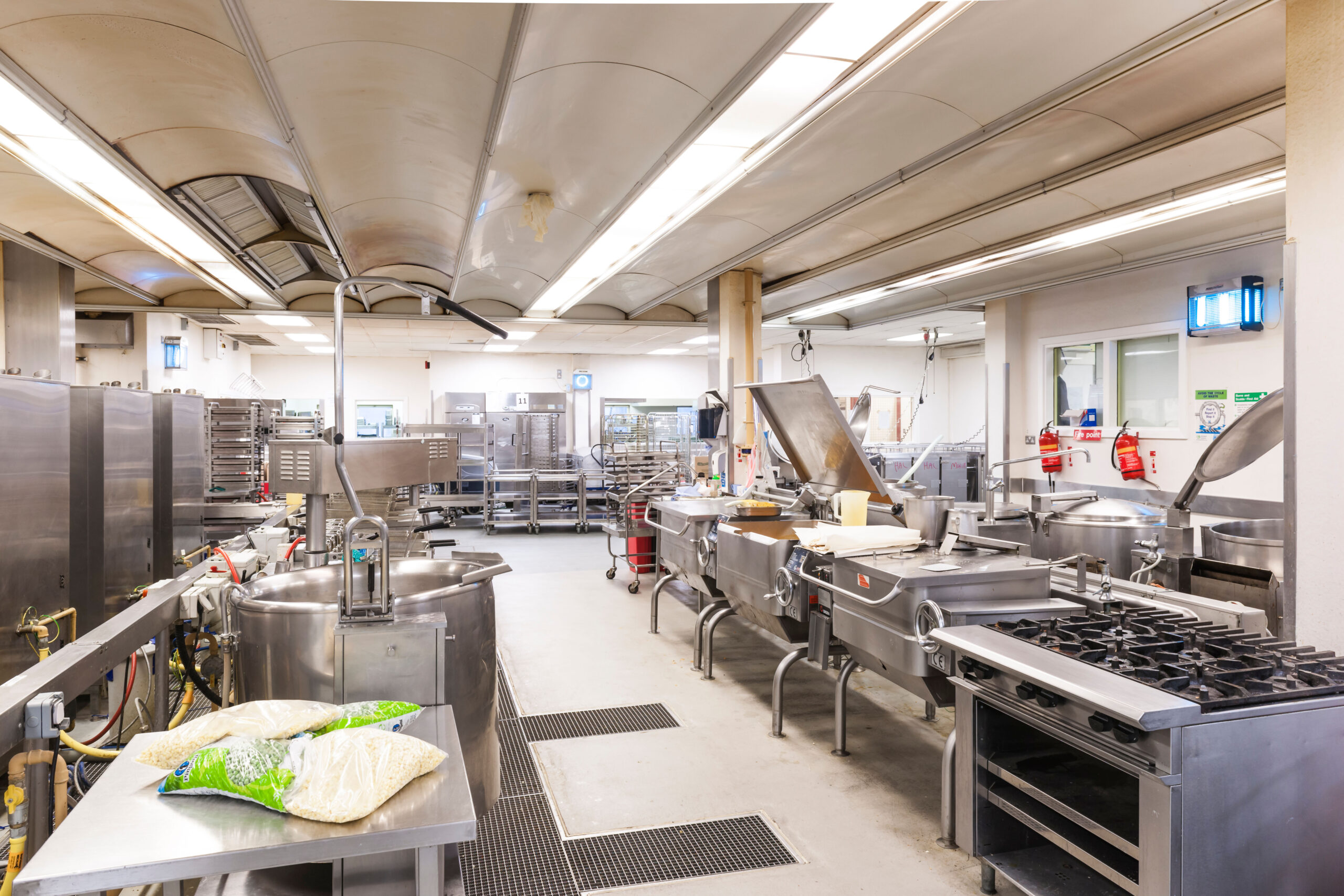
Despite an operating budget of €579 million for 2026,48 the prison service still runs on de facto unpaid labour. The casual visitor walking through a wing “would be impressed by the spotlessly-clean landings (free labour!),”49 and they are observing the diligent work of a person incarcerated in the prison. Many of the cleaning and institutional hygiene tasks are assigned to prisoners as it is “a basically universal function of imprisonment that those who are incarcerated have work to do.”50
The same goes for the catering provided to prisoners and prison staff in their respective mess halls. The majority of the food provided to the over 5,700 prisoners is provided by fellow detainees.51 This is noted by the Inspector of Prisons, from an oddly bottom-line perspective, that this aspect of internal services is provided “at a much lower cost than statutory or private provision.”52 Many of Ireland’s prisons have prisoners assigned to work in the kitchens, typically between 10 and 20 in each prison kitchen.53 With some prisoners working in the kitchen seven days a week.
Anecdotally, a role in the prison kitchen is highly sought by prisoners. It provides large swathes of distraction from a prison life which is fundamentally boring and demoralising.54 Yet work completed by those society has imprisoned is significantly different from work in the community as “it is a form of labour that is uniquely susceptible to unjust practices because of the vulnerability of the worker.”55
Hargaden argues that while prison work is classified as a job, it is “often not appropriately remunerated”56 and tends to sway from potentially rehabilitative to exploitative.57
As remuneration for prison work, prisoners may receive gratuities. The daily amount of the approved work gratuity is fixed for all prisons/ institutions at 50 cent per session with a maximum of €3.50 per week for work training activities, such as work in kitchens, laundry, industrial cleaning, grounds maintenance,
industrial waste management, painting and stores.58 A week’s work gratuities do not stretch far in a prison shop with no market competition.
Education and employability are presented as the key cornerstones of prisoner reintegration
to society. A key reality for successful reintegration that is overlooked (intentionally) are questions of money and personal resources. Many people in prison return to situations of poverty with even less than when they entered prison. If the normalisation principle was to apply to prison labour, then the men and women should be receiving the living wage of €15.40 for every hour worked.59 It is not proposed that prison workers receive their wages immediately while under sentence, as the risk of tensions are present with certain prisoners being identifiable as having access to additional monies. Yet this remuneration for work, as in the community, could be held in a third-party account until the prisoner is being released. This lump sum which they earned by their labour would provide a basis for securing a room or accommodation to restart their lives.
WHAT IS PALATABLE TO SOCIETY
If Bourdain’s assertion that all food is political is true, then this sphere naturally brings in questions of justice and injustice. How our food is produced, where it is produced, and the degree of profit extraction by processors and supermarket chains are concerns for environmentalists. Yet, when we judge the Irish
prison, political interaction, and policy making through the lens of food, we are presented with three courses of injustice: food consumption in deeply undignified settings; systemic maltreatment of a whistleblower exposing eight-figure corruption; and de facto unpaid labour propping up a system with an annual operating budget of almost €600 million.
Whether we consider the prison or the plight of the prisoner at all, we can’t escape the fact that
the prison is part of our society. A part which we fund to the detriment of other areas of social services and have certain expectations of the humane treatment of others. If Irish society finds these injustices palatable and can force them down, then something more is revealed of our society’s appetite and tastes.
Footnotes
- Council of Europe, ‘European Prison Rules’, July 2020, rule 22.1. ↩︎
- Council of Europe, ‘European Prison Rules’, rule 22.4. ↩︎
- Council of Europe, ‘European Prison Rules’, rule 22.2. ↩︎
- ‘Statutory Instrument No. 252/2007 – Prison Rules 2007’, Government of Ireland, 2007, rule 23.1. ↩︎
- For an example, see Office of the Inspector of Prisons, COVID-19 Thematic Inspection of Castlerea Prison (Office of the Inspector of Prisons, 2021), 17. ↩︎
- Statutory Instrument No. 252/2007 – Prison Rules 2007’, rule 23.2. ↩︎
- Office of the Inspector of Prisons, COVID-19 Thematic Inspection of Castlerea Prison, 18. ↩︎
- Office of the Inspector of Prisons, COVID-19 Thematic Inspection of Loughan House (Office of the Inspector of Prisons, 2021), 16. ↩︎
- Office of the Inspector of Prisons, COVID-19 Thematic Inspection of Midlands Prison (Office of the Inspector of Prisons, 2021), 15. ↩︎
- See United Nations, Standard Minimum Rules for the Treatment of Prisoners (Mandela Rules) (United Nations, 2015), rule 22.1; Council of Europe, ‘European Prison Rules’, rule 22.4. ↩︎
- For a detailed account of the existing scholarship on the symbolic role of prison food, An-Sofie Vanhouche has explored how prison food can shape or misshape aspects of identity and reflect existing power relationships in a carceral environment. For more, see An-Sofie Vanhouche, Prison Food: Identity, Meaning, Practices, and Symbolism in European Prisons (Palgrave Macmillan, 2022), 11–34. ↩︎
- Deborah Lupton, Food, the Body and the Self (SAGE Publications Ltd, 1996). ↩︎
- Anthony Bourdain, ‘SHUT UP AND EAT’, Medium, 29 May 2014, https://medium.com/@Bourdain/shut-up-and-eat-a4b7c259f6ee. ↩︎
- Larb is a salad made with minced meat, originating from Laos, and influential in the cuisines of neighbouring countries such as Thailand. ↩︎
- Office of the Inspector of Prisons, Annual Report 2024 (Office of the Inspector of Prisons, 2025), 5. ↩︎
- Cloverhill prison is Ireland’s primary remand prison. ↩︎
- I want to thank the Irish Penal Reform Trust for this very helpful comparison when conceiving of how little space is available in these overcrowded prison cells. In the Dublin City Development Plan 2016-
2022, the required minimum dimensions for a short-term parking bay, such as in a shopping centre, must be at least 2.5 metres wide by 4.75 metres in length. This totalled an area of 11.875 square metres. See Dublin City Council, ‘16.38.9 Design Criteria | Dublin City Development Plan 2016-2022’, accessed 2 November 2025, www.dublincity.ie/dublin-citydevelopment-plan-2016-2022/16development-standards/1638-carparking-standards/16389-design-criteria. ↩︎ - Office of the Inspector of Prisons, Annual Report 2024, 5. ↩︎
- David L. Johnson et al., ‘Lifting the Lid on Toilet Plume Aerosol: A Literature Review with Suggestions for Future Research’, American Journal of Infection Control 41, no. 3 (2013): 254–58. ↩︎
- John Crimaldi, ‘Toilets Spew Invisible Aerosol Plumes with Every Flush
– Here’s the Proof, Captured by High-Powered Lasers’, ABC News, 9 December 2022, www.abc.net.au/news/2022-12-10/toilets-puttingdown-the-lid-invisible-aerosol-plume/101756030. ↩︎ - Jacob Stern, ‘Whatever Happened to Toilet Plumes?’, The Atlantic, 26 January 2023, www.theatlantic.com/health/archive/2023/01/covid-virusspread-toilets-public-bathrooms/672846/. ↩︎
- Liz Dunphy, ‘Whistleblowing “Has Done so Much Damage”, Says Former Prison Officer’, Spotlight, Irish Examiner, 26 December 2020, www.irishexaminer.com/news/spotlight/arid-40196880.html. ↩︎
- Dunphy, ‘Whistleblowing “Has Done so Much Damage”, Says Former Prison Officer’. ↩︎
- Of the two national daily newspapers, there have been three articles about the long running case. The Irish Times has a solitary piece from 2021, while the Irish Independent has two recent articles covering the eviction of the McGree family from their home in Portlaoise by a vulture fund, and their contribution to an EU Inquiry on the treatment of whistleblowers, see Conor Gallagher, ‘Allegations of Property Theft by Staff at Midlands Prison Investigated’, The Irish Times, 6 January 2021, www.irishtimes.com/news/crime-and-law/allegations-of-property-theft-by-staff-at-midlands-prisoninvestigated-1.4450767; Amy Molloy and Maeve Sheehan, ‘Prison Officer Whistleblower Evicted from Home over Substantial Mortgage Arrears Says State Didn’t Protect His Family’, Irish News, Irish Independent, 15 October 2025, www.independent.ie/irish-news/prison-officer-whistleblowerevicted-from-home-over-substantial-mortgage-arrears-says-statedidnt-
protect-his-family/a673403875.html; Maeve Sheehan, ‘Irish Whistleblowers Flood EU Inquiry with Allegations of Reprisals for Speaking Out’, News, Irish Independent, 21 September 2025, www.independent.ie/news/irish-whistleblowers-flood-eu-inquiry-with-allegations-of-reprisalsfor-speaking-out/a1038853716.html. ↩︎ - Houses of the Oireachtas, ‘An tOrd Gnó – Order of Business – Seanad Éireann (27th Seanad) – Tuesday, 14 Oct 2025’, Houses of the Oireachtas, 14 October 2025. ↩︎
- Whistleblower Network News is an independent US-based online newspaper providing readers with up-to-date information on whistleblowing. Beginning in 2007, they cover national and international legal developments and publish editorial and opinion articles on whistleblowing and compliance issues. Their stated goal is to develop a strong reputation as an authoritative news source on whistleblower related issues. For more on its reporting and advocacy, see ‘About’, Whistleblower
Network News, 29 July 2020, https://whistleblowersblog.org/about. ↩︎ - For a full account of McGree’s version, on which this section is based, see Jane Turner, ‘Noel McGree’, Whistleblower Network News, 25 January 2021. ↩︎
- Dunphy, ‘Whistleblowing “Has Done so Much Damage”, Says Former Prison Officer’. ↩︎
- Turner, ‘Noel McGree’. ↩︎
- Mick Clifford, ‘Whistleblowers Justified in Fearing Reprisal for Speaking Out’, Opinion, Irish Examiner, 10 December 2020, www.irishexaminer.com/opinion/commentanalysis/arid-40187622.html. ↩︎
- Molloy and Sheehan, ‘Prison Officer Whistleblower Evicted from Home over Substantial Mortgage Arrears Says State Didn’t Protect His Family’. ↩︎
- Turner, ‘Noel McGree’. ↩︎
- Mick Clifford, ‘Prison Service Whistleblower Felt He Had Nowhere Else to Go’, Opinion, Irish Examiner, 15 November 2018, www.irishexaminer.com/opinion/commentanalysis/arid-30885439.html. ↩︎
- Clifford, ‘Prison Service Whistleblower Felt He Had Nowhere Else to Go’. ↩︎
- On one occasion, McGree was allegedly threatened with being framed for being contraband into the prison, see Gallagher, ‘Allegations of Property Theft by Staff at Midlands Prison Investigated’. ↩︎
- Molloy and Sheehan, ‘Prison Officer Whistleblower Evicted from Home over Substantial Mortgage Arrears Says State Didn’t Protect His Family’. ↩︎
- Dunphy, ‘Whistleblowing “Has Done so Much Damage”, Says Former Prison Officer’. ↩︎
- The food theft was having effect beyond just McGree’s personal and work life. He reported that food shortages were becoming common in the Midlands prison, causing tensions and violence among prisoners. See Turner, ‘Noel McGree’. ↩︎
- Mick Clifford, ‘Investigation into Ministerial Failures to Protect Whistleblower’, Irish Examiner, 10 December 2020, www.irishexaminer.com/news/arid-40187652.html ↩︎
- Molloy and Sheehan, ‘Prison Officer Whistleblower Evicted from Home over Substantial Mortgage Arrears Says State Didn’t Protect His Family’. ↩︎
- Daniel McConnell and Cianan Brennan, ‘Whistleblower Asks PAC to Find out Why He Is Omitted from Prison Investigation’, Irish Examiner, 12 June 2021, www.irishexaminer.com/news/arid-40311734.html. ↩︎
- Gallagher, ‘Allegations of Property Theft by Staff at Midlands Prison Investigated’. ↩︎
- Clifford, ‘Whistleblowers Justified in Fearing Reprisal for Speaking Out’. ↩︎
- Clifford, ‘Investigation into Ministerial Failures to Protect Whistleblower’. ↩︎
- Dunphy, ‘Whistleblowing “Has Done so Much Damage”, Says Former Prison Officer’. ↩︎
- Conor Gallagher, ‘Records Falsified Relating to Mentally Ill Inmate Found Dead in Cloverhill Prison, Watchdog Finds’, The Irish Times, 5 August 2025, www.irishtimes.com/crimelaw/2025/08/05/records-falsifiedrelating-to-mentally-ill-inmate-found-dead-prison-watchdog-finds/. ↩︎
- Of the 74 submissions from across the member states received by an EU inquiry, evaluating whistleblower protections, 40 submissions were from Ireland alone. See Molloy and Sheehan, ‘Prison Officer Whistleblower Evicted from Home over Substantial Mortgage Arrears Says State Didn’t Protect His Family’. ↩︎
- Department of Justice, Home Affairs and Migration, ‘Record €6.17 Billion for Justice Sector in Budget 2026’, Gov.Ie, 9 October 2025, www.gov.ie/en/department-of-justice-home-affairs-and-migration/news/record-6-17-billion-for-justice-sector-in-budget-2026/. ↩︎
- Peter McVerry SJ, ‘An Overview of Challenges Faced in Irish Prisons’, Jesuit Centre for Faith and Justice in Ireland, 30 March 2023, www.jcfj.ie/2023/03/30/an-overview-of-challenges-faced-in-irish-prisons/. ↩︎
- Kevin Hargaden, ‘Prison, Work, and Human Dignity’, in Catholic Social Thought and Prison Ministry: Resourcing Theory and Practice, ed. Elizabeth Phillips and Férdia J. Stone-Davis (Taylor & Francis, 2024), 48. ↩︎
- These workers seem not to be what Leo Vardkar had in mind as he declared his support for all the “people who get up early in the morning.” See Sarah Bardon, ‘Varadkar Wants to Lead Party for “People Who Get up Early in the Morning”’, The Irish Times, 20 May 2017, www.irishtimes.com/news/politics/varadkar-wants-to-lead-party-for-people-who-getup-early-in-the-morning-1.3090753. ↩︎
- In six General Inspections between November 2022 and December 2023, as yet unpublished, it was noted by Inspectors that there was “improvement of the prisoner food menu.” See Office of the Inspector of Prisons, Annual Report 2024, 17. ↩︎
- Drawing on the last available prison inspection reports from 2021, Castlerea had 22 prisoners assigned to work in the kitchen with a further seven prisoners working in the prison staff mess hall. Mountjoy Male had 21 assigned prisoners, while Loughan House, an open prison, had 12 prisoners rostered in the kitchen rota. See Office of the Inspector of Prisons, COVID-19 Thematic Inspection of Loughan House, 17; Office of the Inspector of Prisons, COVID-19 Thematic Inspection of Loughan House, 17; Office of the Inspector of Prisons, COVID-19 Thematic Inspection of Mountjoy Men’s Prison (Office of the Inspector of Prisons, 2021), 12. ↩︎
- McVerry SJ, ‘An Overview of Challenges Faced in Irish Prisons’. ↩︎
- Hargaden, ‘Prison, Work, and Human Dignity’, 49. ↩︎
- Hargaden, ‘Prison, Work, and Human Dignity’, 49. ↩︎
- Virginia Mantouvalou, ‘Work in Prison: Reintegration or Exclusion and Exploitation?’, European Labour Law Journal 15, no. 3 (2024): 409–25. ↩︎
- The approved work gratuities are additional to the automatic gratuity dependent on the prisoner’s incentivised regime. The lowest level or “basic” is 95c per day, those on “standard” receive €1.70 per day, and the prisoners on “enhanced” are paid €2.20 per day. In comparison, a full week of work gratuities is the equivalent to two days of “standard” gratuity. See Houses of the Oireachtas, ‘Prisoner Gratuity Payments – Wednesday, 13 May 2020 – Parliamentary Questions (33rd Dáil)’, text, Houses of the Oireachtas, 13 May 2020, Ireland; Ali Bracken, ‘Half of All Prisoners Earn Top Rate of Pocket Money for Good Behaviour’, Irish Independent, 25 December 2022,
www.independent.ie/irish-news/half-of-all-prisoners-earn-top-rate-ofpocket-money-for-good-behaviour/42243093.html. ↩︎ - ‘Cost of Living Increases Push Living Wage to €15.40 per Hour in 2025/26 | Social Justice Ireland’, Social Justice Ireland, 1 October 2025, www.socialjustice.ie/article/cost-living-increases-push-living-wageeu1540-hour-202526. ↩︎