

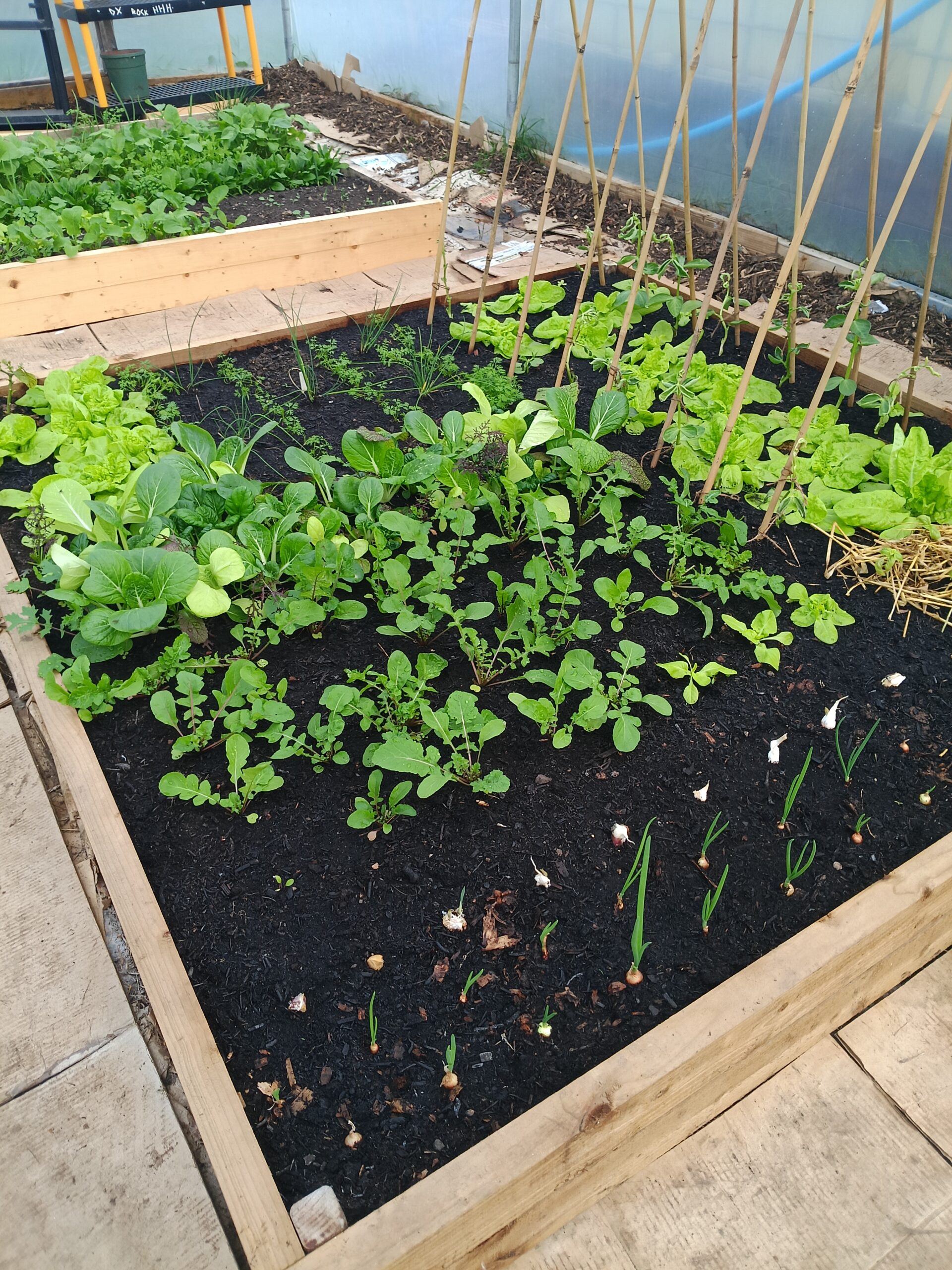
Niall Leahy SJ
Niall Leahy SJ is the Director of the Jesuit Centre for Faith and Justice. Before entering the Jesuits he worked in the financial services sector and qualified as a Chartered Accountant. Since joining the Jesuits he has gained degrees in philosophy, education and theology with a focus on eco-theology. After ordination he served as curate and then Parish Priest at Gardiner Street Parish. He is a member of the Gardiner Street Jesuit community.
INTRODUCTION
I may not have green fingers but I enjoy working in the garden. The first garden I worked in was at home. Mowing the lawn, weeding the flower beds, strimming the edges, and disposing of garden waste were
all excellent ways of being useful and earning some pocket money. But when it came to the cultivation of things, that was best left to my father, who was the brains of the operation. I didn’t inherit that particular intelligence and I still consider myself more of a labourer than a true gardener. I will dig, shovel, trim, shear and haul all day long to my heart’s content, but I must confess that I know very little about growing plants. The early potatoes ought to be sown around St Patrick’s Day, but that’s about as far as my knowledge of the gardening calendar goes. Nonetheless, the enjoyment of “working in the garden” has kept me coming back to gardening projects.
A few years ago when I was a curate1 in Gardiner Street Parish, the mother of a transition year student reached out to me and asked if I could offer any work experience to her son and his school mates. Absolutely! I bought a polytunnel and some raised beds for our inner city walled garden and the lads gainfully helped assemble it all. Once erected, the polytunnel effortlessly attracted people from all quarters: parishioners, school children and their teachers, asylum seekers, researchers, and Jesuits. I was disappointed when it was announced that a new building project in our grounds meant that the polytunnel would be taken down. (Thankfully it found a new home in Co. Monaghan). But in three years, I saw just how ecologically, socially and spiritually fruitful a small gardening project could be.
NEW ADVENTURE AT THE OLD GARDEN
As fortune would have it, at the same time as our walled garden was becoming a building site, another gardening project was starting up — The Old Garden at Clongowes Wood, Co. Kildare.
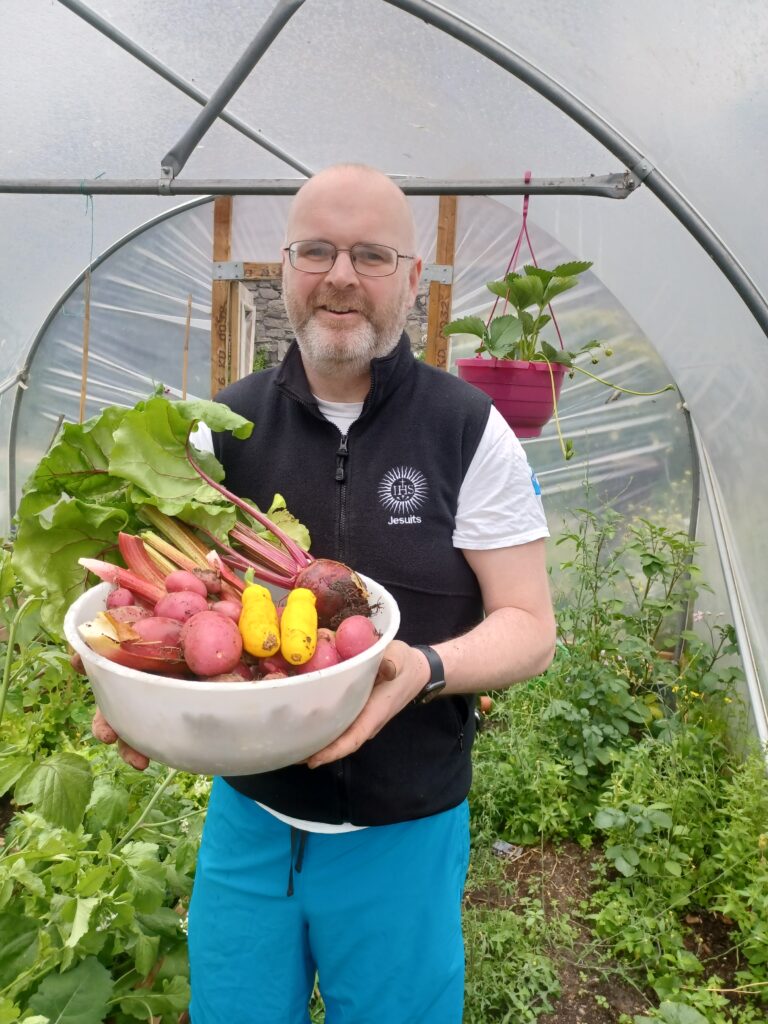
An existing community garden in nearby Rathcoffey was on the look out for a larger location. They asked the Jesuits for the use of some land at Clongowes and a lease of seven acres of farmland was given.
From the outset, it was clear that the group had the vision and ambition to create a significant ecological and social project. In their own words, The Old Garden’s vision is “to cultivate not just plants, but a thriving ecosystem where biodiversity flourishes, individuals connect, and sustainability thrives.”2
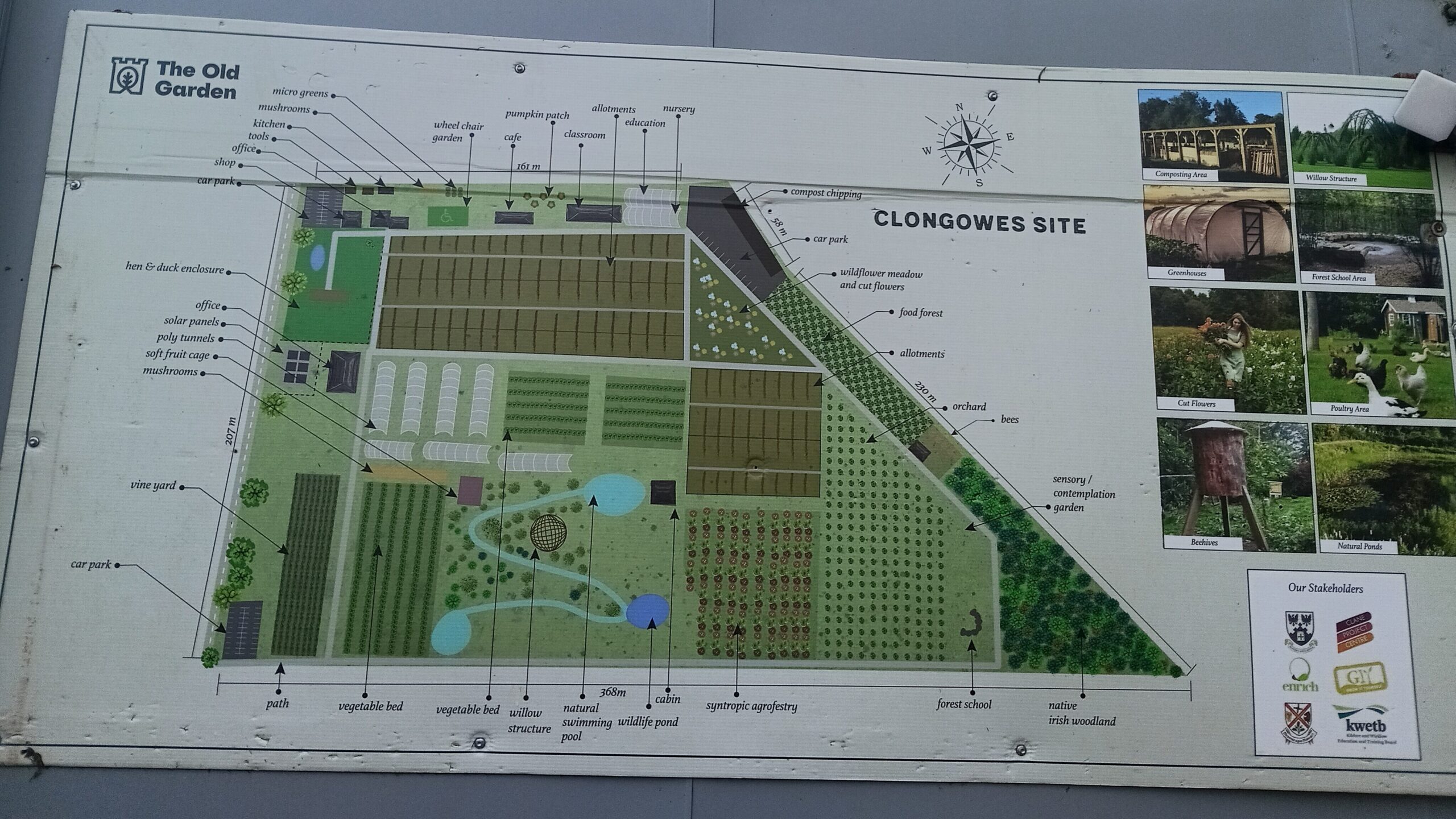
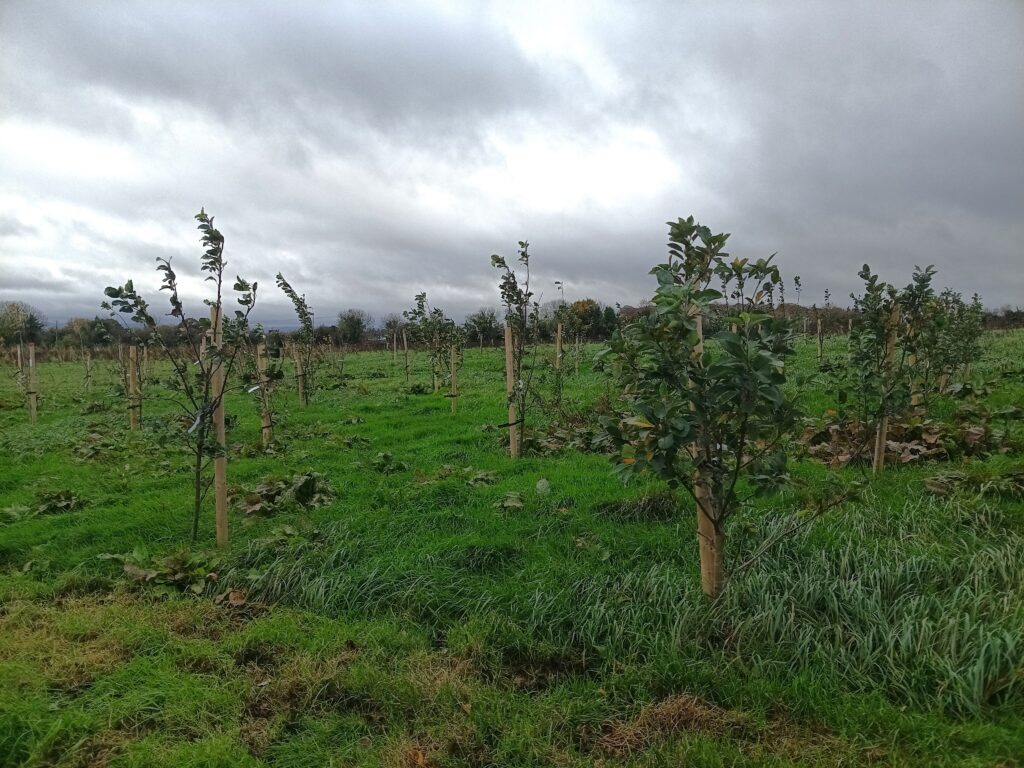
Founded in 2024, The Old Garden is still in its infancy, and yet it has already developed a remarkable range of features and activities: 100 individual allotments for gardeners, egg-laying ducks and hens, honey-producing beehives, three polytunnels, an orchard, a prefab classroom, and solar panels that power the water pump. Regular market days add to its vibrancy and community involvement. More
developments are planned, but in a short space of time the project has already grown in size, scope, and diversity.
I recently got involved with The Old Garden. My allotment is at the end of a row, which means that it is relatively large — around 10 metres long and 7 metres wide. When I received it, it was all grass. Correction: it was all grass and dock leaves. The community garden operates on organic principles, so quick chemical fixes like weed killer and pesticides are not permitted. The only way to be rid of the pesky dock leaves is to dig them up by the roots. To prepare the beds I was advised to use the no-dig method which maintains the soil’s structure and fertility. Instead of removing the sods of grass, you cover the de-dockified area with cardboard and then cover the cardboard with top soil and decomposed manure.
Carrying load after load of soil and manure in the wheelbarrow is very physical work, but it’s more fun than the gym. The worms get to work straight away and once you have a decent layer on top of the cardboard the bed is ready for planting. After I prepared one length in this manner, one of the volunteers kindly planted seed potatoes, carrots and beetroot for me. This summer was warm and humid so it was no surprise when the black spots of blight appeared on the potato stalks. The beetroot and carrots are faring much better, thank God — a sign of fertile ground. Whenever they are ready for harvesting I plan to bring some back to my Jesuit community and to donate the rest to be sold at the The Old Garden market, the proceeds of which go towards the running of the garden.
AGROECOLOGY IN ACTION
The Gardiner Street polytunnel and The Old Garden at Clongowes Wood ran/run according to the principles of agroecology. A loose definition of agroecology is agriculture that follows the patterns of ecology rather than those of industry. Agroecology is more than a set of principles that individuals put into practice: it is also a movement, representing a wide variety of small-scale food producers and consumers. The delegates who attended the International Forum for Agroecology in Nyéléni, Mali in 2015 represented “peasants, indigenous peoples, communities, hunters and gatherers, family farmers, rural workers, herders and pastoralists, fisherfolk and urban people.”3 Community gardeners are not specifically mentioned, but they can be reasonably included under the heading of urban people.
- “The production practices of Agroecology are based on ecological principles like building life in the soil, recycling nutrients, the dynamic management of biodiversity and energy conservation at all scales…. There is no use of agrotoxins, artificial hormones, GMOs or other dangerous new technologies in Agroecology.”4
As I said, the no-dig method for preparing beds was recommended to me. Without this advice, my default approach would have been to dig and remove every sod to uncover fresh soil. The act of digging, however, disrupts the drainage channels that worms establish and the fungal networks that plants utilise for communication and nutrient sharing. It also releases carbon that is locked into the soil. Nodig is beneficial for plant health as it allows the plants to benefit from the natural regenerative and fertile processes of the soil’s ecosystem.
The same thinking informs the policy not to use herbicides, pesticides, and fungicides. If I had used toxins to kill the grass and the docks, or even to prevent the onset of blight, I would have got trapped into the expensive loop of paying for toxins which decrease soil fertility and then compensating for this with artificial fertilisers. This approach takes soil, which is a complex and diverse ecosystem, and turns it into a sterile substrate which cannot provide nutrients. In the long run, it is not a sustainable option, regardless of scale. I have met farmers who are making the transition back to agroecological methods. One of them
told me that he has learned to “feed the soil, not the plant!”
Part of the agroecological conversion is also to see the positive function that ‘weeds’ play in the wider ecosystem. Dock plants are certainly annoying because they are so persistent and roots go deep, but they are also an important source of food for many insects, including caterpillars, which are eaten by birds and
hedgehogs. The dock leaves are doing their bit for biodiversity. And as for the blight, I knew I was taking a risk by planting potatoes so late in the summer. There is every reason to get them down around St Patrick’s Day.
- “Families, communities, collectives, organisations and movements are the fertile soil in which Agroecology flourishes.”5
The two community garden projects that I have been involved with have been intensely collaborative projects between multiple organisations and constituencies. I was truly amazed by the number of constituencies that the Gardiner Street polytunnel drew into its ecosystem in such a short space of time. It
was made possible by the Jesuit Community’s willingness to allow a section of the back garden to be given over for it. The initial ‘grunt’ came from the Transition Year students of Gonzaga College SJ. Numerous gardeners, young and old, from Gardiner Street Parish, Gardiner Street Primary School, and JCFJ, gave of their time and energy. And we were actively exploring the possibility of running an after-school forest school for the local children, only for the building works to stop that in its tracks. Special mention must also go to the editor of this issue of Working Notes who implemented permaculture principles in the garden as part of her studies in biodiversity at the nearby Cathal Brugha Further Education and Training College.
I can see that the same social dynamic is at work at The Old Garden, although on a bigger scale. Mapping the myriad community connections would be a fascinating task. But just to give a flavour, here are a few of the constituencies that are actively engaged: board members, volunteers, allotment gardeners, Clongowes Wood College SJ and Jesuit Community, Kildare County Council, local business and corporate donors and sponsors, local garden centres, KARE (supports for children and adults with intellectual disabilities), Clane Men’s Shed, market customers and other sellers, and guest speakers. Even international connections are being made: a French Jesuit novice (one who is in the initial stage of religious life) recently volunteered at The Old Garden for five weeks. The circle keeps expanding.
When communities invest in community gardens, the community and the garden both grow. Many allotments at The Old Garden are gardened by couples and families, so time spent in the garden is also family time. Others, like myself, ostensibly garden alone, and yet I have never spent time there without having casual conversation with whoever else is there. And even when I am pottering away by myself,
nature has a way of creating space for people to be alone together.
All that is to say that the insight of the agroecology delegates at Nyeléni is being borne out in these two community gardens. Community gardens flourish because of the community web that it simultaneously
depends on and helps create. All I would add is that “families, communities, collectives, organisations and movements” also flourish. They turn people who live in the same vicinity into actual neighbours. They help turn places into neighbourhoods.
- “We recognise that as humans, we are merely part of nature and the cosmos.”6
Our consumerist lifestyles give the impression that we humans sit above the rest of nature. Of course, this sense of elevation is but an illusion: it is impossible to extract or distance ourselves from the ecosystems that we are part of. For me, community gardening has been a way of regaining a sense of our embeddedness in the natural world, and humbly being “but part of nature and the cosmos.”
To give it a theatrical spin, community gardening teaches you that the rest of nature is not simply the inert stage that provides the backdrop to the human protagonists. All the elements of a community garden, human and non-human, are constantly interacting, shaping, and reshaping each other. The continuous process of acting on and being acted on, is the unfolding of a drama.
The changing weather and climate is perhaps the most tangible reminder that the author has given nature a prominent role. Gardeners, like farmers, feel the impact of each shift in sun, wind, heat, and rain. The warm and moist summer that yielded a bumper crop of apples and pears also brought the blight that
destroyed potatoes. Waking up one morning in Gardiner Street to see the polytunnel flattened by an overnight storm was a reminder that sometimes we gardeners only play a bit part. Thankfully, we could repair it, but if our food or livelihood had depended on it, the loss would have been devastating.
Much of our own impact is obvious, but gardening also has a way of alerting us to impacts that we were not previously aware of. At Gardiner Street, I knew that the garden wall provided shelter to many plants, but I only learned recently that the stone acts as a store of heat for them, and extends the flowering season. Again in Gardiner Street, we didn’t mow one section of the lawn for 18 months. Left to its own devices, it became a meadow of clovers, weld, ragwort, feverfew, and many other species. This experiment demonstrated that mowing the lawn entails more than cutting grass: it is the suppression of a magnificent array of plants, flowers and pollinators that brings complexity and biodiversity to your garden. And all of this for aesthetic reasons. But which is truly more beautiful: a perfectly mown lawn that
proclaims our control, or the wild, buzzing diversity of nature set free? Or to avoid an either/or scenario, how much mown lawn do we actually need?
- “We share a spiritual connection with our lands and the web of life.”7
If you had asked me a few years ago about experiencing a spiritual connection with the natural world, I would have assumed you meant the sense of peace that comes from walking in the hills, sitting on the beach watching the sun go down, or staring up at the moon and the stars in awe and wonder. I would have assumed that the experience had been arrived at through the contemplative ‘seeing’ of nature.
Community gardening, however, offers another avenue of arriving at the spiritual connection with nature: working with nature.
If you ever want to see Jesus’s exhortation “Freely you have received, freely give” (Mt. 10:8) being put into action, then spend an hour in your garden and observe how nature is always giving of itself: the sun always gives its light and heat; the rain gives its moisture; the soil gives its fertility; the air gives its gases; the stones give their solidity; the trees give their shelter and protection; the plants give their fruit, their seed, their smell, their colour, and their beauty. All the elements of nature continuously give everything that they have to give.
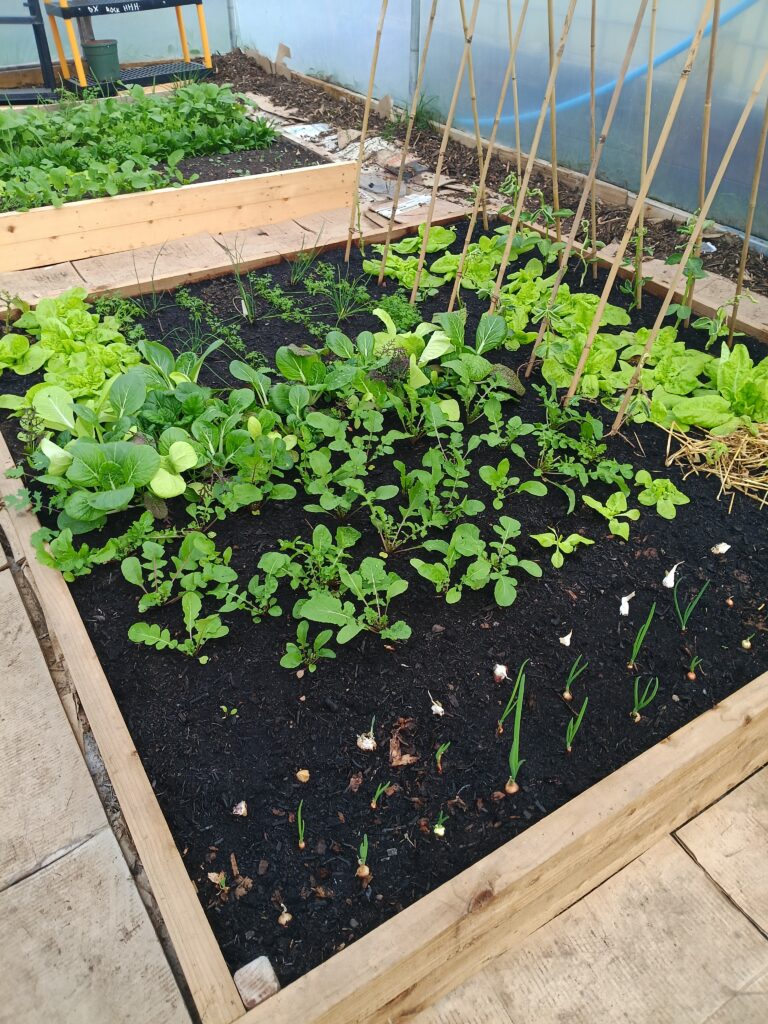
It is not a transactional arrangement. There is no prior negotiation of who will give what and what will be given in return. There is no measuring out. All elements give everything until they have nothing left to give. It works like a family, where it is impossible to keep track of who gives what or to keep a record of who owes what to whom. It is just accepted that every member gives what they have to give, and everybody gets looked after.
To get involved in a community garden is to be drawn into nature’s dynamic of generosity and self-giving. I dig up a sod, and I discover a worm down there who was already digging away. I plant some seeds and the seeds start to germinate. I put weeds into the compost heap and the bacteria start breaking them down. Truth be told, gardeners don’t just work in the garden—they work with the garden. The garden and the gardeners are generous and self-giving co-workers. This is their spiritual connection.
CONCLUSION: VALUE BEYOND MEASURE
You start to notice that the gardeners, volunteers and various constituencies that are involved are also generous people. I have got to know some of them and they simply give what they have to give. The array of talents is impressive: gardening and horticulture, DIY, community development, technology, engineering, finance and business, health and safety, communications, marketing, education.
Obviously community gardens don’t run purely on fresh air — funds are needed. Gardeners pay an annual fee for the use of their allotment. People pay for eggs, honey and the seasonal produce that are for sale. Grants for capital investment have been applied for and received. It makes complete sense that local authorities have policies and plans in place to develop more community gardens and allotments.8 By supporting these initiatives, they are acting as catalysts that release the energy and generosity of communities.
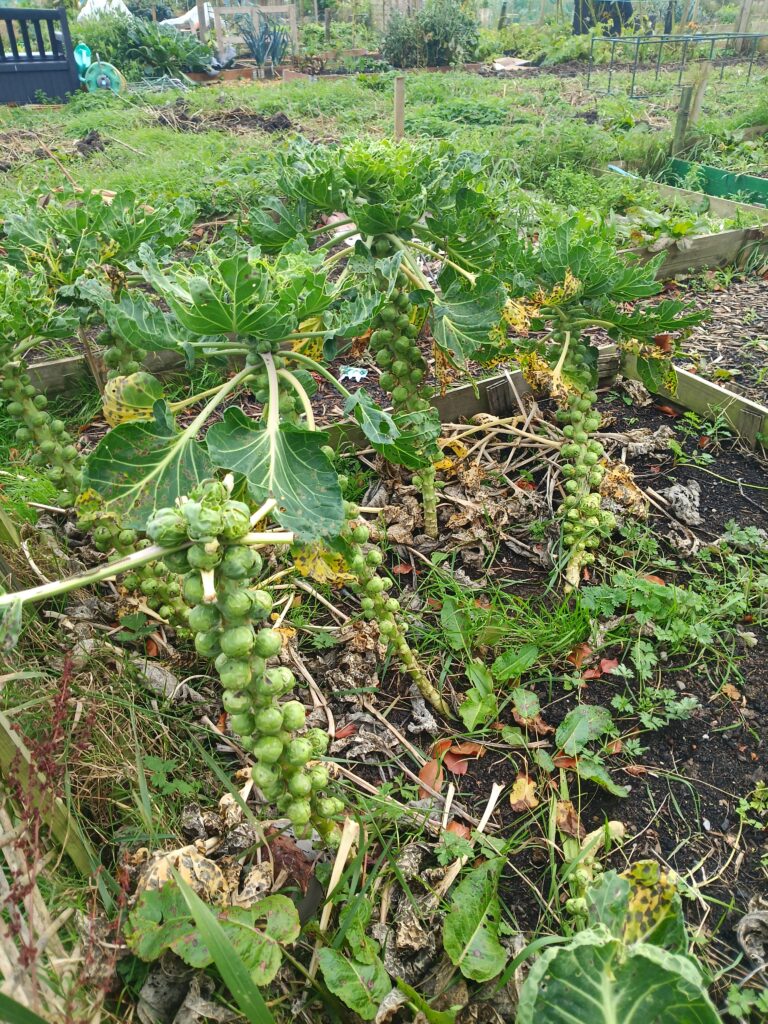
Moreover, the value that is generated far surpasses the money that is involved. And all that extra value comes from the generosity of nature and the people involved. People do all sorts of things in exchange for money, things which may be of greater or lesser value, or of none at all. But when people freely give of their time and energy to something, that is a sign that it is something of great value indeed.
Footnotes
- In the Catholic Church, a curate is a priest who serves as an assistant to the main parish priest. ↩︎
- ‘The Old Garden’, accessed 26 October 2025, www.theoldgarden.ie. ↩︎
- International Planning Committee for Food Sovereignty, ‘Declaration of Nyéléni 2015’, International Forum for Agroecology, 2015, www.foodsovereignty.org/wp-content/uploads/2023/02/NYELENI-2015-ENGLISH-FINAL-WEB.pdf ↩︎
- ‘Declaration of Nyéléni’, 4. ↩︎
- ‘Declaration of Nyéléni’, 5. ↩︎
- ‘Declaration of Nyéléni’, 5. ↩︎
- ‘Declaration of Nyéléni’, 5. ↩︎
- Kildare County Council, Kildare’s Allotment & Community Garden Strategy 2024 – 2030, https://kildarecoco.ie/AllServices/Planning/PlanningStrategies/Kildares%20ACG%20Strategy%20FV.pdf ↩︎