

Fintan Lyons OSB
Fintan Lyons OSB is a monk of Glenstal Abbey. His publications include Martin Luther: His Challenge Then and Now; Food, Feast and Fast: From Ancient World to Environmental Crisis; The Persistence of Evil: A Cultural, Literary and Theological Analysis; and The People’s Celebration of the Eucharist.
Issue 98 of Working Notes was devoted to the Encyclical Laudato Si’ ten years on and included a contribution by Ruby R. Alemu from her thesis “The Cries of the Animals: Integral Ecology After Laudato Si’.” She discussed the omission of reference to “nonhuman animals” in the encyclical because of the perspective of “anthropocentrism” and the Thomistic and Franciscan influences on Laudato Si’, and also found in Catholic Social Teaching. Alemu is correct in considering the place of animals in the scheme of things as one of today’s theological issues.
It can be asserted that the Encyclical’s theme, the care of our common home, has an anthropocentric perspective, that the physical environment is regarded primarily as a home for humanity, but it is true also that the Encyclical makes many references to animals and was inspired by the vision of St Francis who, as St Bonaventure said, would call creatures, no matter how small, by the name of “brother” or “sister.”1 Its critique of technological progress, with climate change as a consequence, is concerned not only with the welfare of humanity but also the problems animals and plants have adapting to change.2
The Encyclical is part of a series of papal documents which had already shown awareness of environmental problems and gave priority to the situation of humanity, because of the dignity of the human person, ultimately based on the Incarnation. Ecology therefore was seen primarily in terms of human ecology, as Popes wrote on a number of occasions; for example, Pope Benedict XVI said to a General Audience in August 2009: “The deterioration of nature is… closely connected to the culture that shapes human coexistence: when human ecology is respected within society, environmental ecology also benefits.”3
Alemu also referred to the launch of Laudate Deum in the Vatican Gardens in October 2023 and the contribution of the author, Jonathan Safran Foer.
(His) recommendation for the serious consideration of food system change highlights the lack of discussion in Laudate Deum of global food production and animal agriculture. His remarks also highlight the omission of animal agriculture and global food production from Laudato Si’. Specific to this conversation is the necessary reduction in meat consumption, as ‘without a major and urgent transformation in global meat consumption, and even if zero [greenhouse gas global emissions] in all other sectors are achieved, agriculture alone will consume the entire world’s carbon budget’, which
is needed to keep global temperature rise under 2°C by 2050.4
WHAT IS TO BE SAID ABOUT THAT CRITIQUE?
Western society’s diet is heavily dependent on meat and meat products, with consequent use of large tracts of land needed for cattle especially, but also for other foraging animals. Consequently, new thinking is needed in relation to animals being used as a food resource. This has in fact developed with the findings in recent decades concerning atmospheric pollution and the threat it poses to the entire ecosystem. According to a 2017 study of the effects of cattle farming, “the livestock sector contributes 14.5% of global greenhouse gas (GHG) emissions, driving further climate change.”5 A report of the
Intergovernmental Panel on Climate Change for the decade 2000-2010 concluded that GHG emissions from the production of beef and beef products were more than ten times that from other agricultural sectors, such as rice and cereals.6
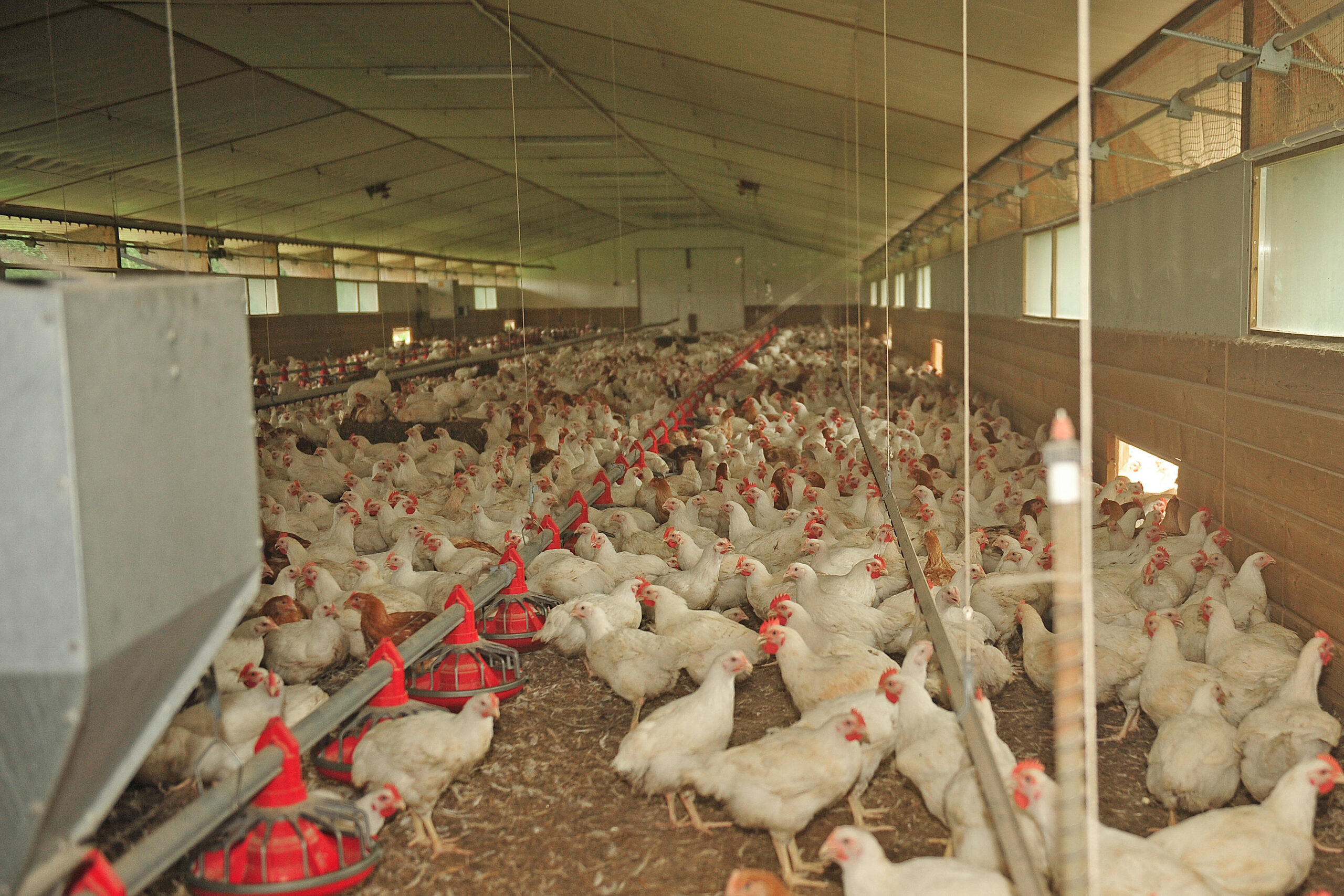
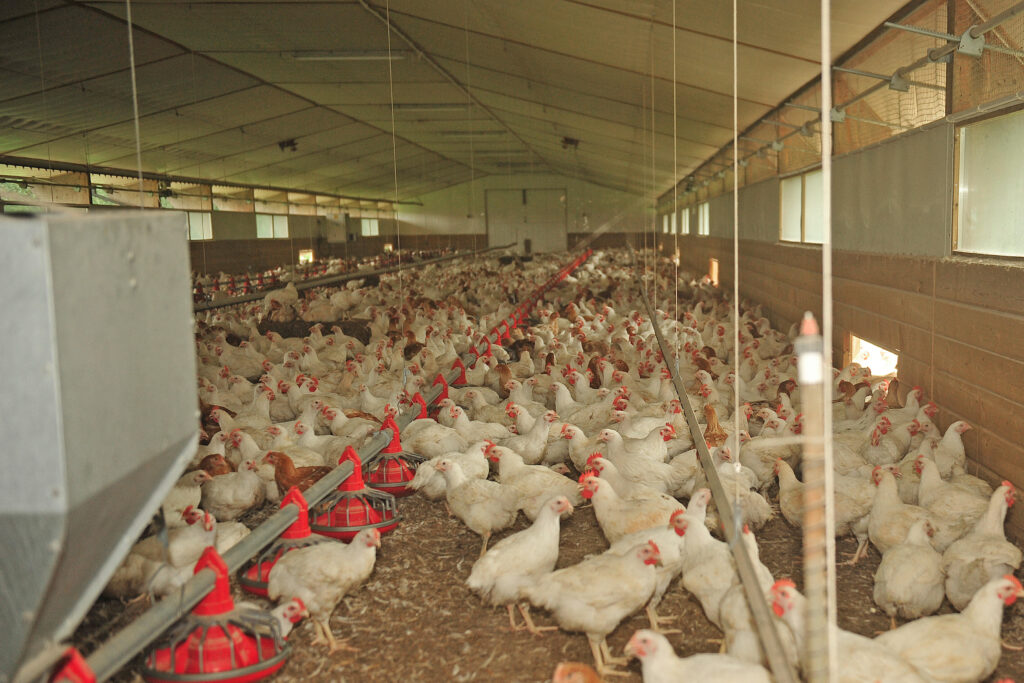
There are also other issues. Meat and meat products in general have their origin in a mass production process that involves ethical ambiguity. In addition to the environmental concerns, it is often alleged that cruelty is endemic to a large-scale process for the slaughtering of animals in order to provide meat for humans.
The nub of the case against industrialised slaughtering is that the scale of the operation makes human involvement remote, reducing it to a mechanical process in which human sensitivity to the infliction of pain is eliminated. In earlier times in the towns of Europe, animal slaughter for food was carried out at the point of sale, or even domestically, and consumers had to be aware of the cost in suffering to another creature required by the nurturing of their human lives. The portion of meat they took away from the market had an association with life as well as death, the life given up so that they could continue to live.
Rather than causing qualms of conscience in most cases, it would instead have helped humans to realise their dependence on the resources of nature and as a result mitigate an arrogance and sense of independence and autonomy that fails to reflect the real status of humanity in the grand scheme of things.
Age-old tradition could certainly have had the effect of making people of normal sensitivity accept that this arrangement was a law of nature; sustaining life for humans meant the losing of life for other creatures. In the original marketplace practice of slaughter, according to a modern study of the abattoir system, the violence involved in taking life remained with the butchers “who were credited with possessing a violent and brutal character.”7 Consumers witnessing the slaughter might in that case react with feelings of unease, but in fact, familiarity may well have led them to associate any destructive feelings with the butchers rather than themselves and so register only an interest in the nourishment
the meat would provide. Vegetarians have never accepted this as a justification for the practice of eating meat.
The satisfaction of the consumers was always a priority of those who provided them with meat, while their health and wellbeing was the concern of civil authorities. In the nineteenth century, medical discoveries relating to infectious diseases—rather than the desire to shield people from the reality of butchering—led to standards of hygiene being introduced that led to slaughterhouses being removed from public places. The gradual industrialisation of the process came with the need to provide for an increasing population,
along with the realisation that mass production resulted in greater profitability. This certainly has had the effect of allowing consumers to see meat in a different light, giving the impression, one shared by the providers, that it is simply a commodity, the subject of a transaction.
ANIMAL WELFARE ISSUES
But investigation of today’s meat production and processing industry has led to concern on the part of activists in animal welfare movements regarding conditions obtaining there, but also with regard to the psychological and physical wellbeing of those who work in abattoirs. The priority in interest is often
accorded to animal welfare, as the mass production system seems open to physical abuse when animals are crowded into the facility, and more obviously because the mechanised nature of the process means
that human intervention is in stages and no one has direct responsibility for killing. In the killing process, there is dissociation between the individual actors and the individual acts8 and the issue of whether it can be a humane act becomes irrelevant. The counterargument on the side of industry relies on questioning whether individual butchering was generally a humane process, given the possibility of imprecision or carelessness or sheer cruelty; if the opinion of historians is correct that butchers of old were of a brutal
nature. Nonetheless, there is a growing perception that greater cruelty is endemic to the production-line slaughtering of animals. However, investigation of whether animals experience panic on smelling blood as they enter the abattoir has not been conclusive. The welfare of the workers is also an issue. In the view of two present-day theologians: “In the context of mechanised mass slaughter, the alienation of the workers from the product of their activity and the annihilation of their compassion, sensitivity and imagination are
essential means of conditioning them to perpetuate slaughter willingly.”9
ENVIRONMENTAL ISSUES AND HUMAN HEALTH
An issue separate from the slaughtering process arises from investigation of the industry in environmental studies. A report entitled Food in the Anthropocene: the EAT–Lancet Commission on healthy diets from sustainable food systems10 was issued by an international commission in January
2019, with the aim of defining global dietary targets that will help to ensure that the UN Sustainable Development Goals and Paris Agreement targets are achieved. It found that, because of disparities of lifestyle between developed and under-developed economies, more than 820 million people have insufficient food. Many more consume low-quality diets that cause micronutrient deficiencies and
contribute to a substantial rise in the incidence of diet-related obesity and diet-related noncommunicable
diseases, including coronary heart disease, stroke, and diabetes.
It established what it called a “healthy reference diet,” one that needs to be obtained universally in order that the burgeoning world population may be fed without further degradation of the ecosystem. The diet consists largely of vegetables, fruits, whole grains, legumes, nuts, and unsaturated oils, a low to moderate amount of seafood and poultry, and includes no, or a low quantity of, red meat, processed meat, added sugar, refined grains, and starchy vegetables. The finding with regard to red meat has been severely criticised by farming lobbies, while media summaries of it accurately present it as implying a very meagre
“half a rasher” a day — to many consumers a finding which invites derision.
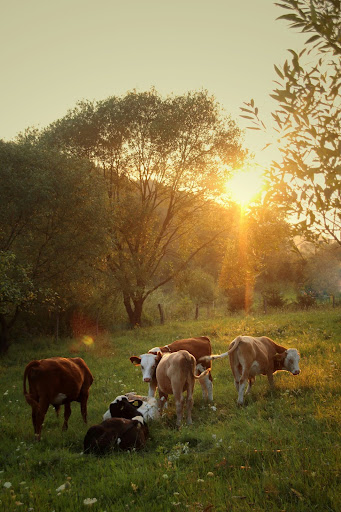
Climate change poses a major threat to the sustainability of all life, human, animal and plant, as the average global temperature continues to rise. Whatever natural climatic cycles occur, there is scientific consensus that human activity is the main cause for this and meat eating is a major contributory factor.
INTERCONNECTEDNESS AND THEOLOGY
The coalescing issues of meat eating, the animal cruelty likely to occur, and the degradation of the environment reveal humanity’s failure to realise the interconnectedness of all creation. The consequence is the rupture of the connection between humanity and the rest of creation which sustains it: the land, the plants, the animals. The failure has its origin in the dominant role humans have endeavoured to exercise from earliest times in the world over plants, animals, land and sea.
Many are more aware now than in the past that a malaise affects humanity in relation to its place in the world. The reasons for this will be understood differently according to whether there is belief in a creator or not. Christians look to the Book of Genesis for an explanation.
The account of humankind’s doings over the course of several chapters of the Book of Genesis represented an acknowledgement and explanation of the situation which actually existed at the time of the compilation of the text (which included more than one literary tradition). It was also an attempt to reach back into pre-history to a world where harmony was thought to have existed. The first account of
creation in Genesis, where the Creator gave humankind its place in creation in relation to other creatures, is one which in all translations establishes humankind’s supreme role. It states:
Be fruitful and multiply, and fill the earth and subdue it; and have dominion over
the fish of the sea and over the birds of theair and over every living thing that moves
upon the earth (Genesis 1:28).
However, the next verse adds:
See, I have given you every plant yielding seed that is upon the face of all the earth,
and every tree with seed in its fruit; you shall have them for food (Genesis 1:29).
As scripture presents it, in the beginning, humans were meant to rely on the regenerating resources of plants and trees. That was the situation in the ideal conditions of the beginning. The end of that account
has God resting on the seventh day, not from a feeling of need but of delight in all he had created – and there is no mention of humankind sharing this rest.
The account of God resting is in fact peculiar to the author of the first account of creation and elsewhere in the Old Testament, as well as in the New, God’s creative activity is continuous. When the Jews persecuted Jesus for working a miracle on the Sabbath, he replied: “My father goes on working and
so do I” (John 5:17). Accordingly, the second account of creation (Genesis 2:5-25) gives the detail of how God continues to deal with humankind: “The Lord God took the man and put him in the garden of Eden to till it and keep it” (Genesis 2:15). Humankind was not meant to live a life of indolence but work would be a sharing in God’s creative activity. Later in Genesis, after the expulsion of sinful humanity from the garden, work was described as a frustrating and painful task. The earth would yield brambles and thistles and work involve toil and sweat (Genesis 3:17-19).
As the generations succeeded one another, “the Lord saw that the wickedness of humankind was great in the earth” (Genesis 6:5) and sent the great deluge to clear away the evil civilisation which had developed. Noah, who was a man who “walked with God”, was chosen to inaugurate a new epoch after he and the survivors emerged from the ark and he had offered burnt offerings from the clean animals and birds; their fragrance was pleasing to the Lord (Genesis 8:21) and led to his making a covenant with Noah and
succeeding generations.
The new epoch thus inaugurated presumed the existence of the disorder caused by sin and the continuing need for sacrifice. The compilers of the text in effect defended the legitimacy of the religious institution and its laws that existed in their day regarding the religious rites, which from the time of the covenant with Moses included sacrifices of well-being (or peace) where the flesh of the animal was eaten, though without its blood, after parts had been made a burnt offering. This had been part of the covenant with Noah:
Be fruitful and multiply, and fill the earth. The fear and dread of you shall rest
on every animal of the earth, and on every bird of the air, on everything that creeps on
the ground, and on all the fish of the sea; into your hand they are delivered. Every
moving thing that lives shall be food for you; and just as I gave you the green
plants, I give you everything. Only, you shall not eat flesh with its life, that is, its
blood. (Genesis 9:1-3)
The dominant role of humankind was asserted, but, fundamentally, the way the narrative developed involved recognition that life as lived was still marked by restrictions. It was not fulfilled because humans yearned for a life they could not have, that which was signified by the picture of the original garden and by God’s rejoicing at the work of his hands in the Sabbath rest on the seventh day. The ideal for humanity would have been to enter into his Sabbath rest. The Psalmist spoke of how things actually turned out, of how God was wearied of humankind. “They are a people whose hearts go astray, and they do not regard my ways. Therefore in my anger I swore, ‘They shall not enter my rest.’” (Psalms 96/5:10-11)
The Old Testament established a culture in which the eating of meat had association with sacrifice and would be based on what was normal dietary practice. As a result, eating meat was not an ethical problem for the developing Judeo-Christian community. They retained the meat (and fish) eating culture, and Peter’s experience recorded in the Acts of the Apostles established greater freedom for them with the elimination of the classification of clean and unclean. In the gospels, Jesus is often depicted at meals
with others and even described by his critics as a glutton and a drunkard (Matthew 11:19). After his resurrection, there is the unique and mysterious event of him in his glorified state eating a piece of broiled fish in their presence – prompting the Venerable Bede to ask what in those circumstances became of the fish.
Despite acceptance by the Christian community, in monastic tradition and in ascetical circles generally there has been a settled conviction about the need to abstain from meat – a restriction imposed on all
Christians during Lent and at all times on Fridays to modern times. But such restrictions were seen against a background of the need to do penance and of suspicion that the eating of meat inflamed the passions.
Much theological writing today re-interprets the passage in Genesis regarding humankind’s dominance in creation to mean a role of custodianship. There are books on the theology of animals, especially those by Andrew Linzey, the Director of the Oxford Centre for Animal Ethics. There are books too devoted to “animal rights,” a view which contrasts with traditional Christian theology, as rights is a concept which
correlates with duties and so does not seem appropriate in relation to animals. St Augustine, for example, in his argument against the Manichean leader Faustus, who held the view that animals had souls, discussed the incident where Christ sent demons into a herd of pigs (Matthew 8:32) and believed that Christ was indifferent (literally cruel, crudelis) to those brute beasts because they had no souls.11
In the contemporary world there is a felt need to re-discover harmony with the rest of creation—as Laudato Si’ declared—to revive the vision of an ideal environment in an attempt to reverse the malaise which increasing pollution inflicts on the planet. Writers and reports such as those from the United Nations focus on a reversal of the deteriorating climate. From the perspective of world history, the plans are necessarily shortterm, stated in terms of a crisis before the end of this century, rather than the remaining life-span of the planet of about four-and-a half billion years.
A THEOLOGY OF EATING
Among the studies of this situation from a theological standpoint is Food and Faith. A Theology of Eating, by Norman Wirzba.12 He approaches the question of harmony of humankind with the rest of creation by
drawing on the idea of the original garden. His aim is to establish the ethical principles by which people need to live in order to experience some anticipation of an eventual return to this garden where they might share God’s Sabbath contentment. This will require a disciplined existence. Continuing to call humankind by the name Adam, he states:
To eat, Adam must garden rather than simply shop. Food is not simply a
‘resource’ to be mined or a commodity to be purchased. Adam’s work, and
the insight that comes from gardening discipline, enables him to eat with a
deep appreciation for what he is eating. It is this appreciation that enables him
to experience the Garden of Eden as a ‘garden of delights.’13
In his view, the issue of vegetarianism versus meat-eating does not then arise. Humanity enjoys the rights accorded by the covenant with Noah.14
He does recognise the importance of the text of Genesis 1:28 from the first account of creation and that the prophets Isaiah and Hosea suggested that a vegetarian diet will also mark God’s future peaceable kingdom. But he then asks if it follows that all consumption of meat is wrong and whether there are
theological considerations that can be brought to bear on “this very complex and important issue.”
His argument depends on the idea of sacrifice, which is implied by all creatures living in communion with one another. “(The) destiny of all creatures is that they offer themselves or are offered up as the temporal expression of God’s eternal love.”15
As stated here, there is a mutuality implied, but clearly “offering themselves” is proper only to rational creatures. This is a principle fundamental to the Christian life and is exercised in many ways, sometimes heroic. It falls to other creatures, such as animals, to “be offered.” and in accordance with that argument, one can see that Buddhists or Hindus could argue that it would be appropriate for humans to offer themselves for the protection of other creatures and so avoid all harm to them.
That is a perspective beyond the Western one, but the present recognition in the West of the urgent need to protect creation, and to have regard for the welfare of animals as well as humanity, is a step in the right direction.
Footnotes
- Pope Francis, Laudato Si’, (Vatican City: Vatican, 2015), §11. ↩︎
- Pope Francis, §35. ↩︎
- Pope Benedict XVI, Caritas in Veritate, (Vatican City: Vatican, 2009), §51 ↩︎
- Ruby Alemu, “Laudato Si’, Ten Years On: Reflections from An Animal Theologian” Working Notes 39, no. 98 (2025), 41. ↩︎
- M. Melissa Rojas-Downing, “Climate change and livestock: Impacts, adaptation, and mitigation”, Science Direct 16, (2017), 145-163. ↩︎
- IPCC, Mitigation of Climate Change. Contribution of Working Group III to the Fifth Assessment Report of the Intergovernmental Panel on Climate Change (Cambridge: Cambridge University Press, 2014), 87 ↩︎
- Noëlie Vialles, From Animal to Edible (Cambridge: Cambridge University Press, 1994), 77. ↩︎
- Vialles, 45. ↩︎
- David Grumett and Rachel Muers, Theology on the Menu. Asceticism, Meat and Christian Diet (London: Routledge, 2010): 123. ↩︎
- Walter Willett et al “Food in the Anthropocene: the EAT–Lancet Commission on healthy diets from sustainable food systems”, The Lancet 393, no. 10170, (2019), 386-7. ↩︎
- Augustine, Contra Faustum Manichaeum 6.5, Sancti Augustini Opera Omnia V (Paris: Paul Mellier, 1842), 273. ↩︎
- Norman Wirzba, Food and Faith. A Theology of Eating (Cambridge: Cambridge University Press, 2019) ↩︎
- Wirzba, Food and Faith, 89. ↩︎
- Wirzba, Food and Faith, xi. ↩︎
- Wirzba, Food and Faith, 174. ↩︎