

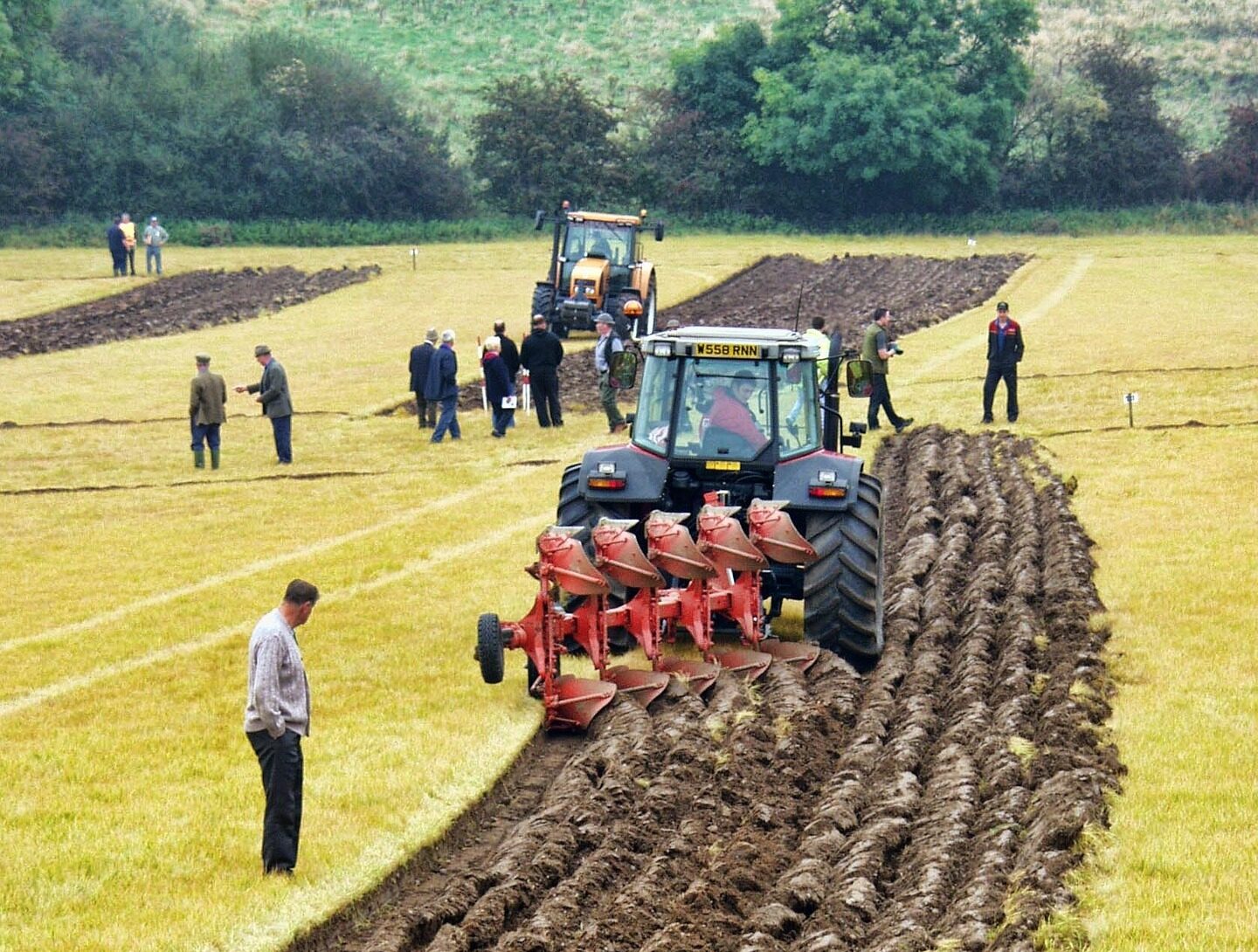
This week President Connolly used her platform at the opening of The National Ploughing Championships in Offaly to highlight how the effects of climate change and geopolitical tensions are exposing the fragility of Ireland’s food supply.
Connolly said: “Ireland’s food supply and distribution is highly dependent on imports and vulnerable to a range of external disruptions and risks, including conflicts and the impacts of extreme weather on inputs and supply change.”
The President’s remarks were no doubt informed by the CCAC’s recently published report on the greenhouse gas emissions of the Irish agricultural sector. It stated that the agricultural emissions fell by only 0.2% in 2025. The total decrease since 2018 has been 4.7%. Even with additional measures, Ireland will not meet the agreed target of a 25% reduction by 2030.
The authors of the report also pointed out how the changing weather patterns are seriously damaging for farming: “Prolonged and intense winter rainfall events and summer heat stress have increased pressure on farms.” A case in point is the large reduction in potato yields in Ireland, UK and Europe this summer. Teagasc estimates that yields have decreased this year by 40%. We don’t like to hear of such things in Ireland.
With Ireland’s agri-food industry listening, President Connolly called for “the transformative change needed to build a sustainable and food-secure future,” adding that “we cannot continue with business as usual and farmers have to be part of the process.”
Listening to the Minister for Agriculture’s subsequent interview with RTE at the Ploughing, I got the impression that farmers are leading the charge against climate change. The figures don’t seem to back that up but maybe he knows something we don’t. However, as long as the Minister continues to prioritise the intensive production of “protein-rich food” (apparently that’s what we say now instead of beef, meat and dairy), it is hard to see how transformative change will happen.
Francis and Wendell
When he wrote his encyclical about the Care for our Common Home, Pope Francis was acutely aware of how the agri-food industry needed systemic transformation. He lamented how it had effectively become an extractive profit-maximising industry:
“Men and women have constantly intervened in nature, but for a long time this meant being in tune with and respecting the possibilities offered by the things themselves. It was a matter of receiving what nature itself allowed, as if from its own hand. Now, by contrast, we are the ones to lay our hands on things, attempting to extract everything possible from them while frequently ignoring or forgetting the reality in front of us.” Laudato Si’ §106
I assume that the agrarian flavour of this paragraph, and others like it in Laudato Si’, was drawn from the writings of the farmer-author Wendell Berry, who died recently. Berry was an outspoken critic against the “Big Ideas, Big Money and Big Technology” that he saw decimating rural communities, economies and ecosystems in the USA. He considered caring for the soil to be one of the most noble things a person could do.
Both Francis and Wendell have gone to God, and agriarian thinking and practice remains niche, but it is spreading. I encountered it myself in Galway last weekend at another agricultural festival.
Organic festivities
The inaugural Green Earth Sustainability Festival took place on the organic farm of Kenneth Keavey in Co. Galway, and it marked the 20th anniversary of his entry into organic farming. It hasn’t been an easy 20 years for Kenneth, and he acknowledged publicly that the farm is still only breaking even. He relies on the Green Earth Organics online shopping platform to generate a profit.
Difficult as it has been, Green Earth Organics is an enterprise that is inspiring many others to start producing and consuming organic food.
From the perspective of the consumer, the delicious taste of organic meat, fruit, and veg is a big selling point. When you add in the superior nutrition and tangible health and wellbeing benefits you start considering seasonal organic food as a need and not a luxury. Cost is undoubtedly a barrier for some. At the moment, organic food costs more than industrially farmed produce, but the argument is that by spending a bit more on food, you will spend a lot less on supplements and medical appointments.
Organic farming also promotes the health of the earth. In the absence of chemical sprays and artificial fertilizers, soil health, and fertility improve dramatically and the wider agro-ecosystem comes back to life.
Keavey’s farm is 28 acres, which is relatively small by Irish standards. But he is able to take care of that land in ways that he would be impossible on larger tracts of land. Organic farmers recognise that there is only so much that the land can do, and only so much that a farmer can do too.
We get what we ask for
Farmers do whatever the food system — consumers, retailers, distributors, manufacturers, and government ministers — asks of them. For the last fifty years the system has been asking for maximum productivity, and that is what farmers have delivered. But we are seeing more and more signs that nature’s resources are maxed out. It is glaringly obvious that we need to stop asking for the maximum and ask for whatever it can sustainably give us — the optimum.
As I walked around Keavey’s farm, I found myself thinking how strange it was that it is held up as an example of transformative change. After all, it is just a farm that doesn’t put chemicals on our food. That it is an exception indicates just how crazy a world we live in today.
I also wished that President Connolly would visit Kenneth and the Green Earth Organics farm some day, perhaps on her way home to Galway. It will give her hope to see the type of food system transformation she is calling for.


