

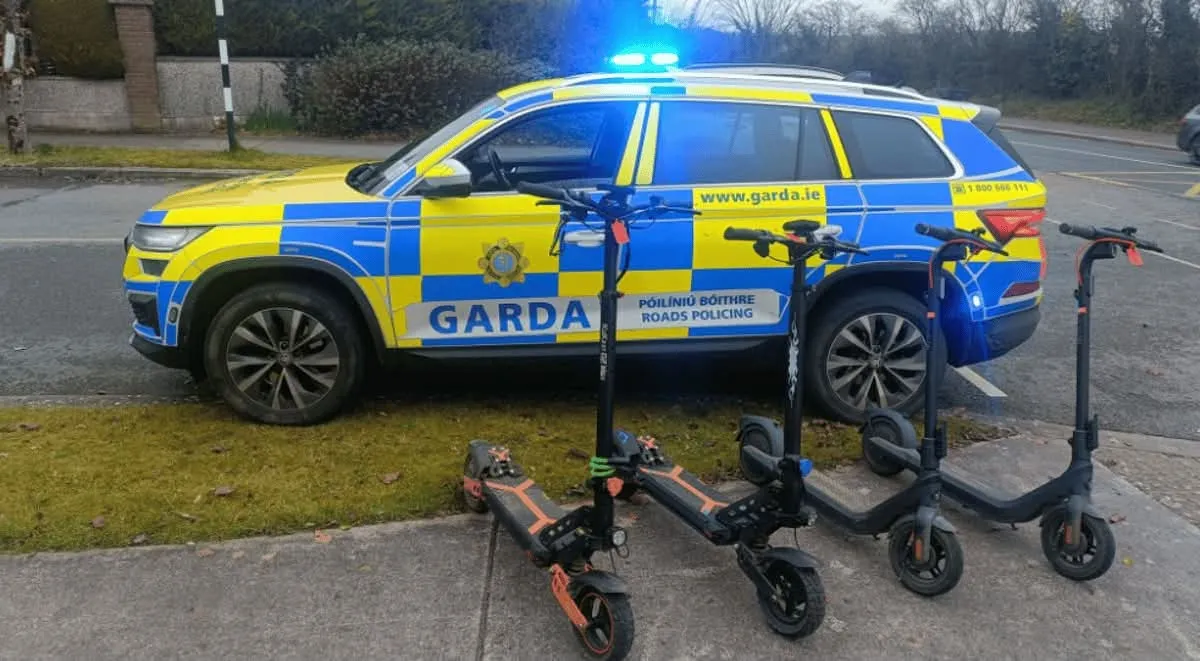
This is something I have been thinking about as the news cycle has shifted from wildfires, e-scooter mania, road deaths and the doubling down by the government on fossil fuel dependant infrastructure, including road building. The obvious contradictions in sentiments of the government and their actions are something we have noted many times and reflects a depressing disinterest and disregard of certain environmental, social and climate crises and possible responses to them.
The concern for the health of e-scooter users from those in government obviously has merit but unfortunately mirrors past form in terms of an inherent contradiction in road safety perceptions. Head injury presentations have been rising sharply due to the use of e-scooters, therein lies argument to regulating their use. It is when we look at the wider picture and the proposed solutions that one could feel justified with accusing the government of cynicism and a touch of maliciousness.
Legislation v enforcement
In response to the news of increased numbers of traumatic brain injuries the government vowed to ban e-scooters outright. Such simplistic solutions proved to be naïve[1] and the official response settled on a ban on under 18-year-olds using the machines with a mandate on using helmets and hi-vis clothing. Soon retailers will also have to stop selling e-scooters which don’t reach legal requirements (they can go too fast). On the surface this makes sense. However, use of e-scooters by under 16-year-olds has been illegal for a few years now and has proved ineffective in curtailing their use. The use of e-scooters which can go above 20km/h is also illegal but data on hospital admissions indicate that excessive speed was a factor in a significant number of injuries treated. Mandating helmet use makes a certain amount of sense however one would wonder at how enforceable this will prove to be. The action with the biggest impact is arguably removing the most dangerous machines from the shelves and putting the responsibility on retailers as well as on parents and users of the e-scooter. The relatively small tweaks in legislation indicate that it is not the legislation but the enforcement and perhaps the communication of the dangers of illegal use of e-scooters which was the problem.
Road safety for who?
The terrible incidences of e-scooter injuries come in the context of a wider road violence crisis. So far this year over 100 people have been killed on the road. These include drivers, passengers, cyclists, pedestrians, motor cyclists and e-scooter users. Looking beyond the stats that is over 100 people who can no longer love or be loved, over 100 families who are in mourning. While writing this, news has just been released that a 10-year-old girl died in hospital after a crash on Friday which claimed the life of her mother. Every incident like this should be enough to warrant a complete shift in how we view our transport system. Collectively, these kinds of numbers are horrific and the response should be dramatic. Road violence is the leading cause of death in young people and car use is the primary cause.
It is without a doubt that the spaces currently used as roads would be immeasurably safer if there were no cars on them yet there is no equative calls to ban cars as when the danger of the e-scooter became apparent. The speed of cars, the height and weight of cars, the sheer number in circulation, the infrastructure on which they drive and the mingling of vulnerable people on the roads with these machines are all extensions of the fact that cars are inherently dangerous. Our tolerance of road violence when it comes to cars being to blame is unfortunately higher than when ‘novel’, less common, modes of transport is used.
We know what we need to do to make the roads safer and yet the same government which rightly expressed concern about the inherent risk of e-scooters continually abscond responsibility when it comes to dealing with road safety as a whole. There is a raft of measures which could be put in place to make our roads safer. We don’t even need to think up of solutions ourselves – we can just copy others who are doing the work and reap the rewards.
What to do when people who drive cars might get mad?
What is particularly disappointing is that even when Ireland develops good legislation and policies to reduce road violence, implementation and follow through are lacking. Currently legislation is in place to allow the government reduce urban speed limits automatically to 30km/h. We know when cars go at this speed there are less accidents, and when they do happen, they are less deadly. Instead of taking steps to implement this legislation the government has dissolved responsibility to individual councils significantly increasing the amount of work and time it will take to create safe urban centres, all this and the results will be inconsistent application of the legislation across the country.
Another example of this is the understanding that every measure to reduce the number of people in cars and into public transport and onto footpaths and bikes is a road safety measure. Investment into active transport infrastructure has stagnated while investment commitments for major new road projects have solidified, the government seems particularly keen on forcing through the Galway ring road which, even by its own Environmental Impact Assessment, will increase car use.
This selective concern about road violence and the ambivalent and disjointed response to what is a national crisis is disturbing. I will ask the question again – At what point does ambivalence shift into something more malicious?
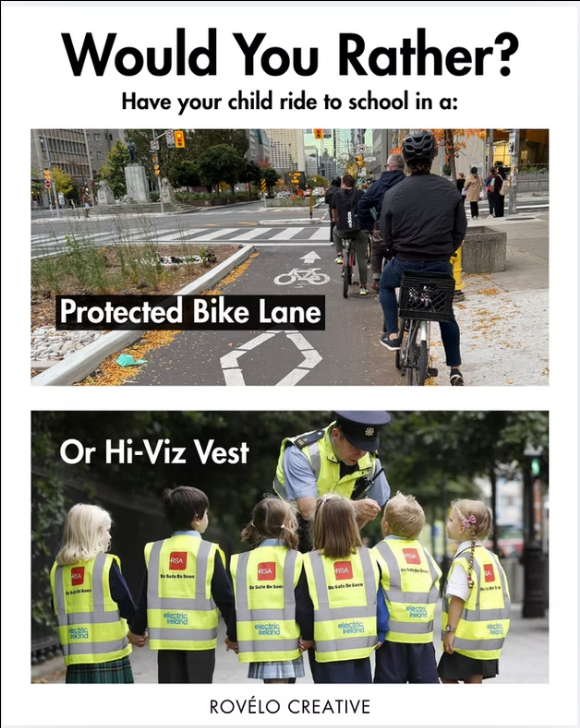
On Tuesday 22nd September JCFJ in collaboration with Trinity and several other environmental and transport advocates will host a public lecture by Tom Flood (ROVÉLO CREATIVE) focusing on reframing the mainstream narrative around road safety, road violence and active transportation.
Once you see it, you can’t unsee it.
[1] This move would also ban an important transport medium for those who for whatever reason do not drive, cannot use public transport or cycle. The choice of transport mediums


