

In ecological experimentation, one of the ways to examine how systems work is to disturb the system, by, for example, adding, removing, or changing the behaviour of a particular species and looking at how the system responds. These experiments are used to see how resilient or vulnerable a system is.
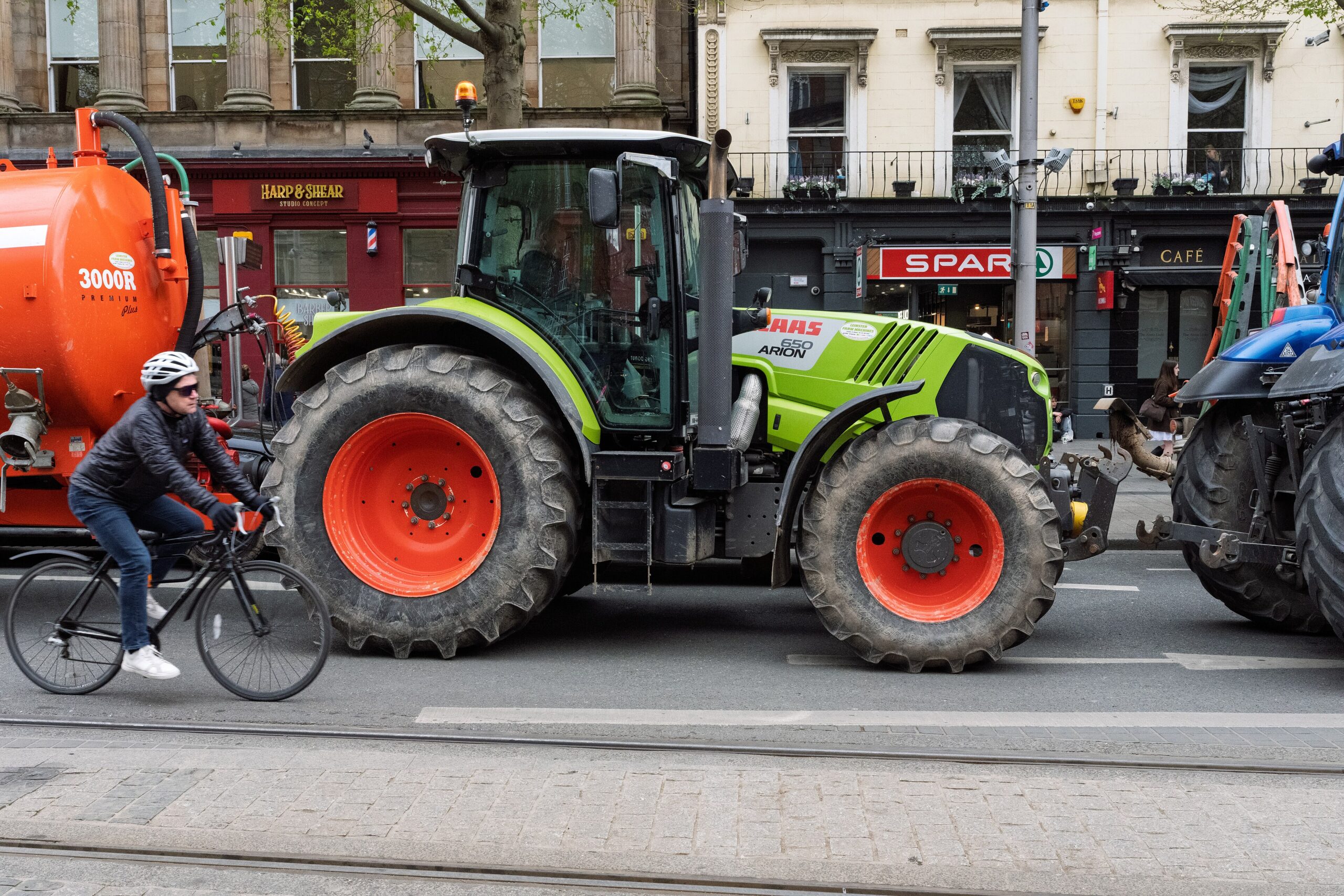
The fuel protests last week could be viewed as a large-scale ecological experiment to test how resilient our economic and societal ecosystem is. Large tractors, trucks, and lorries were used to disturb the flow of people, goods, and fuel. The results are in – and they are not reassuring. In fact, it has highlighted the massive fragility of the foundations on which our society is built.
The fuel protests have showed – in devastating clarity – how dependant we are on fossil fuels in nearly every facet of our daily lives. Essential care and emergency services were on the brink of not being able to fulfil their work due to fuel shortages and road blockages. People going to and from work – who rely on private car travel – sat in traffic for hours or were simply not able to get where they needed to go. Essential work on farms – including collecting milk from dairy farms – were put on hold. The protests were primarily focused on the price of fuel – which has risen sharply globally due to US and Israeli aggression in the Middle East – with more than a sprinkling of far-right agitation mixed in. Legitimate concerns from protestors about the massive spike in fuel costs impacting on livelihoods garnered some popular support however the means and scale of protest, as well as some of the rhetoric from the protestors, were incredibly problematic.
In the entire commentary of the protests the issue of climate change, our over exposure to fossil fuels being an energy security issue or the alternatives which could diversify the ecosystem were barely included during the protests (in the aftermath some excellent opinion and analysis pieces have been published).
The subject of taxing fossil fuels was discussed only as an example of the Government fleecing the people of Ireland with no mention of the fact that fossil fuels are themselves artificially cheap and the negative externalities of air pollution and climate change are paid for by the rest of society.
Contradictions in our fossil fuel policy
Even a cursory look at our economy and society reveals a stubborn and non-sensical contradiction of realities and policies in the Irish state and economy around fossil fuels:
- We have none of it and we absolutely depend on it
- We rightly say we won’t look for more yet we don’t build alternatives in the form of adequate volumes of wind and solar power generation
- We have ambitiously legislated to reduce emissions from fossil fuels however we have failed utterly to make the deep cuts necessary to keep up with the targets we have set ourselves.
- We speak at international conferences about our work to cut emissions while actively working to undermine our own Climate Act to allow us to build more fossil fuel infrastructure.
- We say we are energy insecure but respond by aiming to entrench our dependence on an insecure, entirely import reliant and expensive fuel.
What is it about this particular substance which makes alternatives seem impossible? Are we so entrenched in our ways that we are not able to substitute one type of energy for another? Are we so addicted to fossil-based growth that pressing the pause button on infrastructural projects which demand vast amounts of energy and water, such as data centres, is out of the question? Can we learn the lessons of today and realise that being so entirely dependent on an import which can be disrupted by protest, war, or weather in the fragile global web we have weaved means we are incredibly insecure?
Fossil fuel non-proliferation treaty
We may be slow at accepting the idea that a safe, secure future is one where fossil fuel use is consigned to the history books – but other countries are forging ahead. The first conference on ‘Transitioning away from Fossil Fuels’, hosted by Colombia and the Netherlands, begins in 10 days’ time in Santa Marta. From the very first COP in Berlin in 1995 to COP30 last year in Brazil, global climate negotiations have focused on managing the symptoms of the climate crisis — specifically greenhouse gas emissions — while ignoring the root cause: the unchecked proliferation of coal, oil, and gas.
This conference ‘Transitioning away from Fossil Fuels’ and the overall aim to establish a Fossil Fuel Treaty is the first step towards transitioning away from fossil fuel dependence and towards a clean, fair and decarbonised society. The fact that Ireland has yet to endorse the fossil fuel treaty initiative signals, yet again, how deeply unserious we are about the climate crisis and the pressing need to decarbonise. From the events of the past week or so we can now acknowledge that this would not only drive down emissions but also create a system which is more resilient – which can survive and thrive through any disturbance.


