
EU Affordable Housing Plan
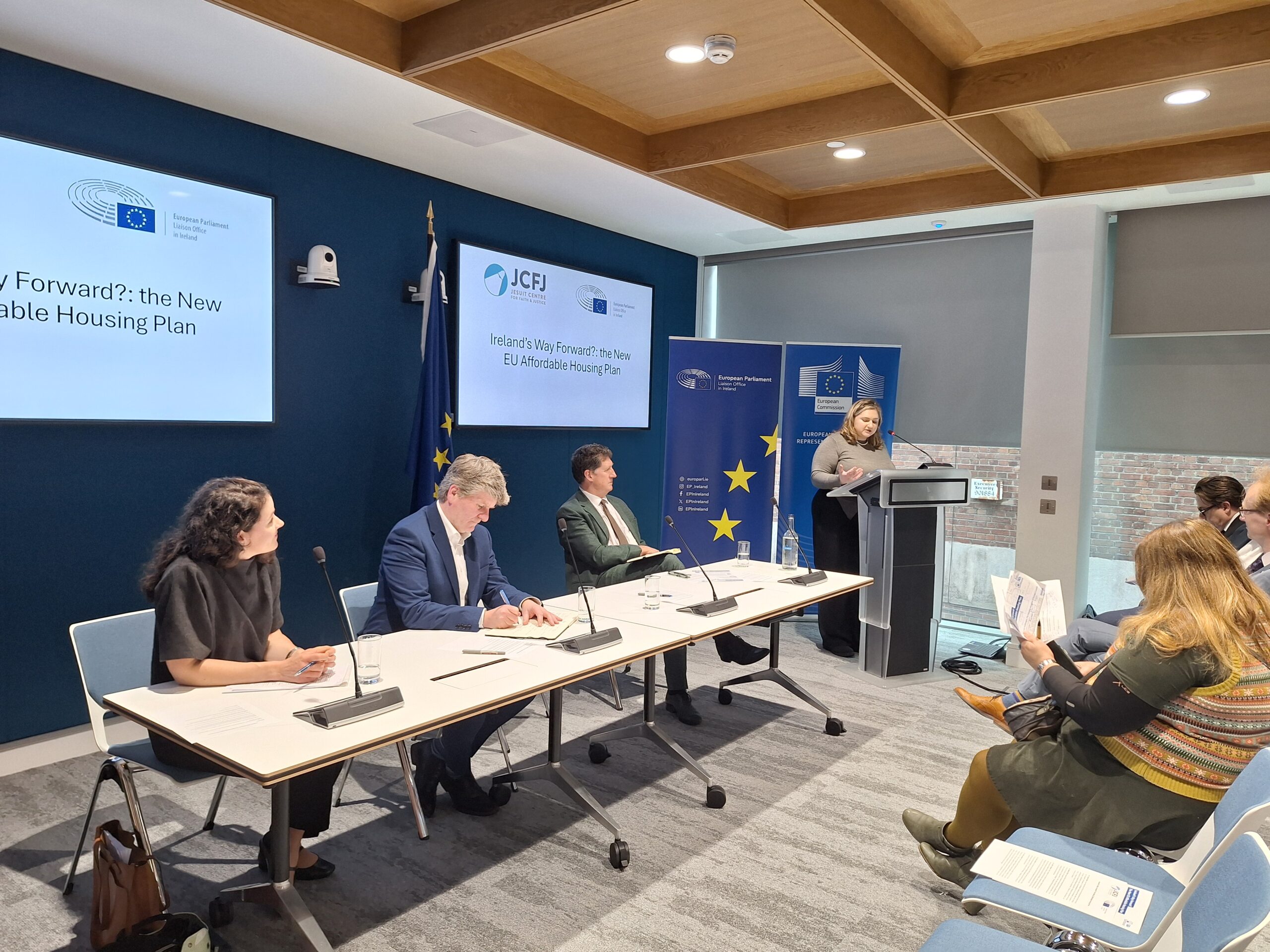
In February, Former Minister Eamon Ryan, the current Chair of the EU Housing Task Force that helped inform the EU Affordable Housing Commission, came with us to present “Ireland’s Way Forward?: The New EU Affordable Housing Plan”. Moderated by Dr. Dáithí Downey, Head of the European Programme Support Office and International Relations for Dublin City Council.
This plan as Eamon Ryan said, calls for a ‘Paradigm shift, we need to look at housing through the lens of 50 years in the future, rather than seeing housing as an asset you can flip.’
JCFJ, in Conjunction with the EU Parliament Liaison Office, hosted this event to urge Ireland to step up to the plate and pursue the EU affordable housing plan wholeheartedly. We welcomed Respondent Mr Paul Tierney, CEO of MMC Ireland (Modern Methods of Construction refers to building systems that are largely manufactured off‑site, then assembled on‑site, to improve consistency, speed and sustainability across a home’s life‑cycle). Dr. Marie Hyland, from Eurofund, also shared how the housing crisis causes a delay in young adults lives, keeping 40% of those aged 25-34 years old still at home with their parents.
Dr. Alexia O’Brien, then shared Irelands Strengths and weakness’ in alliance with the eu affordable housing plan.
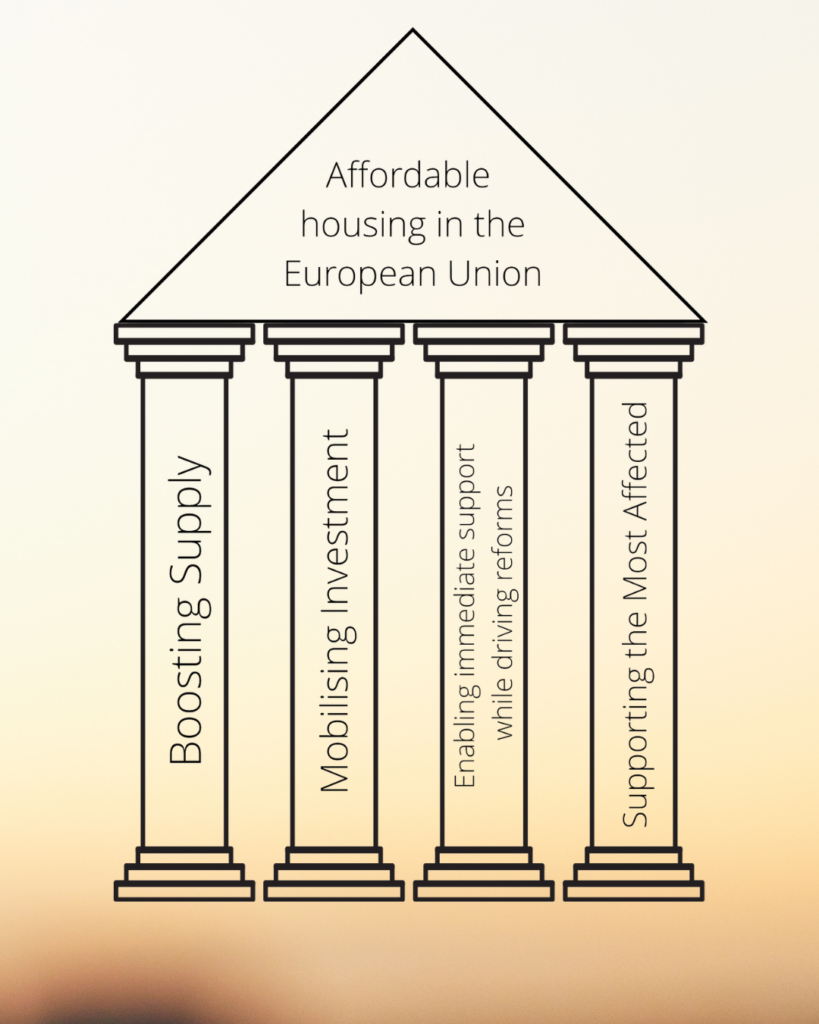
For a quick and general of where Ireland is currently positioned against the EU Affordable Housing Plan summary, see the traffic light guide and JCFJ’s brief summary report…
Pillar 1:
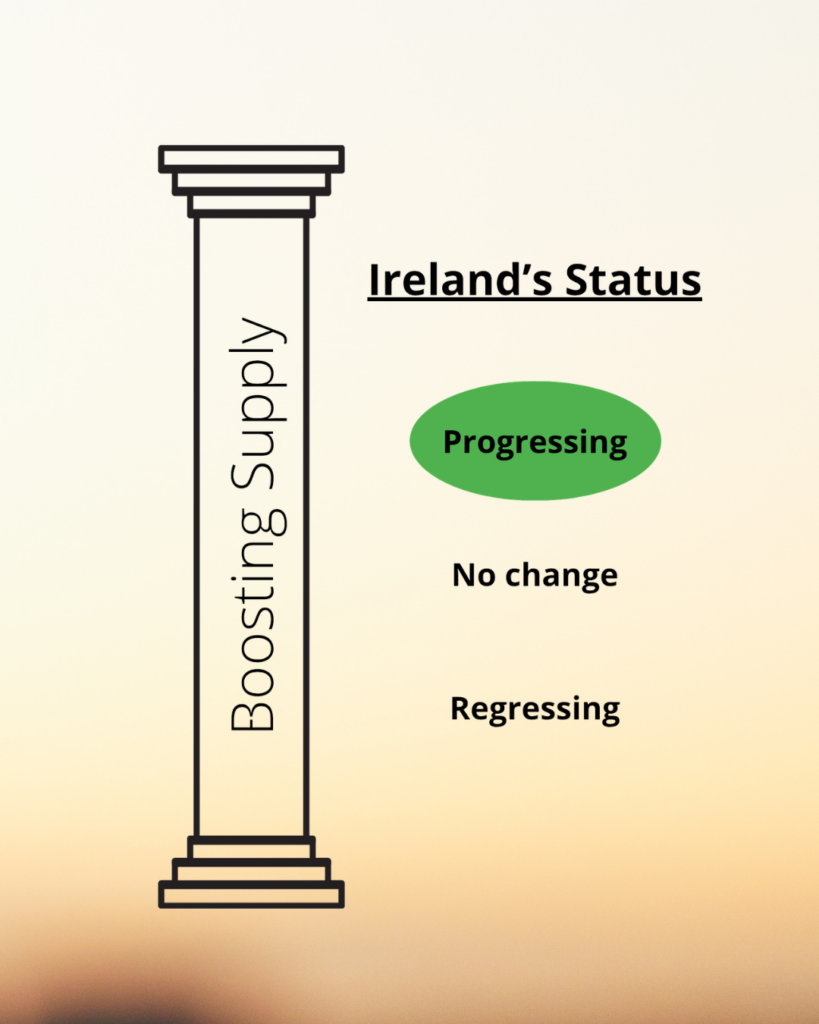
Ireland is doing really well in boosting supply, excelling prior to what the EU has outlined. The use of Modern Methods of Construction (MMCs) puts Ireland far ahead, and the emphasis on strengthening apprenticeships in housing construction will keep this momentum moving forward. The use of digital planning systems also eliminates bureaucratic red tape holdups, accelerating housing supply. Finally, the
need for retrofitting buildings to improve energy and bring back to life vacant and derelict buildings has been recognised, with increasing grants for current and future homeowners.
Pillar 2:
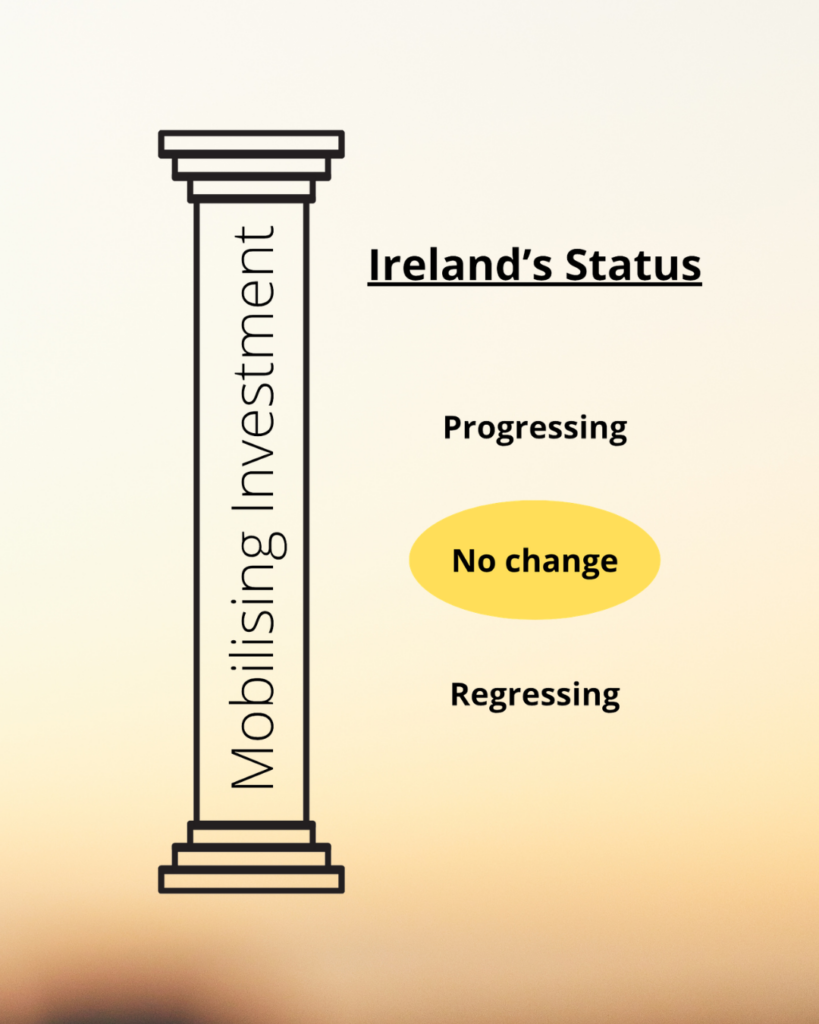
Currently, mobilising investment sees Ireland mostly in line with the EU policy wise, although the ability to fully commit has led us to list Pillar 2 as no change. Ireland does list the need to utilise Private-Public Partnerships (or Private-Public Investment), but the follow through on this is a struggle, with multiple large projects being delayed due to funding. Due to this, there is room for mistrust by the public, to which the government across levels will need to work on.
Pillar 3:
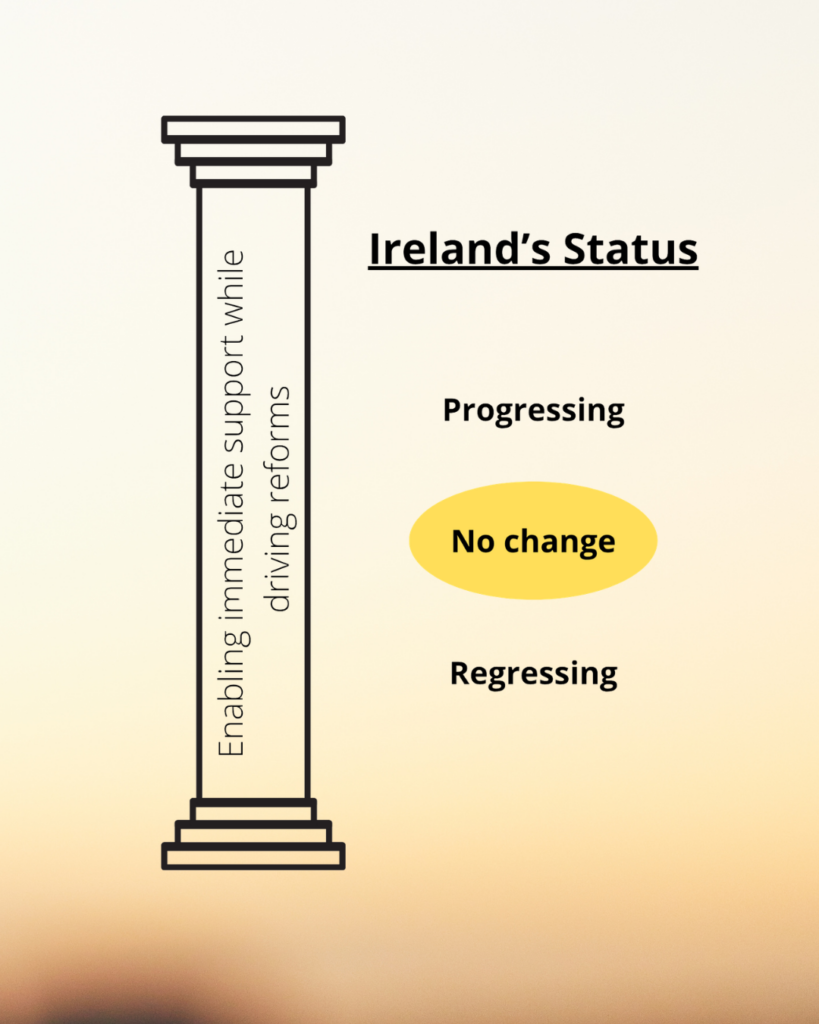
Enabling immediate supports while driving reform is the one Pillar Ireland is currently divided in its strengths through the action points, making it difficult to say if Ireland is at “no change” or “regressing”. Ireland is doing well with addressing short-term letting for holiday stays, bringing in new legislation that should hopefully bring more short- term lets to the private rented sector or for homeownership opportunities. It is in addressing land speculation where Ireland is very weak, with current policies and
practices heavily favouring institutional investors and market actors who greatly benefit financially from speculation and financialization. Lastly, Ireland has numerous schemes and grants for upgrading and renewing buildings to be used as homes, both in urban and rural settings, but despite this, we are still failing to hit the targeted goals in housing delivery set out by the government.
Pillar 4:
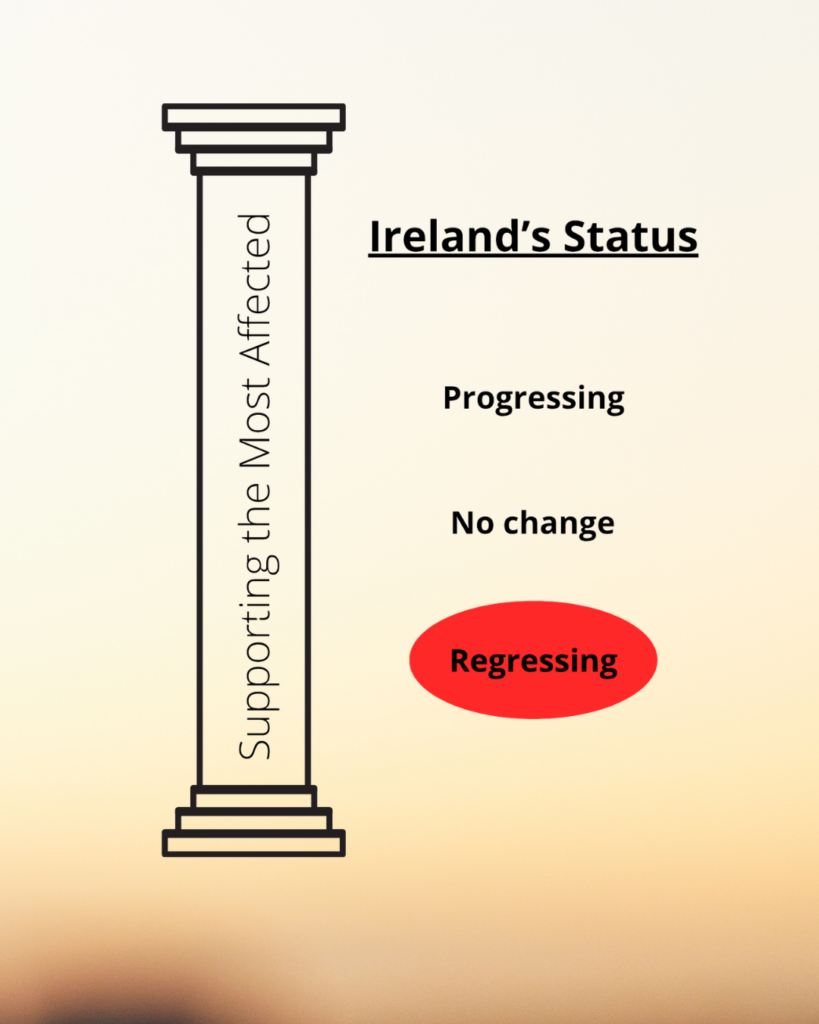
Supporting the most affected is where Ireland is regressing in relation to ensuring our housing policies and actions do genuinely support those who need it the most. Much of our actions here are surface level, with brief mentions in policy of how to help those who are facing other challenges in combination with housing access, but there is little to no supports are actually given. Housing for young people is also where we fall behind; while it seems that Ireland is doing a lot to support young people, such as through grants targeted at first-time buyers, house prices are becoming so out of reach that these grants still do not help make up the difference or bring people closer to becoming homeowners. Additionally, there is no mention on how to make housing more affordable across the board, especially in the private rented sector, where unaffordability is at its worst.
To get a deeper understanding of how Ireland is position against the EU affordable Housing Plan, read our summary report below written by our housing policy officer Dr. Alexia O’Brien