
Category: Penal Policy

An Overview of Challenges Faced in Irish Prisons

Most prisoners come into prison with an addiction issue, receive little or no help with their addiction, and leave prison with the same addiction issue. And we are surprised when they reoffend!

‘National Conversation’ is a loaded term

Maybe serious channels for dialogue, listening and understanding are being developed by the Office of An Taoiseach and other departments. But if, as I suspect, the real intention is not for understanding but a focus on building consensus about the issue of societal violence, we may be asked to travel a different path. One of punishment rather than understanding.

The multiplier effect of prison overcrowding

Prison overcrowding affects prisoners’ ability to attend education, work, appointments and social activities, and puts a strain on stretched in-prison psychological and addiction supports. There are few, if any, downsides to having fewer people in a prison.

Prisoners’ Sunday: Going Beyond Sympathy

  This weekend marks Prisoners’ Sunday, a moment in the year prompting us to pause and consider the men, women, and children who inhabit our prisons and places of detention. People in prison are rarely the recipients of sympathy. Their concerns and travails barely register with the general public. In fact, public opinion on penal… Read more »

Prison Buildings are Not Enough

Because prisoners depend on prison staff for their most basic needs, the research concludes that it is critical to the concept of trauma-informed practice how staff exercise their power and authority in staff-prisoner relationships.

Prison’s Mission Creep

As a society, we should always be seeking to reduce both our prison population and the role of the prison. What we are currently experiencing is a mission creep—the gradual expansion beyond its original aims or goals— which is very difficult to row back once it becomes ingrained.

The Allure of Carceral Feminism

If a ‘carceral feminism’ rises with a reliance on the Irish criminal justice system, then a shift will imperceptibly occur where gender-based violence becomes more narrowly defined as an individual crime rather than a broad social and political problem.

Children and the Irish legal system

It was a demoralising, destructive and dehumanising experience, with no redeeming features, characterised by idleness and boredom. Some politicians and tabloid media believed the regime was not sufficiently harsh to deter them from committing further crime on release. One young person there summed it up very succinctly when he said: “This place brings out the worst in you.” 

“You Only Do Two Days”

When the Minister for Justice said that “six prisoners were required to be released immediately,” this is either unintentionally erroneous or misleading. These six were not prisoners by definition. Yes, they were in prison but their legal status was profoundly different from that of a prisoner. The sentence they received had been served, they were free people who were being detained in prison with no legal basis or grounding. Their sentences had expired. Something as important as the calculation of released should have safeguards with as many checks as is needed to ensure that a person is guaranteed their correct day of release.

Nothing New Under the Sun

  Two weeks ago, I wrote about how the decision of the Department of Justice to not publish two Dóchas Centre reports undermines its stated commitment to combat violence against women. The stated justification was that the Minister was acting on legal counsel sought by her Department. We know a little more about the serious… Read more »

Whose Violence? Which Women?

If reports into conduct within a closed institution for women deemed worthy of investigation are mothballed on a shelf due to “legal advice,” than an accompanying explanation must also be forthcoming. Are there ongoing criminal investigations based on the report? Are there security risks to the safe custody of the women in the Dóchas Centre? An allusion to legal advice is not sufficient when the stakes are so high.

More Women in Prison: The Only Certainty in Prison Policy in 2022

The vast majority of women are imprisoned for non-violent property crimes and the judiciary will likely continue in its paternalistic vein of either giving the women a “short, sharp shock” or an opportunity to have an assessment and receive treatment. As such, regardless of the meritous developments within the new Limerick prison block, the end result is likely an intensification of this carceral paternalism of poor women and Traveller women.

The Compassionate Prison Paradox

While security and compassion will always be in tension in a carceral environment, little evidence exists to demonstrate an equal footing.

Covid-19 and the Decarceral Instinct

Much complexity has been added to the day-to-day working of Irish prisons over the past 20 months; ranging from necessary health protocols to ever-increasing restrictive regimes by way of serious technological upgrades, but it may be more helpful to reflect on the initial decarceral instinct of policymakers.

The 1985 Whitaker Report

Peter McVerry SJ was on the Whitaker Committee in 1984 which reported to government the following year that communities are made safer not when we imprison more people for longer, but when those we imprison are released as better people, with more skills, more opportunities open to them and more hope that their future can be different from their past.

Reflections on the Unheard Voices of Prisoners

Early in the book, I read the sentence that has stayed with me longest: “Is it not time for some prison walls to come down and for society to have the courage and foresight to explore other options to address the issues of crime and punishment?”

Prisons Report Illustrates the Need to Build Back Better

A timely Inspector of Prisons’ Annual Report, published by the Department on Friday, provides much which should form the basis of such a debate on the future of our prison system. Here are what we in the Jesuit Centre for Faith and Justice consider the main points of interest in the report.

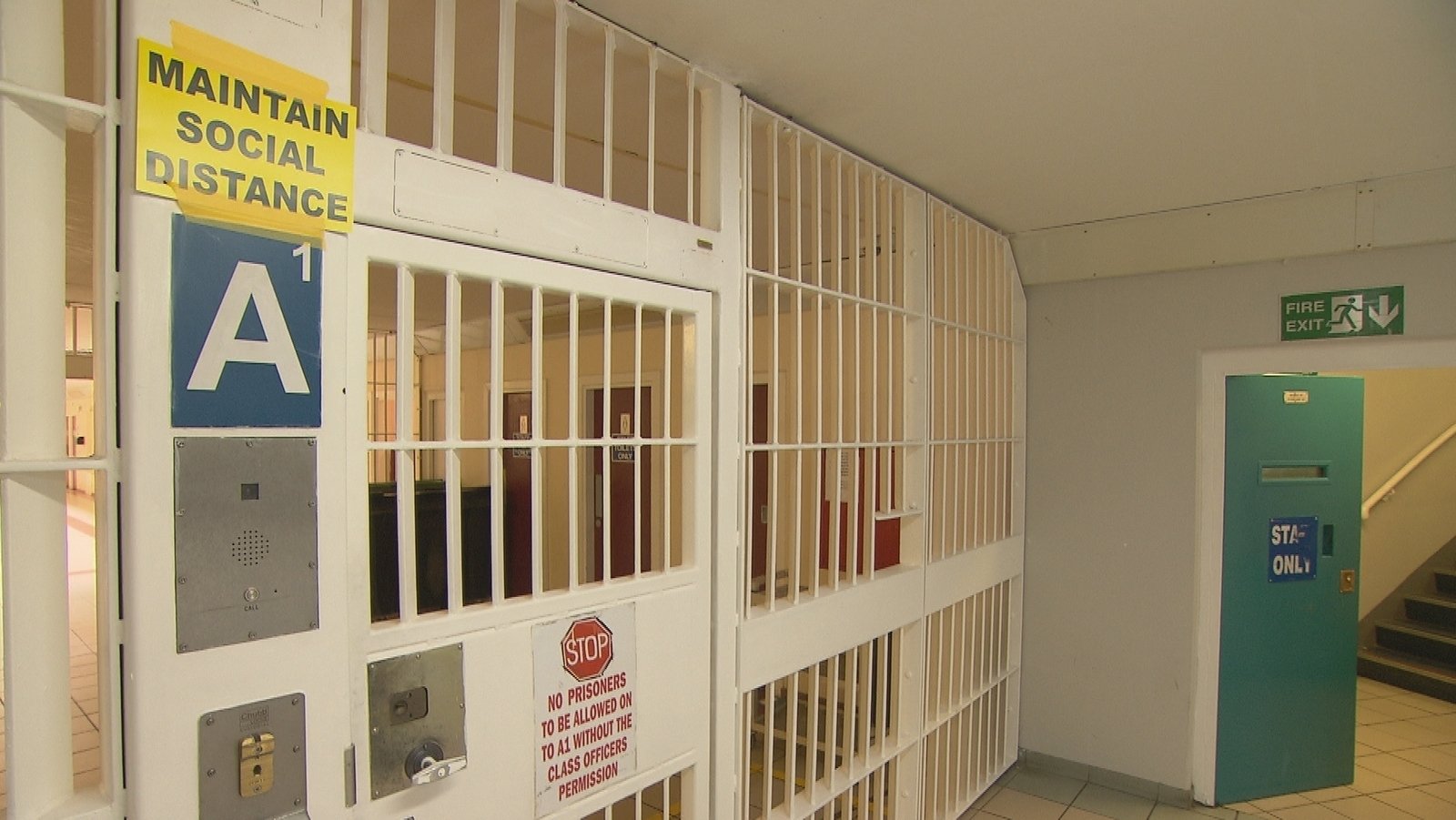
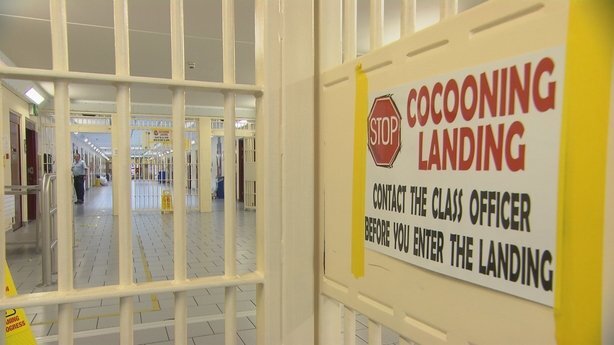
Prison landing with Covid-19 safety notices

The Long Lockdown

With the emergence of multiple vaccines, Ireland is in a very different position today compared with five months ago, when we entered into the highest level of lockdown just after Christmas. Yesterday, the Minister for Health announced that more than half of the adult population had received their first dose of a vaccine, with over… Read more »

Into the Unknown

“I want to make a simple proposal that if our judges were more aware of the prison environment, to have walked the tiled floors or listened to the experiences of those they may have imprisoned first-hand, the numbers in pre-trial custody would reduce.” Peter McVerry SJ

A Shot in the Dark

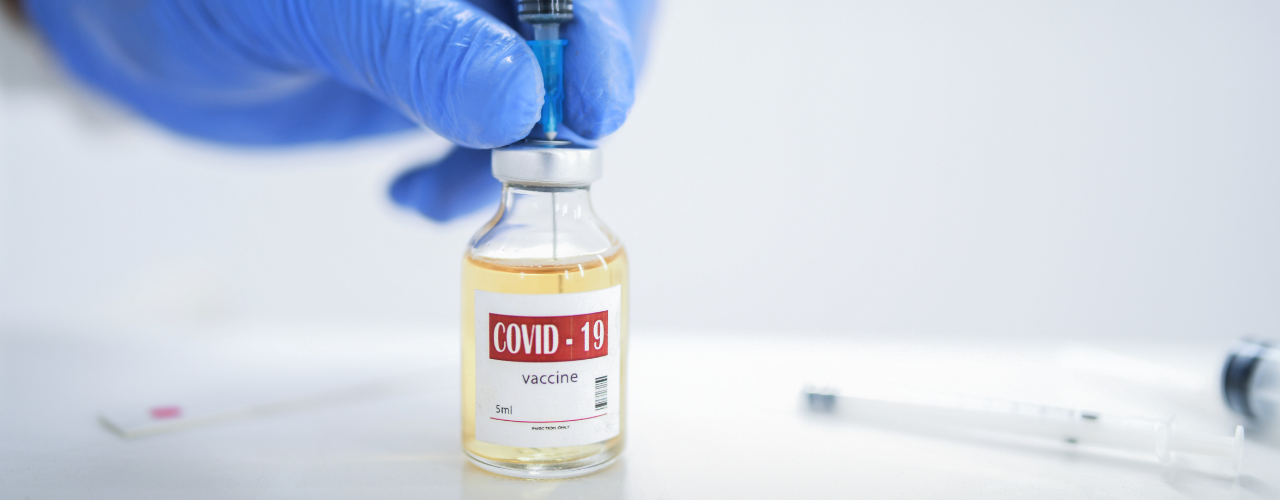
It is important to ask why a request to vaccinate prisoners in the early stages of the programme is met with vehemence and opposition. The force of emotion expressed reflects something of our punitive instinct around justice and this particular instance exposes how in the end, that desire is self-destructive.

Deaths Under Sentence

Keith Adams considers, from a sociological and theological perspective, what it means for the terminally-ill to die in prison.

In the system but not of the system

Chaplains are unique, in that they have no agenda other than the welfare of prisoners and prison officers. There is no career path or advancement for chaplains that might compromise how they work. Thus, they are almost universally respected by prisoners who place a high level of trust in them. They will talk to the chaplain about issues in their life, traumas they may have experienced in childhood and their fears for the future. Most prison officers, too, hold the chaplain in high regard and appreciate the work they do.

Receiving a Wooden Bowl

Imagine if death was somehow suspended, causing people who are close to their demise or severely injured to exist, in a catatonic state? Portuguese author, Jose Saramago posits this scenario in his novel Death with Interruptions. He considers it as a thought experiment, teasing out its potential political, economic, and social ramifications, often with surprising… Read more »

Image of light coming through prison window

The Unintended Prison Experiment

  We have never been so obsessed with experiments. In some sense, our former way of life ostensibly hinges on their success. Reports of the merest success against Covid-19 imbue us with hope. On the periphery of the pandemic, slightly more removed, many unintended social experiments have occurred or are ongoing in Ireland. Typically, social… Read more »

No Country For Poor Women

A common lament of those working in the area of prison policy is a lack of information. This has not been one of those weeks. Since the beginning of the week, a number of documents with either a full or partial focus on prisons – the Irish Prison Service Annual Report 2019, a draft Programme… Read more »