

Introduction
The rural scenes on view from the Holyhead to London train provided a fitting backdrop to reading the memoir of James Rebanks, a farmer and author based in the Lake District where his family have lived and worked for over six hundred years. On a recent sail and rail journey from Dublin to Louvain, Belgium, I ploughed my way through English Pastoral, the story of the four most recent generations of the Rebanks family, from his grandparents to his children, while reflecting on the changes that transformed both farming and rural life. The land and the farming life is an inheritance that connects them all. As I read, I found myself wondering what remains of that inheritance for those of us who no longer farm.
Nostalgia, progress and utopia
The book’s three sections—Nostalgia, Progress, and Utopia—are ironic to the point of being subversive. At first glance they suggest a familiar story: a romantic rural past giving way to modern machinery, chemicals, and economies of scale. According to this narrative, technological progress would liberate farmers from drudgery and allow corporations to feed the world cheaply and efficiently. But this is not Rebanks’ story. If anything, the titles mock such a telling of the tale.
Nostalgia brings you back to James’ childhood and those formative years of learning the craft and love of farming from his grandfather, who was something of a purist. His was a mixed farm which provided meat, cereals and vegetables for their household and the markets. Traditional ways of doing things were revered and faithfully passed on. The work was extremely demanding, but rewarding and done together. This is not a nostalgic view on a romantic past but a clear-eyed take on rural discipline.
By the time James’ father took over the farm, farming and food were changing. After much internal struggle, and pressure from the bank manager to modernise, he embraced the chemicals, large machinery and specialisation that the industry experts were promoting. Efficiencies did increase but prices did not so they had to increase the size of the herd just to stay afloat. A lot of wildlife and biodiversity, above and below the ground, was also killed off. His father was still under financial pressure and the bank manager was no longer advising him to modernise, but to sell. Progress indeed!
The turning point comes with the death of Henry, an old-fashioned farmer who never modernised. He was well liked but also seen as rather backward and stuck in the past. When he died his small farm was carved up and sold to several neighbouring farmers. Since modern farmers were in the practice of regularly adding artificial fertilisers to their soil, one of the new owners sent in a soil analyst to determine what needed to be added to his newly acquired fields. The analyst reported that Henry’s soil was some of the best he had ever tested. This news came as a shock but also confirmed what James’ father had intuited for years: that modern farming was not ecologically sustainable. Where once he admired his friends and relatives who were building big farming businesses on debt, now he began to worry about them. Sure enough, some of them lost their farms.
When James took over the farm he knew he could not fully invest his money or himself in full-bore agricultural modernisation, but neither could he turn back the clock. Neither traditional mixed farming nor modern industrial farming offered the security they once did. Utopia is not the realisation of an agricultural ideal but the story of finding workable compromises that keep the farm economically viable while creating some room for natural processes that bring the land back to life. At least this way there will be something valuable for him to pass on to his children, should they want to receive this inheritance.
An inheritance not lost
Rebanks’ story raises a question that extends far beyond the Lake District. What happens when people become disconnected from the land that once sustained them? In Ireland, that question has particular resonance.
The vast majority of Irish people today are not “of farming stock”, but the recently published 1926 census shows that many of us do have recent ancestors who were farmers from rural Ireland. Obviously this agricultural inheritance was not passed down to us. Never mind farmland, even having a garden is a luxury nowadays.
Something is shifting though. People are getting in touch with James’ and his father’s intuition that our industrial systems of food production and consumption are ecologically and economically unsustainable. They are already looking for alternatives.
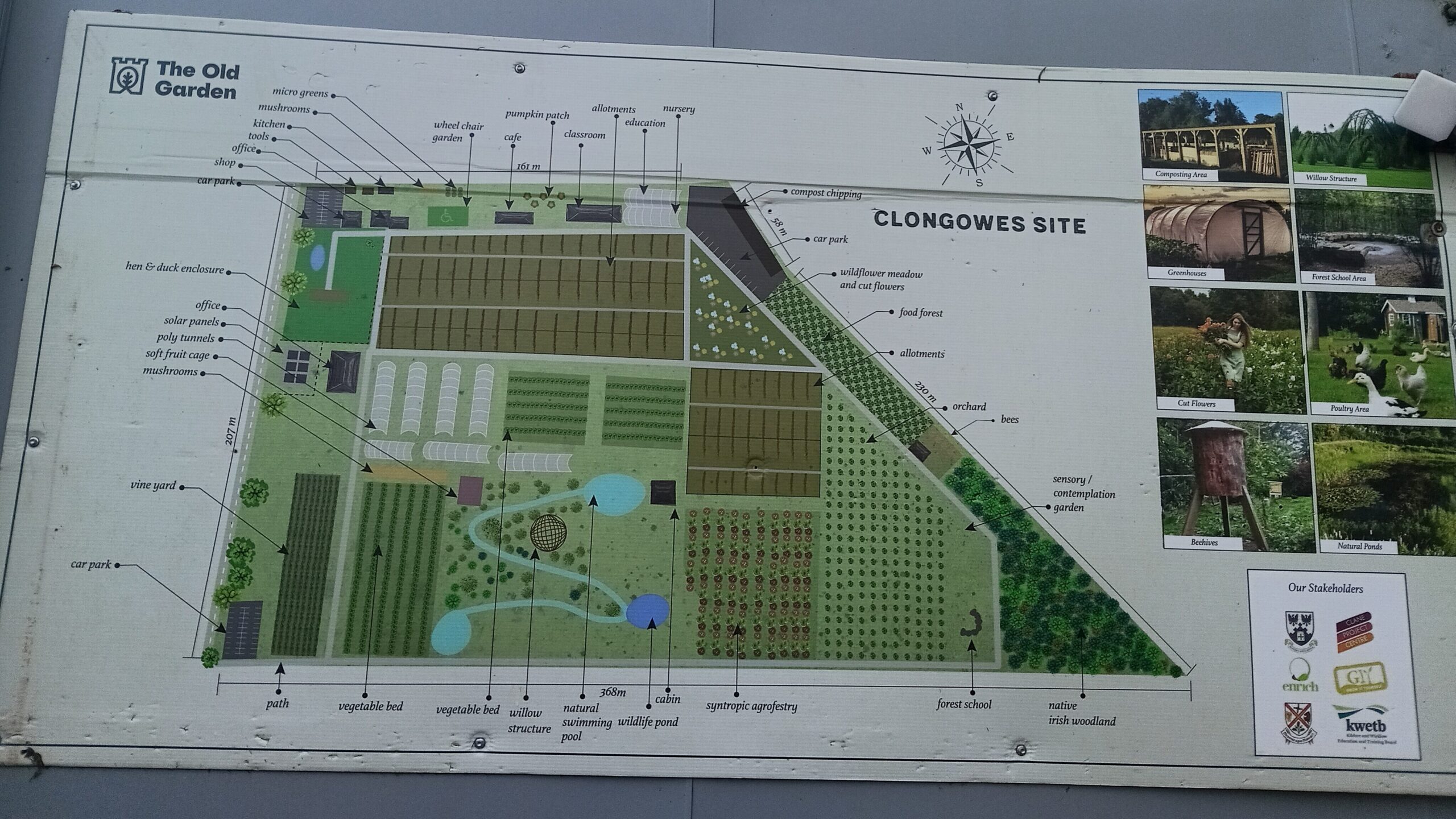
On Wednesday morning Virgin One’s Ireland AM outside broadcast crew visited The Old Garden, a community garden and farm project which is on Jesuit land at Clane, Co. Kildare. The garden has more than 120 allotments where people grow their own, five polytunnels producing vegetables for regular market days, and small flocks of egg-laying chickens and ducks. Local food organically grown by and for the local community. “Wholesome vibes” Padraig from Virgin commented on Instagram afterwards.
Projects like The Old Garden are not simply producing food. They are helping people recover practical knowledge, rebuild local relationships, and experience a more direct connection to the land. The inheritance was not passed down intact. For many of us it was broken, neglected or forgotten. Yet it was not entirely lost. Some of it is being preserved and held in trust in community gardens and local food projects, waiting for the moment when we are ready to receive it.
An unexpected gift
When I arrived in Louvain one of my Belgian Jesuit confrères gifted me a copy of John Feehan’s seminal history of Irish farming. It concludes with the following call to action:
“The future lies with an ever-widening appreciation of all the ways the countryside enhances human well-being and a determination to sustain it.”
The task now is not to return to the past but to recover what was valuable in it, insofar as we can.


