

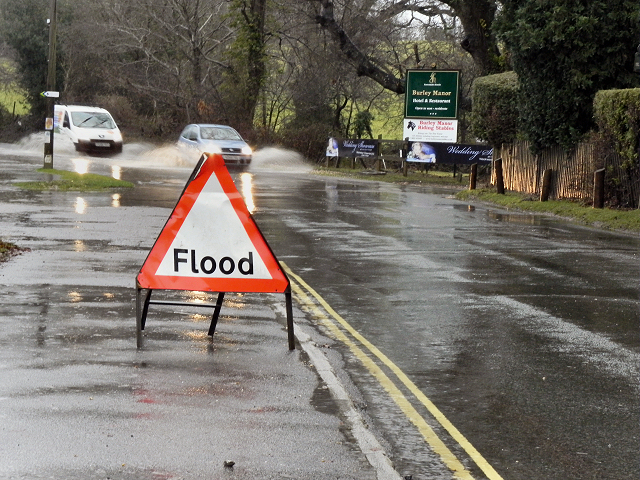
In Manchán Magans’ book “99 words for rain (and only one for sun)” he effortlessly evoked the prevailing weather system in Ireland. Rain is one of Irelands defining features and it is responsible for our description as the Emerald Isle. All this to say that we are used to rain in Ireland – but not quite like this.
Climate change in Ireland means more rain and heavier outbursts. It means more flooding, more homes destroyed, more money being spent cleaning up the mess that is left behind. Our years of experience with managing rain in Ireland have resulted in built infrastructure and ‘improved’ land to try and direct and control where this water goes. The devastating flooding in January and February this year has shown us, in a country with so many words for rain, we have failed to ‘manage’ rainwater, and in the era of climate change we need to rethink our relationship with water.
Flooding – its not just rain
Flooding is caused by a wide mix of factors; the amount of rain is definitely the major factor but changing land use or disturbing natural ecosystem functions also massively increases the risk of inundation.
In the catchment area of rivers, water landing in fields, forests, or bogs eventually makes it way to streams and rivers, either over the surface or by sinking down into the soil into underground water systems. Everything in this catchment area has the potential to impact how the water flows in the catchment. Peatland or fields drained (or improved) for farming, forestry, or development pushes water somewhere else. Rivers and streams straightened or narrowed rush the water downstream, causing erosion upstream and more sedimentation downstream. Built infrastructure effectively seals the soil making it impossible for the soil to soak downwards – instead flows over hard surfaces until being drained away artificially or finding its way to soft ground. The drainage system which allows for this is linked to the sewerage system – in spells of heavy rain this system is overwhelmed and storm water mixed with raw sewerage is released into the rivers and coastal areas.
We view flooding in Ireland predominately on a local scale – what is happening on a field, a farm, a street, or a particular urban centre. We manage flooding in these areas predominately by hard engineering, walls, culverts, transforming natural rivers into artificial structures. These are vulnerable to failure in a flood event if drains get blocked by leaves and stones or even litter either before or during a heavy rain spell. Flood walls may also be breached in extreme flooding events which will become more common as climate change progresses.
What if we looked at a wider scale? The entire picture of the river catchment?
An ironic turn of event
Spongeworks, an EU Horizon project tackling the growing risk of floods or drought across Europe, has selected the Aughrim River catchment as a study area. The launch of this event was planned for Tuesday 27th January in the Tidy Towns Pavillion Centre in Aughrim. It was cancelled due to Storm Chandra and the severe flooding which hit the area.
This launch would have told the hopeful attendees about work aiming to address flooding, drought and biodiversity decline at a catchment level by protecting and enhancing the soils capacity to soak up rainfall like a sponge and manage its movement through the catchment landscape from uplands to lowlands and urban centres. A holistic view of the catchment area and nature based solutions such as restoring bog ecosystems, planting trees to help prevent erosion and enhance the quality of soils, leaky dams and constructed wetlands such as rain gardens and floodplains all help slow the flow of water, store excess water for longer and reduce downstream sedimentation.
None of this is new – nature based solutions has been carried out in other countries for years and is beginning to be implemented here. Projects on the Santry river and bog restoration in the Wicklow mountains show what is possible in this area.
The tide is beginning to turn on how we manage our water. It is long past due.


