

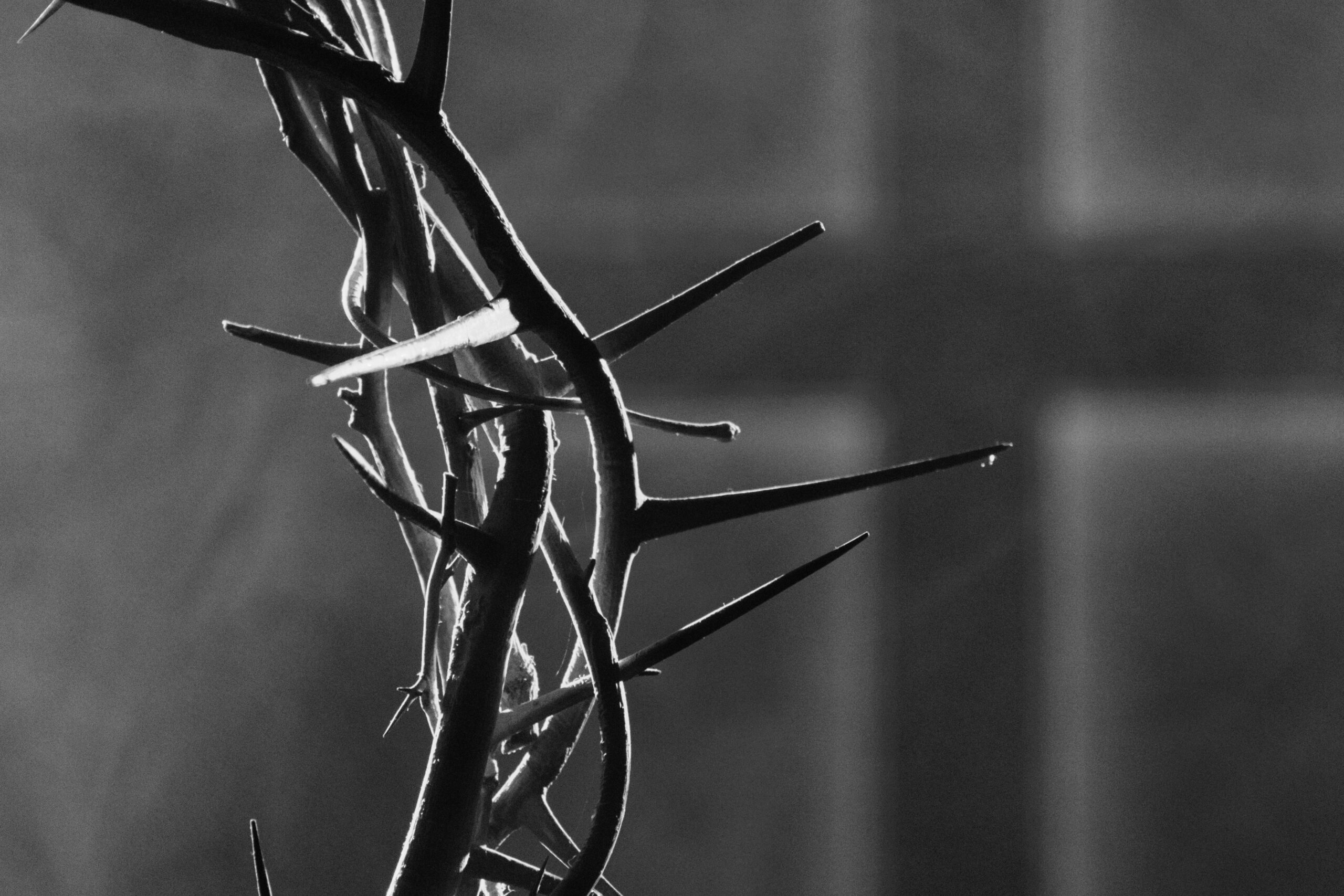
In the days leading up to this Good Friday, I was immersed in re-reading one of my favourite books ever. It is a genuinely undiscovered masterpiece called After Crucifixion by the American theologian, Craig Keen. It reminded me of how easily I am tempted to wrap today up in pious sentimentality.
I overheard a brief discussion on an FM radio show this morning where the hosts were discussing Easter and entirely sincerely concluded “that it was all about chocolate, really.” It would be a good punchline for a joke but we can’t really blame these two guys charged with running a light entertainment show for people who are getting ready for the day. After all, what Easter is all about is an event so grotesque that two millennia later, even Christians can’t turn to face its implications in full.
There’s a great bit in the original Arrested Development where Maeby wants to gets a cross necklace and mistakes it for a “t”. We might not be that culturally disconnected from the Christian story, but we have undoubtedly domesticated it. That symbol we see everywhere is a torture device. It is equivalent to adorning our jewellery with an electric chair.
The massive uptick in talk about “Easter bunnies” might not just be secularisation at work and instead is a subconscious attempt to evade the wounded flesh of that Jewish peasant and see it for the absolute scandal it was – and still is. In a world obsessed with being well put together, pursuing wholeness, and keeping ourselves buffered from discomfort, the mangled body of Christ is a direct affront to every standard of success we hold dear.
The truth is, we’ve been well-trained to value what Keen calls the “majestic oaks” – all those who are rooted, strong, and haven’t a mark on them. But Good Friday doesn’t offer us a hero of that kind. It concerns a man despised, rejected, and of no account, a “root breaking through dry ground” that mercilessly trampled underfoot by the powers of the day.
This isn’t just an old story about someone who “suffered for us” in the abstract. It’s a claim that God took on human flesh that was mutilated, and even in the glory of the resurrection, those wounds didn’t just vanish. Christ is no more “whole” on Easter Sunday than he was on the Friday. Indeed, his very brokenness somehow becomes the most fitting temple in which God’s glory actually dwells. If the Spirit can raise a broken body from the tomb, then being disabled, or abandoned, or walking wounded is no barrier to the Kingdom at all.
For the church, this means our mission isn’t to be found hanging around the centres of power or trying to be important. Keen points us to a “martyr-ecclesiology” – a way of being that doesn’t recoil from the compromise and messiness of people’s actual lives. We’re meant to be out on the peripheries, attending with a long-suffering patience to those whose bodies are still being trampled by the systems of this world – migrants, the strangers with the heavy accents, the ones living hand-to-mouth whom the rest of the world would rather not look at.
This Good Friday, we’re reminded that the future doesn’t belong to those who think the good life is found in evading every hardship, or the industrial tycoons who are besotted with their own technical prowess, or the leaders gone mad on imperialistic fantasies. It belongs to those who are willing to follow this wounded healer who sides with the excluded, identifies with the prisoner, and stands in complete solidarity with those whose bodies and souls are wracked with pain. Only down that path can we realise that what the majestic oaks deem “helplessness” is exactly where the life of God takes root.
The quiet of Holy Saturday approaches. Let us reflect with wonder that the strength of God has never been more evident than in this dying flesh. And that this power is made perfect in our weakness.


