

Psychiatric Care Scandal
I have a blind-spot. As a prison researcher and policy advocate, I still like to believe that crystal-clear scandals in our prisons still have the potential to throw our Government and statutory bodies into turmoil as they struggle to respond with acceptable explanations. Maybe it is just hopeful naivete. Whatever it is, it was firmly punctured last week.
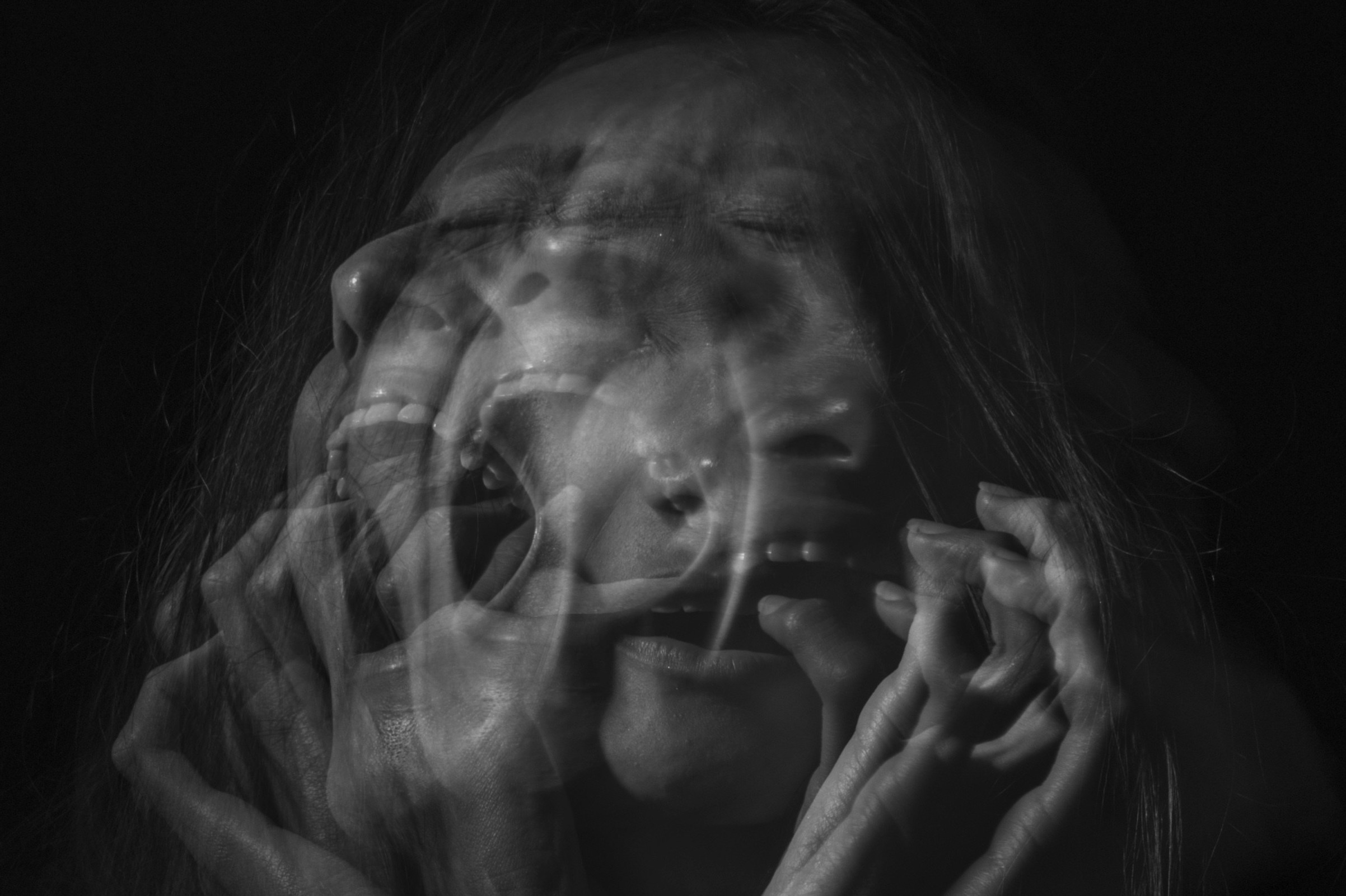
On Monday and Tuesday evenings, RTE Investigates broadcast a two-part documentary, entitled “The Psychiatric Care Scandal”, describing in painstaking detail the quasi-internment of people who had been diagnosed with serious mental ill-health, including psychosis, bipolar conditions, and schizophrenia. At least one in seven admitted to prison require psychiatric care.
Those caught in this situation are often too unwell to stand trial, condemned to spend an indeterminate time in an overcrowded prison. Prisons, which have a deleterious effect on those with stable mental health, exacerbate the rapid fraying of a person’s mind. It is not too much to draw an equivalence to torture. One person was isolated for 20,000 hours — over 800 days.
Others have covered the details and context of the documentary much more ably. Saoirse Brady from the Irish Penal Reform Trust, notes that what was revealed was the “inevitable outcome of years of policy decisions that have left prisons absorbing the consequences of unmet mental health needs, untreated trauma and addiction.” Alice Leahy evocatively described what our prison have become as “dumping grounds.”
Then, Ivan Rosney’s daughter gave a heartbreaking interview on national radio, pleading to know the circumstances which led the death of her father while he was restrained by officers in Cloverhill Prison in September 2020. Ivan had four children. He also had schizophrenia and was on remand. Courtney Rosney described what it is like to go up against the State and institutions which do not want to be transparent or accountable. Her determination for truth (still unsatisfied) is truly commendable.
I thought, “This is the moment. Now, there will be sustained pressure on the Government and the Minister for Justice to respond meaningly. At the very least, we will be offered the balm of something like an independent judge-led inquiry.” None of that has come to pass.
In recent years, after the tide turned due to the work of many advocates and victims’ groups, the Irish Government have lead the Irish public through a period of apologies for its institutional past. Various Taoisigh have apologised on the floor of Dáil Eireann, many reports have been compiled, and schemes of compensation have been devised.
As a society, wrestling with our past, we should be even more deeply attuned to our institutional present. In the Irish Examiner, Mick Clifford was left trying to make sense of this disconnect, between a clear public scandal causing untold pain to many – who may be unable to articulate its severity – and the “complete dearth of societal or political outrage.” He concluded that by cleansing ourselves from past sins, the Government and society have formed a righteousness which allows us to look past the present.
(As an aside, I think Clifford makes a misstep in his analysis, assuming that the State will “repent for its cruel and inhumane treatment” in our prisons. Institutions in our near past were a nexus of Church and State. With the Church now absent, the State has no one to blame but itself for its institutional fervour. We should not bet the mortgage on this forthcoming apology.)
The Only Public Service With No Waiting List
I am glad that my colleague Peter McVerry SJ became a Jesuit, as he has an incredible ability to turn a catchy phrase and communicate a complicated idea in a few words. He could have been a very effective press officer or Government advisor.
Informed by decades of visiting and ministering to men in prison, he often quips that prison is the only public service with no waiting lists. Never has this been more true, which is particularly clear after the documentary’s revelations.
As prison researchers, we spend much time talking about the purpose or utility of prison; how it can be used for political gain; considering its rehabilitive ideals or its punitive function. After the documentaries, I suspect that the Irish Government simply uses the prison because it is the cheapest option. Despite some spending increases in recent Budgets, recent Governments have been formed by an austerity mindset. These habits are difficult to give up. But, you will say, how does this make sense if the budget for the Irish Prison Service is €579 million this year? That’s an increase of 8%, or €39 million, in a year.
But, as Peter suggests, the prison serves as the ‘safety’ net, the catch-all for everyone who falls through the gaps in our patchy state provision of mental health and addiction support. Under Sláintecare, the Government committed to spending 10% of the health budget on mental health. It has stagnated between 5 and 6%; only 5.6% in 2024.
In 2026, only 5.8% of the total health budget (€27.4 billion) has been ringfenced for mental health service (€1.6 billion). To reach its target of 10%, the Government would have to add another €1.3 billion to the mental health budget. It is cheaper to keep building and staffing prisons.
Death In Custody Report Finally Published
Some political movement did occur following the documentary. While the death in custody report into Rosney’s death was sent to Minister Helen McEntee in October 2024, it remained on the desk unpublished, awaiting advice from the Attorney General. Coincidentally, in the hours after the documentary aired, Minister O’Callaghan was able to confrm that the Attorney General’s advice had arrived and the report would be published at the end of the week. At least there is some positive news for the Rosney family.
This time allowed the sourcing of a black marker so that a key section of the death report could be redacted. A cover page on the report, by the Minister, outlined the legislative basis for removing the findings of the post mortem examination, on the basis that it would be contrary to the public interest.
Clifford notes that the delaying of the publication of reports into our prisons by the Department of Justice is a “well-worn tactic.” Potentially problematic reports can be delayed for years. It takes the sting out of any critique. If anyone is still paying attention, the argument can be made that the prison system has long moved on. Another benefit of the careful release of death-in-custody reports is that they are envisioned as standalone cases. This is important in the protection of our justice structures.
The full report is here and it is worth a careful read. In the recommendations, the Inspector of Prisons expresses “deep reservations about the manner in which Mr. J [Ivan Rosney] was restrained and about the extent of the external and internal injuries to his body revealed at Post Mortem.” Redaction, while framed as an administrative decision, is deeply political and suggests something of concrete importance.
Ultimately, the death in custody hinges on two important pieces of information: The external and internal injuries on the body, and what happened in 2 minutes and 37 seconds in the staircase during a control and restraint procedure between the ground floor and the first-floor landing.
The staircase was in a CCTV blindspot.
The family will never know.
It is illuminating to try and interpret this document in light of the wider related texts (Inspection reports from Human Rights Bodies). This prevents us from focusing too narrowly and brings trends and repetitions to the fore. This kind of analysis should be considered as very basic for any government that seeks to protect the vulnerable in their society.
What we find when we do that is two cases in Cloverfield Prison where prisoners were improperly subdued by excessive force, as reported by the Committee for the Prevention of Torture.
In one incident in July 2023, an officer was seen jumping on the head of a man already restrained in the prison yard. A month previously, a prisoner was punched and kicked while he was prone on the ground. In this case, CCTV footage shows an officer again jumping on a prisoner’s head.
Let those who have ears, hear.


